Clivia Care Secrets: Grow Vibrant Blooms and Healthy Leaves
Clivia is a shade-loving, evergreen plant cherished for its bold, strappy leaves and spectacular clusters of trumpet-shaped flowers. Native to South Africa, clivia (also called bush lily or kaffir lily) has earned a loyal following among indoor gardeners because it’s both tough and elegant. With a few simple care secrets, you can enjoy vibrant blooms and lush, healthy foliage year after year.
Understanding Clivia: What Makes This Plant Special?
Clivia belongs to the amaryllis family and typically flowers in late winter or early spring, producing umbels of orange, yellow, or sometimes red or cream blossoms. A mature plant can bloom reliably each year and live for decades, often becoming a treasured “pass-down” houseplant.
Key characteristics of clivia:
- Grows best in bright, indirect light and cool to mild temperatures
- Features thick, strap-like leaves in a fan arrangement
- Develops fleshy roots and rhizomes that dislike disturbance
- Blooms most reliably when given a defined rest period
Knowing these traits will help you replicate the plant’s natural conditions and encourage both flowers and foliage to thrive.
Light Requirements: Bright but Never Harsh
While many flowering plants crave full sun, clivia prefers dappled light or bright shade, mimicking the understory conditions of its native habitat.
Indoors
- Place clivia in a bright room, near an east- or north-facing window.
- In a south- or west-facing exposure, keep it back from the glass or use a sheer curtain to diffuse the sun.
- Avoid direct midday sun, which can scorch the leaves and cause yellow or brown patches.
Outdoors (in suitable climates)
- Clivia can spend late spring to early fall outside in partial to full shade.
- Protect it from direct afternoon sun and from strong winds that can tear leaves.
- Move it back indoors before nighttime temperatures drop below about 10°C (50°F).
When the light is right, the foliage will be a deep, rich green without pale or burned areas, and the plant will store enough energy to flower beautifully.
Temperature and Humidity: Cool Periods Encourage Flowers
Temperature is one of the most important clivia care secrets, especially if you want consistent blooms.
-
Active growth season (spring–summer):
Ideal range is 18–24°C (65–75°F). The plant tolerates a bit warmer, but avoid prolonged heat above 29°C (85°F). -
Rest/cool period (late autumn–early winter):
10–13°C (50–55°F) for about 6–8 weeks works best. This cool spell helps trigger flowering. A cool spare room, enclosed porch, or unheated but frost-free sunroom is ideal. -
Humidity:
Clivia handles average indoor humidity well. Overly dry air can cause leaf tips to brown; you can group plants together or place the pot on a pebble tray with water (without letting the pot sit in water) if needed.
Avoid sudden temperature drops and cold drafts, which can stress the plant and reduce flowering.
Watering Clivia: Less Is Often More
Overwatering is one of the fastest ways to damage clivia. The fleshy roots store moisture and are prone to rot if they sit in soggy soil.
During active growth (spring and summer)
- Water thoroughly when the top 2–3 cm (about an inch) of soil feels dry.
- Allow excess water to drain completely; never leave the pot standing in a saucer of water.
- In bright, warm conditions, watering is often needed every 7–10 days, but always check the soil first.
During the cool rest period (late autumn–early winter)
- Water very sparingly.
- Let the soil nearly dry out between waterings—often every 3–4 weeks.
- Aim to keep roots just barely moist so they don’t shrivel.
Signs of watering problems
- Too much water: Yellowing leaves starting from the base, soft or mushy roots, sour-smelling potting mix.
- Too little water: Limp, folding leaves that look thin and floppy, with dry, crispy tips.
A consistent, slightly on-the-dry-side routine will keep your clivia healthy and encourage reliable blooms.
Soil and Potting: Why Clivia Loves to Be Slightly Root-Bound
Clivia performs best in a well-draining, slightly organic-rich potting mix and actually prefers to be somewhat crowded in its pot.
Ideal potting mix
Use a high-quality, peat- or coir-based houseplant mix and improve drainage by adding:
- Perlite or pumice (about 25–30%)
- A bit of composted bark or leaf mold
The goal is moisture retention without sogginess. A mix that dries moderately fast but doesn’t become rock-hard is perfect.
Pot size and material
- Choose a sturdy pot with drainage holes; clivia can become heavy as it matures.
- Start with a pot just a little larger than the root ball and avoid “overpotting.”
- Being slightly root-bound often encourages flowering.
Repotting frequency
- Repot every 3–5 years, or when roots visibly crowd the surface or distort the pot.
- Best time: shortly after flowering, before new active growth begins.
- Handle roots gently—clivia dislikes disturbance, and rough handling can set it back.
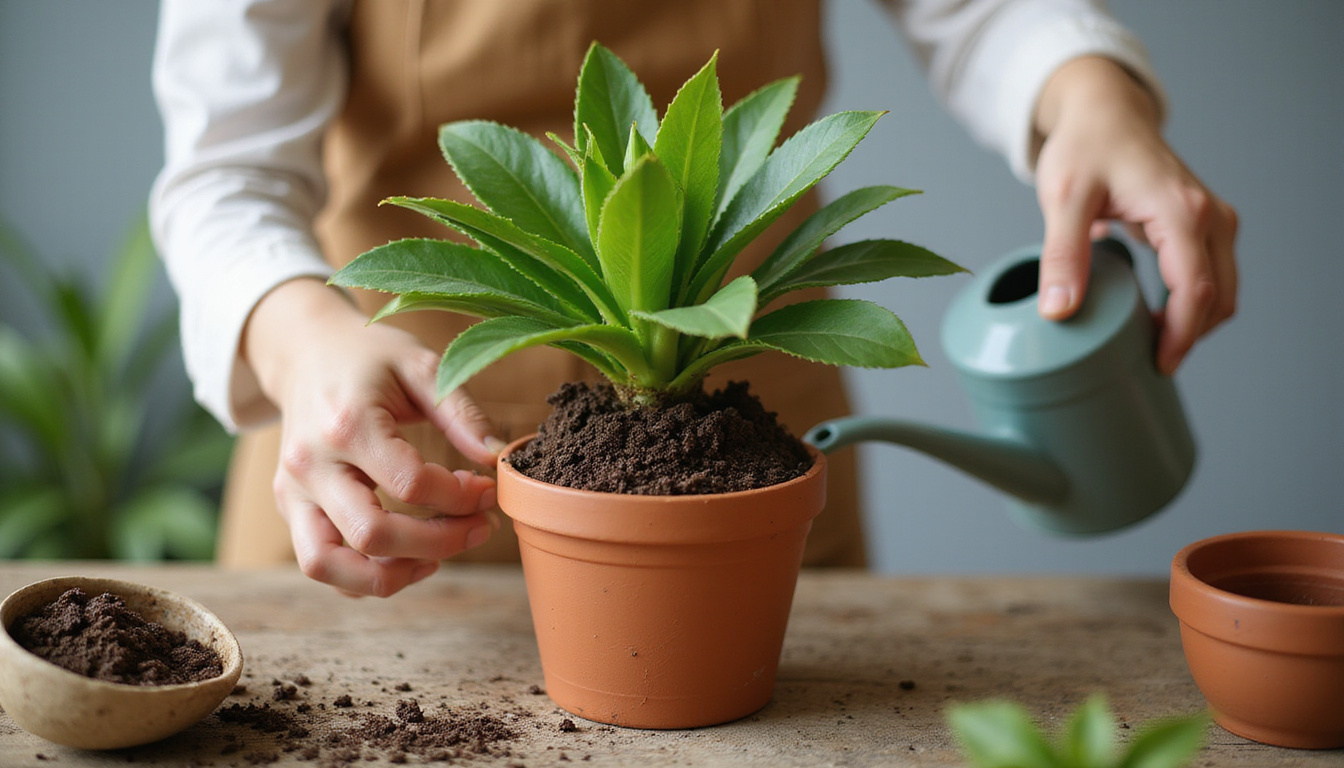
When you repot, top-dress with fresh mix around the crown instead of burying it; keeping the base of the leaves just above soil level helps prevent rot.
Fertilizing for Strong Leaves and Brilliant Blooms
Clivia is not an especially heavy feeder, but regular, moderate fertilization during active growth results in stronger leaves and more abundant flowers.
Feeding schedule
- Spring to late summer:
Use a balanced, water-soluble fertilizer (for example, 10-10-10 or 20-20-20) at half the recommended strength every 4–6 weeks. - Late summer to early autumn:
Switch, if desired, to a fertilizer slightly higher in potassium and phosphorus to support bud formation. - Cool rest period:
Do not fertilize.
Avoid over-fertilizing, which can lead to salt build-up and burnt leaf tips. If you see white crust on the soil surface, flush the potting mix with plain water to leach excess salts.
The Cool Rest Period: The Key to Clivia Flowers
The most common reason a clivia fails to bloom is skipping or shortening its rest period.
To encourage flowering:
- Reduce water in late autumn as light and temperature decline.
- Move the plant to a cooler room with 10–13°C (50–55°F) temperatures and bright, indirect light.
- Do not fertilize and water only lightly when the soil is nearly dry.
- Maintain this for 6–8 weeks, then move the clivia back to warmer conditions (18–21°C / 65–70°F) and resume normal watering.
Within several weeks of returning to warmth and a regular watering schedule, you should see a flower stalk emerging between the leaf bases, leading to a spectacular display.
Pruning, Grooming, and Basic Maintenance
Clivia requires minimal pruning but benefits from routine grooming.
- Remove spent blooms:
After flowering, cut the flower stalk close to the base, unless you plan to collect seeds. This redirects energy to the plant instead of seed production. - Trim damaged leaves:
Use sterilized scissors to cut away leaves that are yellow, brown, or badly torn. - Wipe leaves:
Dust the broad leaves occasionally with a damp cloth to improve photosynthesis and keep them glossy.
If you wish to collect seeds for propagation, allow the berry-like seed pods to ripen fully (often many months), but be aware that this can reduce the plant’s overall vigor and delay the next flowering cycle.
Pests and Problems: Keeping Clivia Healthy
Clivia is generally robust but can face a few common issues.
Pests
- Mealybugs: Cottony clumps in leaf bases and on roots.
- Scale insects: Small, shell-like bumps along leaves and stems.
- Spider mites: Fine webbing and stippled, pale leaves in very dry conditions.
Control measures:
- Wipe pests off with a cotton swab dipped in isopropyl alcohol.
- Use insecticidal soap or horticultural oil as labeled.
- Isolate heavily infested plants until the problem is resolved.
Diseases and cultural issues
- Root rot: From chronic overwatering or poorly draining soil. Solution: Improve drainage, repot in fresh mix, and adjust watering.
- Leaf scorch: From direct, hot sun or sudden exposure to intense light. Solution: Move to a more shaded, indirect-light location.
- Failure to bloom: Often due to too much warmth in winter, insufficient light, or no rest period.
Monitoring your plant regularly allows you to catch and correct problems early.
Propagating Clivia: Growing New Plants from Offsets
The easiest way to propagate clivia is by dividing offsets (side shoots) from a mature plant.
Steps for dividing clivia offsets:
- Wait until the offset has at least 4–5 leaves of its own.
- Carefully remove the plant from its pot and gently tease away soil.
- Separate the offset from the main plant, ensuring it has some roots attached.
- Pot the offset in a small, well-draining potting mix, similar to the mother plant.
- Keep it slightly moist, in bright, indirect light, and avoid fertilizing for a few weeks.
Seed propagation is possible but slow; clivia grown from seed may take 4–5 years or more to flower (source: Royal Horticultural Society).
Quick Clivia Care Checklist
Use this list as a handy reminder for ongoing care:
- Bright, indirect light; no harsh midday sun
- Temperatures 18–24°C (65–75°F) during growth, 10–13°C (50–55°F) for 6–8 weeks in winter
- Water thoroughly, then let the top 2–3 cm of soil dry; very light watering during rest period
- Well-draining, organic-rich potting mix; sturdy pot with drainage holes
- Fertilize lightly in spring–summer; stop feeding in cool season
- Slightly root-bound conditions; repot only every 3–5 years
- Remove spent flower stalks; clean leaves occasionally
- Watch for mealybugs and scale; treat promptly
FAQ About Clivia Care
1. Why is my clivia not flowering?
Most often, clivia doesn’t flower because it didn’t receive a proper cool rest period, or it’s growing in too little light. Ensure it spends 6–8 weeks at about 10–13°C (50–55°F) in winter with minimal watering, and keep it in bright, indirect light the rest of the year.
2. Can clivia grow outdoors year-round?
Clivia can be grown outdoors year-round only in mild, frost-free climates (generally USDA zones 9–11). In colder regions, treat it as a container plant: keep it outdoors in shade during warm months and move it inside before temperatures drop below about 10°C (50°F).
3. How often should I repot a clivia plant?
Repot clivia only every 3–5 years, or when the roots are clearly overcrowded. It actually prefers to be somewhat root-bound. Disturbing the roots too often can delay flowering.
Bring Long-Lasting Color to Your Home with Clivia
With the right combination of light, temperature, and watering, clivia rewards even modest care with elegant foliage and striking, long-lasting flowers. If you’ve struggled to get yours to bloom, apply the cool rest period, adjust your watering routine, and resist the urge to repot too frequently.
Start refining your clivia care today: choose a bright, sheltered spot, set reminders for its winter rest, and tune your watering schedule. With these simple steps, you’ll soon enjoy vibrant blooms and healthy, glossy leaves that make clivia a standout centerpiece in your indoor garden for years to come.
Throughout history, many plants and herbs have been associated with luck, protection, and prosperity. To explore their deeper spiritual, psychological, and scientific significance, visit SpiritualMindScience.com.