Across cultures and centuries, beast symbolism has carried deep messages about courage, fear, transformation, and hidden potential. Those dragons, lions, serpents, and hybrid monsters in ancient myths are far more than fantasy creatures; they’re mirrors of our inner world. When you decode what these beasts represent, you uncover a powerful roadmap for understanding your own instincts, shadows, and strengths.
This article explores how beast symbolism works in myth and legend, what it reveals about the psyche, and how you can use these archetypes to unlock your inner power today.
Why Beast Symbolism Is So Powerful
Beasts in myth are exaggerated versions of what we feel but can’t easily name. They embody:
- Raw emotion (rage, desire, terror)
- Instinct (fight, flight, protect, nurture)
- Forbidden or repressed qualities (envy, lust, ambition)
- Untamed potential (creativity, willpower, resilience)
Ancient storytellers understood something psychology is now confirming: the human mind responds strongly to symbolic images. Mythic beasts bypass logic and speak directly to our subconscious, turning complex inner experiences into vivid, unforgettable forms.
In Jungian terms, many mythic animals are archetypes—universal patterns that live in the collective unconscious (source: Jung, “Man and His Symbols” via Library of Congress). When you meet these beasts in stories, you’re really meeting parts of yourself.
The Three Core Roles of Beasts in Myth
Across civilizations, beasts tend to appear in three main roles. Each role reflects a different way we relate to our own inner forces.
1. The Beast as Guardian
Guardian beasts stand at thresholds: gates of cities, entrances to underworlds, edges of sacred spaces. Think of:
- Cerberus, the three-headed hound guarding the Greek underworld
- Egyptian sphinxes flanking temple gateways
- Chinese guardian lions (shishi) protecting palaces and shrines
Symbolically, threshold guardians represent the challenges that appear when you approach a new stage of life: a career leap, a relationship turning point, a spiritual awakening. The message behind this beast symbolism is clear: you don’t get to the “next level” without facing a test.
Inner meaning:
When you feel blocked by fear, self-doubt, or external resistance, imagine it as a guardian beast. It’s not there to destroy you—it’s there to make sure you’re ready. Passing the test usually means developing a new skill, boundary, or level of self-honesty.
2. The Beast as Shadow
Some creatures embody everything a culture fears or condemns: chaos, temptation, destruction. Examples include:
- Hydra, the many-headed serpent in Greek myth
- The demon Mahishasura in Hindu mythology, defeated by goddess Durga
- The biblical Leviathan, a monstrous sea dragon
This is shadow beast symbolism: the parts of ourselves we’re afraid to acknowledge. Aggression, taboo desires, greed, or jealousy get projected onto monstrous figures. The “evil creature” out there is really the disowned energy in here.
Inner meaning:
When you encounter a terrifying mythic beast, ask: What human quality is this exaggerating? Where do I see even a small trace of that in myself? Owning the shadow doesn’t mean acting it out; it means taking responsibility for it, so it doesn’t control you from the dark.
3. The Beast as Ally or Guide
Not all beasts are adversaries. Many appear as sacred helpers, guides, or protectors:
- Athena’s owl (wisdom, clear sight)
- Odin’s ravens Thought and Memory in Norse myth
- Native American totem animals like Eagle, Wolf, or Bear
These beasts symbolize cultivated instincts—energies we’ve integrated enough that they can work with us instead of against us.
Inner meaning:
When an animal recurs in your dream life, art, or daydreams, it may be functioning as an inner guide. Asking “What qualities does this creature have?” can highlight strengths you’re ready to claim.
Major Beast Archetypes and What They Mirror in Us
Different beasts highlight different inner dynamics. Here are some of the most powerful archetypes found in beast symbolism around the world.
Lions and Big Cats: Sovereignty, Courage, and the Heart
From the Nemean Lion of Heracles to the lion thrones of pharaohs and kings, big cats stand for:
- Courage and sovereign power
- Leadership and protection
- The fiery, passionate heart
To face a lion in myth is often to confront your relationship with power: Are you shrinking from it, abusing it, or learning to hold it responsibly?
Personal reflection:
Where are you being called to “step into the lion’s role”—to protect, lead, or claim your voice? Where do you fear your own power?
Serpents and Dragons: Transformation and Raw Life Force
Snakes and dragons carry some of the most layered beast symbolism:
- Death and rebirth (shedding skin)
- Wisdom and forbidden knowledge (serpent in Eden, kundalini in yoga)
- Chaotic or creative life force (Chinese dragons bringing rain, fertility)
In many myths, slaying or taming a serpent marks a major inner shift: conquering overwhelming fear, mastering desire, or channeling energy more consciously.
Personal reflection:
What old skin are you outgrowing? Is there a “dragon” in your life—an intense challenge or desire—that, if faced, could fuel your evolution?
Wolves and Dogs: Loyalty, Instinct, and the Pack
Canine beasts are often liminal, living between wild and domestic realms:
- Roman legend: the she-wolf nursing Romulus and Remus
- Fenrir, the bound wolf who will break free at Ragnarok in Norse myth
- Black dog apparitions in British folklore
Wolves and dogs highlight our social instincts and our relationship with belonging, loyalty, and freedom.
Personal reflection:
Where do you feel torn between the “pack’s” expectations and your wild, individual path? How can you honor both belonging and authenticity?
Hybrid Beasts: The Complexity of Being Human
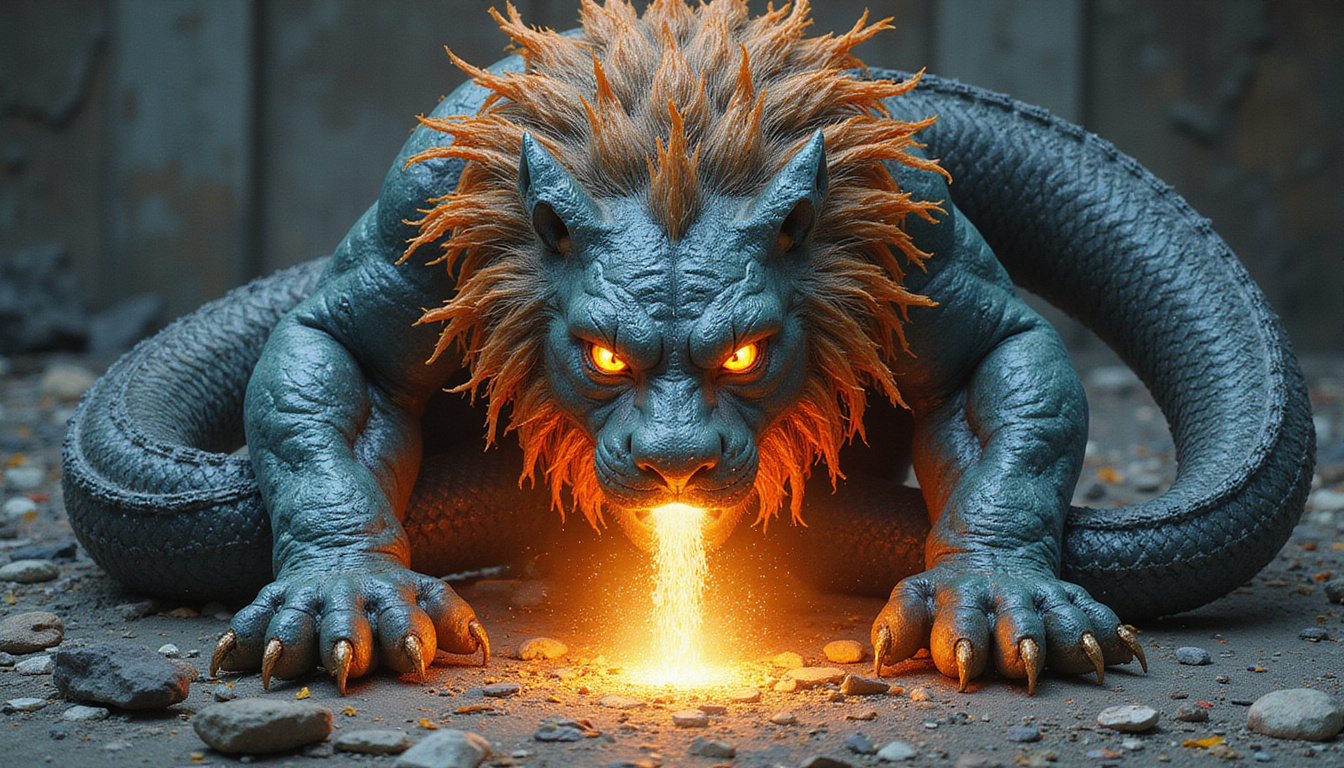
Creatures like centaurs, mermaids, sphinxes, and chimeras mix species to portray inner conflict:
- Human/animal hybrids = reason versus instinct
- Land/sea hybrids (mermaids) = conscious versus unconscious
- Bird/lion hybrids (griffins) = heaven versus earth impulses
Hybrid beast symbolism points to the fact that you contain multitudes. Conflicting desires, shifting identities, and paradoxes aren’t flaws—they’re part of being human.
Personal reflection:
Which “parts” of you feel hardest to reconcile—head and heart, work and play, logic and intuition? If you imagined yourself as a hybrid beast, what would it look like, and what truth would that reveal?
How Ancient Hero Stories Reveal Inner Power
Hero-versus-beast tales are everywhere for a reason: they mirror your inner journey from fear to mastery.
The Beast Is the Gateway, Not the Obstacle
Whether it’s Theseus and the Minotaur, Gilgamesh and Humbaba, or Saint George and the Dragon, the pattern repeats:
- A community or individual is threatened by a beast.
- The hero volunteers (or is forced) to face it.
- A descent or ordeal follows—into forests, caves, underworlds.
- The confrontation transforms the hero and restores balance.
Psychologically, this is what happens when you finally confront a long-avoided truth, habit, or fear. The “monster” is guarding treasure: authenticity, courage, or new capacity.
Taming Versus Killing the Beast
Not every myth ends with the creature’s death. Some end with:
- Beasts being tamed or befriended
- Humans transforming into beasts
- Beasts revealing themselves as gods in disguise
These variations carry a crucial nuance in beast symbolism: sometimes you must “kill” a behavior; other times you must integrate an energy you’ve demonized.
Ask yourself: Is this something I need to end—or something I need to learn to direct?
Using Beast Symbolism for Self-Discovery
You can consciously work with these symbols to better understand yourself and unlock hidden power.
1. Track the Beasts in Your Imagination
Start noticing:
- Animals or creatures that appear often in your dreams
- Mythic beasts you’ve always been drawn to (or repulsed by)
- Recurring animal imagery in your art, writing, or daydreams
Write them down in a dedicated notebook or digital doc. Patterns will emerge.
2. Decode Their Qualities
For each creature, ask:
- What are its obvious traits (speed, strength, cunning, stealth, beauty)?
- Where do I already express these traits in my life?
- Where am I afraid of or disconnected from these traits?
You’re not looking for a single “correct” meaning. You’re building a language between your conscious mind and your deeper psyche.
3. Create a Personal Bestiary
Make your own inner “book of beasts” to work with:
- Name each creature and note the myth or dream it came from.
- List the life situations it seems connected to.
- Write what it wants or fears—imagine a short dialogue.
Over time, you’ll see that beast symbolism in your life forms a map of your strengths, challenges, and emerging potential.
4. Engage the Beast, Don’t Just Analyze It
Symbolic work is most powerful when it’s experiential. You might:
- Draw or paint the beast, exaggerating features that feel important.
- Write a scene where you meet it and ask what it’s guarding.
- Move like the creature for a few minutes—how does that shift your state?
This isn’t fantasy for its own sake; it’s a way of giving subconscious material a safe, creative outlet.
Common Misunderstandings About Beast Symbolism
A few pitfalls can block the real power of this work:
- Taking symbols too literally. Seeing a snake doesn’t “mean” something bad will happen; symbols speak in metaphor, not prediction.
- Moralizing the beast. Labeling energies as “good” or “bad” oversimplifies them. Anger, for instance, can be destructive or protective.
- Ignoring cultural context. A creature’s meaning varies by culture. Snakes are evil in some stories, sacred healers in others. Respect diverse interpretations.
- Using symbolism to bypass reality. Inner work is powerful, but it doesn’t replace real-world action—therapy, boundary-setting, or practical change.
Stay curious rather than rigid. Symbolism is a tool for insight, not a rulebook.
FAQ: Beast Symbolism and Inner Power
Q1: What does beast symbolism mean in dreams?
When animals or monsters appear in dreams, they often personify instincts, emotions, or situations you haven’t fully acknowledged. Dream beast symbolism can highlight fears you’re avoiding, strengths you’re underusing, or desires that feel “too wild” to own. Notice how you relate to the creature in the dream—running from it, fighting it, befriending it—that dynamic is usually the key.
Q2: How is animal and beast symbolism used in mythology across cultures?
Across cultures, animal and beast symbolism appears in roles like guardians of sacred places, companions to gods, embodiments of natural forces, and tests for heroes. While details vary—dragons as benevolent in Chinese myth versus destructive in some European tales—the underlying pattern is similar: beasts dramatize humanity’s relationship with nature, power, desire, and the unknown.
Q3: Can working with mythical beast symbolism really help personal growth?
Yes, when approached thoughtfully. Mythical beast symbolism gives you a vivid, nonjudgmental language for exploring parts of yourself that are hard to talk about directly. By identifying with certain creatures, or facing others symbolically, you can better understand your fears, drives, and potentials. This awareness supports emotional healing, clearer choices, and a more empowered sense of identity.
Let Your Inner Beast Become Your Ally
Myths aren’t relics; they’re instruction manuals in disguise. Every dragon, lion, serpent, or hybrid creature you encounter in stories is an invitation to look inward—to ask what power, fear, desire, or wisdom it’s carrying on your behalf.
You don’t need to “slay” your inner beasts to become whole. You need to recognize them, listen to them, and learn when to restrain, when to release, and when to ride their energy toward what matters most.
If you’re ready to go deeper, start today: choose one beast that has always fascinated or frightened you. Read a few myths about it, journal about the qualities it mirrors in you, and imagine how your life might change if you could partner with that power instead of running from it.
Your legends are already written inside you. Now is the time to decode their beast symbolism—and step into the larger, truer story of who you are.
Animals have inspired symbols and beliefs across cultures for centuries. Discover how these traditions connect with psychology, spirituality, and human consciousness at SpiritualMindScience.com.