Verbena is a gardener’s dream: long-lasting color, pollinator-friendly flowers, and easy-going care that fits everything from window boxes to sprawling borders. Whether you grow verbena in containers or garden beds, learning a few simple care techniques will keep your verbena blooming nonstop from spring until frost.
This guide walks you through everything you need to know about verbena—types, planting, watering, feeding, pruning, and troubleshooting—so you can enjoy months of vibrant color with minimal fuss.
Why Grow Verbena?
Verbena (Verbena spp.) is a sun-loving flowering plant prized for:
- Continuous blooms: Many varieties flower from late spring through fall.
- Versatility: Great in containers, hanging baskets, rock gardens, and borders.
- Pollinator appeal: Butterflies, bees, and hummingbirds love verbena.
- Heat and drought tolerance: Ideal for hot, dry summers once established.
You’ll find both low-growing, trailing verbena perfect for cascading over edges and taller, airy types that add height and movement to the garden.
Types of Verbena: Choosing the Right One
Understanding the main types of verbena will help you choose the best variety for your space and climate.
1. Annual Verbena
Often sold simply as “verbena” in garden centers, these are usually hybrids (Verbena × hybrida) grown as annuals.
- Habit: Mounding or trailing, 6–12 inches tall.
- Best for: Containers, hanging baskets, front-of-border plantings.
- Bloom time: Spring to frost with proper care.
- Colors: Reds, purples, pinks, whites, bicolors.
2. Perennial Verbena
Perennial types come back year after year in the right climates.
- Verbena bonariensis (Tall verbena):
- 3–6 feet tall with airy clusters of purple flowers on wiry stems.
- Attracts tons of butterflies and bees.
- Often short-lived but self-seeds lightly.
- Verbena rigida and Verbena canadensis:
- Lower-growing, spreading perennials.
- Hardy in warmer zones (often USDA zones 7–10).
3. Native and Wild Verbenas
In many regions, there are native verbena species adapted to local conditions.
- More resilient to local pests and climate.
- Excellent for wildlife and pollinator gardens.
When choosing, check the plant tag for:
- USDA Hardiness Zone
- Mature size
- Light needs (almost always “full sun” for best performance)
Ideal Growing Conditions for Verbena
Verbena isn’t demanding, but it does insist on a few key things.
Sunlight: Full Sun Is Essential
For strong growth and heavy flowering, give verbena:
- At least 6–8 hours of direct sun each day.
- More sun usually means more flowers.
In very hot climates, a bit of late-afternoon shade can help container-grown plants, but garden-grown verbena generally thrives in full exposure.
Soil: Well-Drained or Bust
Verbena hates wet feet. Poor drainage is the fastest way to kill it.
- Texture: Light, well-draining soil is ideal—sandy or loamy.
- pH: Slightly acidic to neutral (around 6.0–7.0).
- Drainage: If water sits for more than a few hours after rain, improve drainage.
To improve soil:
- Mix in compost to lighten heavy clay.
- Plant in raised beds or mounded soil if drainage is poor.
- Use a quality potting mix (not garden soil) for containers.
Temperature and Climate
- Many hybrid verbenas are frost-tender annuals in cold climates.
- Perennial verbenas vary in hardiness, with some tolerant down to USDA zone 6–7.
- Plants prefer warm days and cooler nights but handle heat well if kept watered.
How to Plant Verbena for Strong Starts
When to Plant
- In cold climates: Plant after all danger of frost has passed and the soil has warmed.
- In warm climates: Plant in early spring or fall when temperatures are mild.
Spacing
Give verbena enough space to spread and allow air circulation:
- Annual, mounding types: 8–12 inches apart.
- Trailing forms: 12–18 inches apart or near edges to cascade.
- Tall verbena (V. bonariensis): 18–24 inches apart.
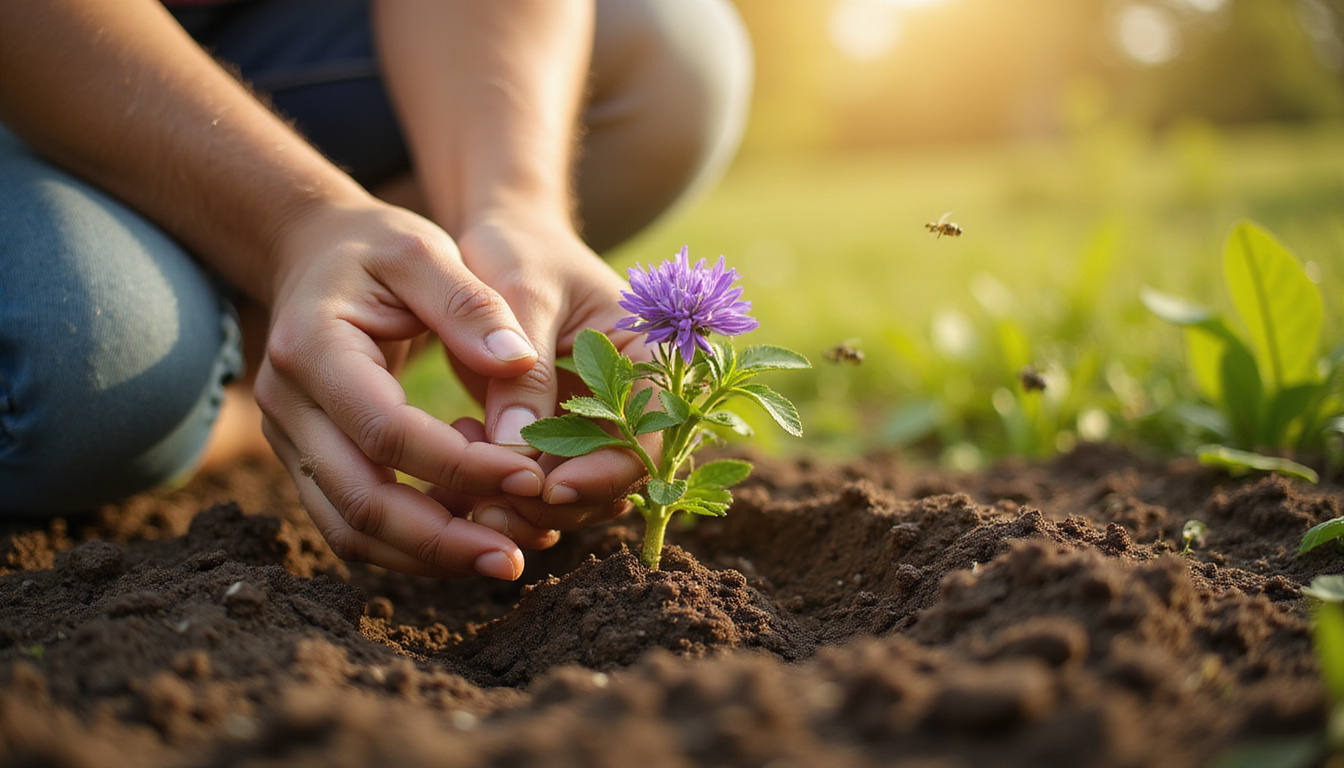
Planting Steps
-
Prepare the soil
Loosen the top 8–10 inches and mix in compost for fertility and structure. -
Dig the hole
Slightly wider than the nursery pot and about the same depth. -
Remove the plant
Gently ease it from the pot, loosening any circling roots. -
Plant at the same depth
The top of the root ball should be level with the surrounding soil. -
Backfill and firm
Fill the hole, gently press to remove air pockets. -
Water thoroughly
Soak the area to settle the soil around the roots.
Apply a thin layer of mulch around (but not touching) the stems to help retain moisture and suppress weeds.
Watering Verbena: Find the Right Balance
Verbena is somewhat drought-tolerant once established, but it still needs consistent moisture to bloom its best.
General Watering Guidelines
- Newly planted verbena:
Water regularly for the first 2–3 weeks to help roots establish. - Established plants in the ground:
- Water deeply when the top 1–2 inches of soil are dry.
- Aim for about 1 inch of water per week from rain or irrigation, adjusting for heat and soil type.
- Container verbena:
- Check daily in hot weather; containers dry out faster.
- Water when the top inch of potting mix feels dry.
Avoid Overwatering
Overly wet conditions lead to root rot and fungal problems.
Signs of overwatering:
- Yellowing leaves that drop.
- Mushy or blackened stems at the base.
- Persistently soggy soil.
Improve drainage or water less frequently if you notice these symptoms.
Feeding Verbena: Fertilizer for Continuous Blooms
Verbena responds well to moderate feeding, especially in containers.
In-Ground Plants
- At planting time, mix a balanced, slow-release fertilizer into the soil.
- Midseason, you can side-dress with compost or reapply slow-release fertilizer if growth seems weak or flowering declines.
Container Plants
Container-grown verbena needs more frequent feeding:
- Use a water-soluble bloom booster (higher in phosphorus and potassium than nitrogen) every 2–3 weeks during the growing season.
- Alternatively, use a slow-release container fertilizer according to label directions.
Avoid overfeeding with high-nitrogen fertilizers; they cause lush foliage at the expense of flowers.
Pruning and Deadheading Verbena for Endless Blooms
Regular grooming is the secret to keeping verbena flowering all season.
Deadheading: Remove Spent Flowers
For most varieties:
- Snip or pinch off faded flower clusters just above a set of healthy leaves.
- This redirects energy into new buds instead of seed production.
- Some modern hybrids are marketed as “self-cleaning,” but occasional deadheading still improves appearance and bloom density.
Midseason Rejuvenation
If your verbena looks leggy, woody, or sparse midseason:
- Cut plants back by about one-third of their height.
- Water well and apply a light dose of fertilizer.
- Within 2–3 weeks, new growth and fresh flowers should appear.
Tall verbena (V. bonariensis) typically needs less pruning. You can remove spent flower heads or shear lightly if plants flop.
Growing Verbena in Containers and Hanging Baskets
Verbena shines in pots and baskets where its trailing stems can spill over the edges.
Container Tips
- Choose the right pot:
- Ensure drainage holes.
- 10–14 inches wide for mixed plantings; smaller for single plants.
- Use quality potting mix:
- Light, well-draining, and formulated for containers.
- Pairing plants:
Verbena combines well with:- Petunias and calibrachoa
- Sweet alyssum
- Dusty miller
- Ornamental grasses
Container Care Checklist
- Water when the top inch of mix is dry.
- Feed every 2–3 weeks (liquid fertilizer) or as directed (slow-release).
- Rotate containers occasionally so all sides receive sun.
- Trim back straggly stems to keep a full, rounded shape.
Common Problems and How to Fix Them
Even though verbena is generally easy, a few issues can pop up, especially in less-than-ideal conditions.
Powdery Mildew
A white, powdery coating on leaves, often in humid or crowded plantings.
- Prevention:
- Space plants adequately for airflow.
- Water at the base, not overhead.
- Control:
- Remove affected foliage.
- Use a labeled fungicide if needed, following directions (see general disease guidance from university extensions (source):
University of Florida IFAS – Powdery Mildew Overview).
Root Rot
Usually caused by overwatering and poor drainage.
- Let soil dry out between waterings.
- Improve drainage or move plants to a better site.
Poor Blooming
If your verbena is leafy but flowerless:
- It may be getting too much shade—move to a sunnier location.
- Over-fertilizing with nitrogen can suppress blooms—switch to a bloom-focused formula.
- Deadhead more regularly to encourage new flower spikes.
Simple Verbena Care Checklist
Use this quick list to keep your verbena thriving:
- Plant in full sun (6–8+ hours daily).
- Ensure well-draining soil; avoid waterlogged areas.
- Water deeply but infrequently, letting the top soil dry slightly.
- Feed lightly but consistently, especially in containers.
- Deadhead spent blooms and trim back midseason if plants get leggy.
- Watch for powdery mildew and overwatering, and adjust care as needed.
FAQ About Verbena Care
How do you care for verbena plants in summer heat?
In summer, verbena care focuses on water and deadheading. Keep plants in full sun, water deeply when the top inch of soil is dry, and deadhead spent flowers regularly. Container-grown verbena may need daily watering in extreme heat and a light dose of fertilizer every 2–3 weeks to support continuous blooms.
Is verbena a perennial or annual in the garden?
Verbena can be either perennial or annual, depending on the species and your climate. Many hybrid verbenas are treated as annuals in colder regions, while species like Verbena bonariensis and some native verbenas behave as perennials in warmer USDA zones (often 7–10). Check the plant tag for hardiness and treat accordingly.
Why is my verbena not blooming well?
Sparse blooms on verbena usually indicate one of three issues: not enough sun, too much nitrogen fertilizer, or lack of deadheading. Ensure at least 6–8 hours of direct sunlight, switch to a balanced or bloom-boosting fertilizer instead of high-nitrogen formulas, and remove faded flower clusters to encourage new blooms.
Bring Endless Color to Your Garden with Verbena
With the right combination of sun, drainage, and a bit of routine grooming, verbena rewards you with months of bright, butterfly-attracting blooms. Whether you’re filling a window box, softening a stone wall, or adding height and movement to a border, there’s a verbena variety that can fit your vision.
Start by choosing a type suited to your climate, plant it in a sunny, well-drained spot, and follow the simple care steps outlined above. If you’re ready to transform your outdoor space into a long-blooming, low-maintenance display, add verbena to your next planting list—and enjoy the show from spring to frost.
Throughout history, many plants and herbs have been associated with luck, protection, and prosperity. To explore their deeper spiritual, psychological, and scientific significance, visit SpiritualMindScience.com.