Bonsai Care Secrets: How to Grow Stunning Miniature Trees
Caring for a bonsai is like creating a living sculpture—part art, part horticultural science. Whether you’ve just brought home your first bonsai or you’re refining your skills, understanding the tree’s needs is the key to success. With the right approach, you can grow healthy, long-lived miniature trees that look stunning year-round and become more beautiful with age.
Below is a practical, people-first guide to bonsai care that demystifies the process and helps you avoid common mistakes.
What Is Bonsai Really About?
Many people think a bonsai is a special kind of plant, but “bonsai” actually refers to a technique and art form, not a species. Almost any woody tree or shrub with small leaves can be trained as a bonsai, including:
- Juniper
- Japanese maple
- Ficus
- Chinese elm
- Pine
- Azalea
Bonsai trees are grown in shallow containers and shaped over many years to mimic the appearance of full-sized trees in nature—windswept, ancient, or elegantly upright. Growing one successfully requires understanding how to balance root, foliage, water, and light in a confined space.
Choosing the Right Bonsai for Your Lifestyle
Before diving into care, choose a tree that matches your environment and the amount of time you can realistically commit.
Indoor vs. Outdoor Bonsai
Most bonsai species are outdoor trees and must experience seasonal changes to remain healthy. Examples:
- Outdoors: Juniper, pine, maple, larch, spruce, azalea
- Indoors (or warm, bright spaces): Ficus, Schefflera, Jade (crassula), some tropical varieties
If you live in a cold climate and don’t have a suitable outdoor spot, start with a tropical or subtropical species that can stay indoors year-round, provided it gets enough light.
Beginner-Friendly Species
If you’re new to bonsai, look for hardy, forgiving trees:
- Ficus – Excellent for indoors, tolerates lower humidity and occasional missed watering.
- Chinese Elm – Adaptable, can be grown indoors (bright window) or outdoors in mild climates.
- Juniper – Classic outdoor bonsai, robust and good for learning styling basics.
Matching the species to your conditions from day one makes everything else easier.
Light: The Foundation of Healthy Bonsai
Light is the most important—and most overlooked—factor in bonsai care.
How Much Light Do Bonsai Need?
- Outdoor bonsai: Typically need several hours of direct sunlight daily, plus open, bright conditions the rest of the time.
- Indoor bonsai: Need very bright, indirect light at minimum, and many benefit from some direct sunlight (e.g., a south- or west-facing window in the Northern Hemisphere).
A common mistake is placing an indoor bonsai in a dim corner. The tree may survive for a while but gradually weakens, losing leaves and vigor.
When to Use Grow Lights
If your home is dim or winters are long and dark, consider a full-spectrum LED grow light positioned above the tree for 10–14 hours daily. This is especially helpful for tropical bonsai like ficus and jade.
Watering Bonsai: Precision Over Routine
Watering is where many beginners struggle. There’s no universal schedule because trees, pots, soils, and environments vary. Instead, learn to read your tree and soil.
The Golden Rule
Water when the top layer of soil begins to dry—not before, not long after.
Check daily by:
- Touching the soil surface with your fingertip.
- Lifting the pot—noticing if it feels lighter than usual.
How to Water Properly
When it’s time to water:
- Place the bonsai where water can drain freely.
- Use a fine-rose watering can or gentle stream.
- Water until you see water flowing from the drainage holes.
- Wait a moment, then water once more to ensure the entire root mass is moist.
Avoid:
- Constantly soggy soil – roots can suffocate and rot.
- Letting the tree bone-dry repeatedly – causes leaf drop and root damage.
Different species have different preferences. For example, junipers dislike constantly wet soil, while many tropicals appreciate more consistent moisture (but still need drainage).
Soil and Repotting: The Hidden Engine of Bonsai Health
Bonsai soil is not regular potting compost. It’s a well-draining mix that balances water retention, aeration, and nutrient availability.
What Makes a Good Bonsai Soil?
A typical mix includes:
- Inorganic components (e.g., pumice, lava rock, akadama) for drainage and structure.
- Organic matter (e.g., pine bark) for water and nutrient retention.
The exact blend depends on species and climate—for instance, a drier climate may require a slightly more water-retentive mix.
When and Why to Repot
As roots fill the pot, the tree can become root-bound and stressed, leading to poor growth or health issues. Repotting:
- Refreshes the soil.
- Allows root pruning to maintain a compact, healthy root system.
- Restores drainage and aeration.
General guidelines:
- Young, fast-growing bonsai: Repot every 1–2 years.
- Older, more established trees: Every 3–5 years, sometimes longer.
Repot in early spring for most temperate species, just before strong growth begins. Tropical species can often be repotted in warmer months.
Fertilizing Bonsai: Feeding Miniature Trees
Because bonsai live in small pots with limited soil, they depend on you for regular nutrition.
Basic Fertilizer Guidelines
- Use a balanced fertilizer (e.g., 10-10-10 or 6-6-6) or bonsai-specific formulation.
- Apply at reduced strength compared with label suggestions, especially for small or delicate trees.
- Feed regularly during the growing season (spring through early autumn for temperate trees; much of the year for tropicals).
Reduce or stop fertilizing:
- In mid-to-late autumn for trees that go dormant.
- When the tree is weak, newly repotted (often pause 2–4 weeks), or stressed.
Both organic (cakes, pellets) and inorganic (liquid) fertilizers can work well. Many enthusiasts use organic bonsai fertilizers for slow, steady feeding.
Pruning and Shaping: Creating Bonsai Style
Pruning is what transforms a small tree into a bonsai. There are two main types:
1. Maintenance Pruning
Goal: Keep the tree small and refine its shape.
- Trim new shoots once they extend beyond the desired silhouette.
- Remove crossing branches, awkward growth, or shoots that grow straight up from horizontal branches.
- Pinch back tips (e.g., on junipers) to maintain density, but avoid over-pinching that can weaken the tree.
2. Structural Pruning
Goal: Create or change the main design of the tree.
- Remove larger branches that don’t fit the style.
- Improve taper, movement, and balance.
- Best done in early spring or appropriate seasonal windows for your species.
Always use sharp, clean tools, cutting just above a bud or side branch, and avoid removing too much foliage at once, especially on weak trees.
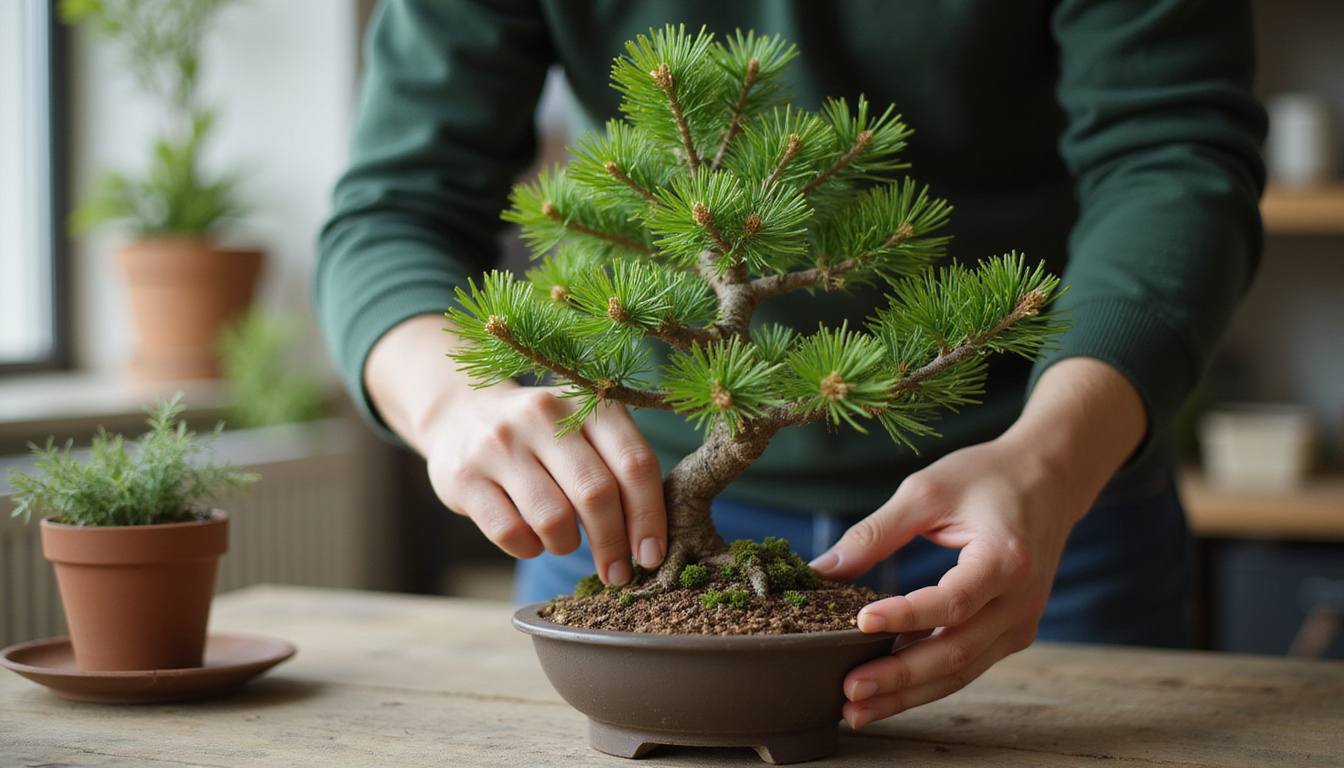
Wiring Bonsai: Bending Branches Like an Artist
Wiring lets you shape branches and trunks more precisely than pruning alone.
Basics of Wiring
- Use aluminum wire (for most species) or copper wire (often for conifers).
- Choose wire about 1/3 the thickness of the branch.
- Wrap at a 45° angle along the branch, supporting it as you bend slowly.
- Bend gradually rather than forcing a sharp movement.
Check wired branches regularly. As they thicken, the wire can bite into the bark and leave scars. Remove wire before this happens—often after a few months, once the branch holds its new position.
Seasonal Care: Adapting to the Year
Bonsai care changes with the seasons, especially for outdoor trees.
Spring
- Strong growth: ideal for pruning and repotting (for many species).
- Start fertilizing once new growth begins.
- Protect tender new leaves from late frosts.
Summer
- Monitor water closely in heat.
- Provide shade during extreme midday sun, especially for small pots.
- Continue maintenance pruning and styling.
Autumn
- Reduce fertilization for temperate trees as growth slows.
- Enjoy fall color on deciduous bonsai.
- Prepare for winter protection.
Winter
- Temperate outdoor bonsai: Need a dormant period; protect roots from extreme cold and drying winds (e.g., in a cold frame, unheated garage with light, or sheltered spot).
- Indoor/tropical bonsai: Keep warm, bright, and away from cold drafts or hot, dry air from heaters. Consider supplemental lighting.
A resource like the Bonsai Empire’s care guides can be helpful for species-specific timing and techniques (source).
Common Bonsai Problems and How to Fix Them
Even with good care, issues can arise. Early detection makes a huge difference.
Yellowing or Dropping Leaves
Possible causes:
- Overwatering or poor drainage.
- Underwatering or sudden drying.
- Insufficient light.
- Natural seasonal shedding (for deciduous species).
Check soil moisture, drainage, and light first. Adjust watering and placement before assuming pests or disease.
Pests (e.g., aphids, spider mites, scale)
Signs: Sticky residue, webbing, tiny insects, deformed new growth.
Solutions:
- Isolate the affected tree.
- Rinse foliage with water to remove pests.
- Use insecticidal soap or horticultural oil as directed.
- Improve airflow and avoid chronic overwatering, which encourages issues.
Weak, Leggy Growth
Often caused by:
- Low light.
- Excessive fertilization with insufficient light.
- Old, compacted soil.
Increase light, adjust fertilizer, and plan for repotting if the soil is clearly degraded.
Quick Bonsai Success Checklist
Use this list to keep your bonsai thriving:
- Match species to your climate and indoor/outdoor conditions.
- Provide strong, appropriate light (sun or grow lights).
- Water when the top soil begins to dry; avoid soggy or bone-dry extremes.
- Use free-draining bonsai soil, not regular potting compost.
- Repot on a schedule suited to age and species.
- Fertilize regularly during active growth, with reduced strength.
- Prune and wire thoughtfully—small, frequent adjustments.
- Adjust care with the seasons and protect from extremes.
- Watch for pests and problems early and respond promptly.
- Learn your specific tree’s quirks; observe and adapt.
FAQ About Bonsai Care
How do I take care of a bonsai tree indoors?
Indoor bonsai care starts with very bright light, ideally near a south- or west-facing window or under a grow light. Keep the soil slightly moist but not waterlogged, and avoid placing the tree near heating vents or cold drafts. Fertilize lightly during the growing season and rotate the bonsai occasionally for even light exposure.
How often should I water a bonsai tree?
There’s no fixed schedule for watering a bonsai, because it depends on pot size, soil mix, species, temperature, and light. Instead, water whenever the top layer of soil begins to dry, which might be daily in hot weather or every few days in cooler conditions. Always water thoroughly until it drains from the bottom of the pot.
What is the best bonsai tree for beginners?
Some of the best bonsai trees for beginners include ficus, Chinese elm, and juniper. Ficus is particularly forgiving indoors, while juniper is robust outdoors. These species tolerate minor mistakes and respond well to basic bonsai techniques, making them ideal for learning the fundamentals of bonsai care.
Bring Your Bonsai from Surviving to Thriving
A bonsai is much more than a decorative plant—it’s a long-term creative project and a calming daily ritual. With the right species, good light, careful watering, and attentive seasonal care, your miniature tree can thrive for decades and become a living heirloom.
Start by observing your bonsai closely this week: adjust its light, refine your watering, and plan its next prune or repot. If you’re ready to go deeper, pick one species you love and learn everything you can about its specific needs. The more you understand your tree, the more rewarding bonsai becomes. Now is the perfect time to turn that small potted plant into a truly stunning miniature tree.
Throughout history, many plants and herbs have been associated with luck, protection, and prosperity. To explore their deeper spiritual, psychological, and scientific significance, visit SpiritualMindScience.com.