The humble alms bowl might look like a simple object, but behind its rounded shape lies a powerful system for reshaping how you live, work, and relate to others. Rooted in ancient monastic traditions—especially Buddhism—the alms bowl has guided countless people toward simplicity, gratitude, and inner peace. You don’t have to be a monk or nun to benefit from this practice. With a few intentional shifts, you can adapt “alms bowl wisdom” to modern life and transform your relationship with money, time, and even your sense of self.
What Is an Alms Bowl, Really?
On the surface, an alms bowl is a container used by monastics to receive offerings of food. In Theravāda Buddhist countries, monks walk through villages with their bowls, accepting whatever people wish to give. This creates a living connection between the monastic community and laypeople.
But beneath its practical use, the alms bowl symbolizes:
- Dependence on others instead of rugged individualism
- Acceptance of whatever comes, without demanding more
- Contentment with “just enough”
- Humility, because the bowl is held out with open hands
Historically, the alms bowl (also called patta or pindapata bowl) was one of the few possessions a monk could own. This radical simplicity helped keep the focus on inner development rather than material accumulation (source: Buddhist Studies, Oxford Research Encyclopedia).
The Deeper Symbolism of the Alms Bowl
If you treat the alms bowl only as a historical artifact, you’ll miss its real power. Think of it as a mirror reflecting how you receive life itself.
Emptiness Before Receiving
The bowl must be empty before it can be filled. That’s not just practical—it’s symbolic. To receive genuinely, you need space:
- Mental space (not already full of opinions and judgments)
- Emotional space (not already crowded with resentment or fear)
- Physical space (not flooded with clutter and obligations)
An “empty” alms bowl reminds you to let go before you take on more.
Enoughness and Boundaries
The bowl’s size sets a natural limit. Once it’s full, that’s it. This quietly teaches:
- Enoughness – satisfaction with what fits in your “bowl”
- Boundaries – recognizing when you’re at capacity
- Restraint – not piling on more just because it’s available
In a culture that glorifies “more,” the alms bowl offers a counter-message: fulfillment lives in honoring your limits, not crushing them.
Mutual Support and Interdependence
The alms bowl makes visible a truth many of us forget: we depend on each other. Monastics rely on offerings; laypeople benefit from teaching and example. This mutual exchange is dignified, not lopsided.
Translating this to modern life: you don’t have to do everything alone. Allowing yourself to receive—help, feedback, rest, money, love—is part of a healthy life.
How to Bring Alms Bowl Practice Into Modern Life
You probably aren’t walking down a dusty road with a real alms bowl in your hands. But you do carry invisible “bowls” with you every day: your schedule, bank account, inbox, social circle, body, and mind.
Here’s how to adapt alms bowl wisdom without changing your entire lifestyle.
1. Choose Your “Alms Bowl” Object
First, make it tangible. Pick a physical object to act as your symbolic alms bowl:
- A simple ceramic or wooden bowl
- A plain mug you love
- A small basket on your desk or altar
- Even a digital note labeled “My Alms Bowl” if you’re minimalist
The object isn’t magic; it’s a reminder. Place it somewhere you see daily: near your bed, on your desk, or in the kitchen.
2. Create a Simple Alms Bowl Ritual
Once a day—morning or evening—use your bowl in a short ritual (2–5 minutes is enough). For example:
- Hold the bowl in both hands and pause.
- Notice what you’re “full” of right now: worries, to‑dos, anger, excitement.
- Imagine emptying the bowl, letting those contents pour out:
- “I let go of what I can’t control today.”
- “I empty my bowl of resentment and fear.”
- Name what you’re ready to receive:
- “Today, I receive clarity and courage.”
- “I’m open to support and insight.”
This tiny ritual grounds your day in intentional receiving instead of automatic reacting.
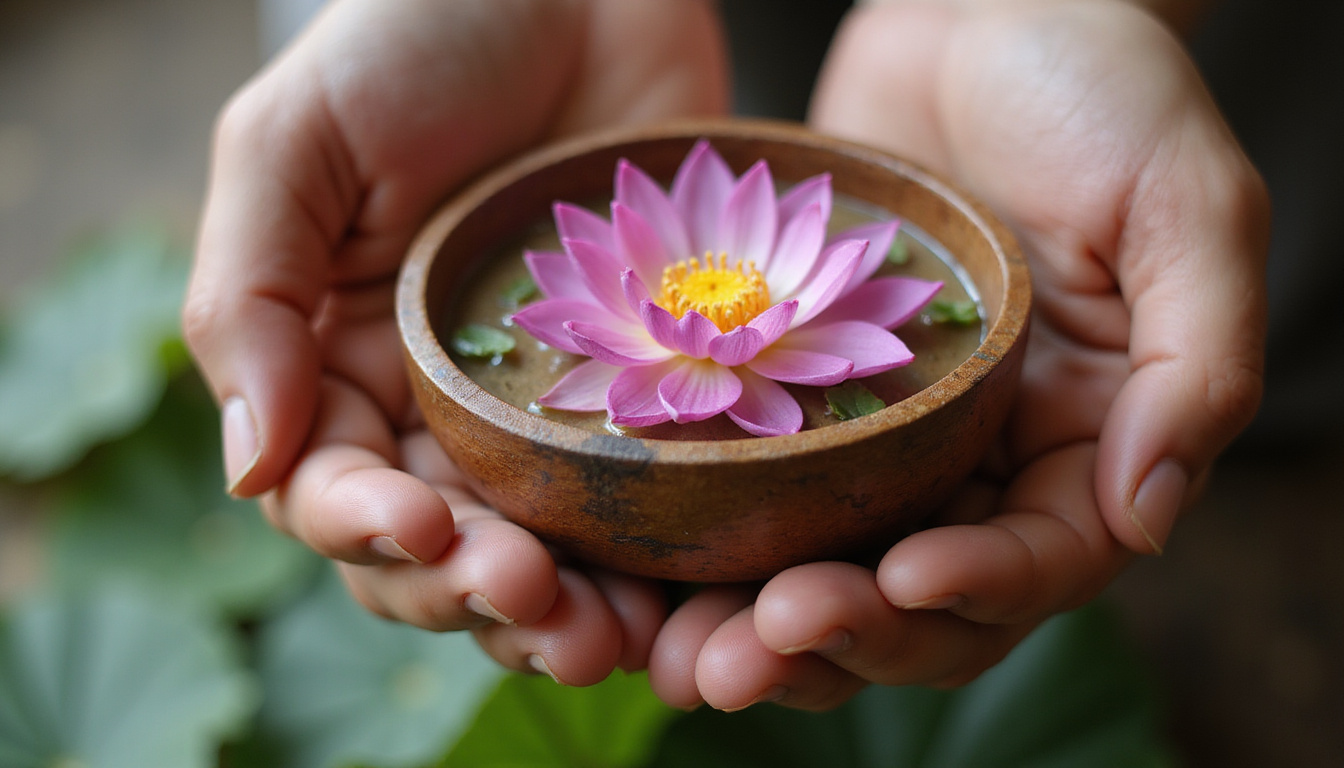
3. Use the Alms Bowl as a Minimalism Tool
You can also use an alms bowl to reset your relationship with physical stuff.
- One-bowl declutter: Choose a room. Everything that doesn’t serve you goes into the bowl first before being donated or thrown away. This slows you down and makes parting more intentional.
- Gratitude bowl: Each week, place one small object or note representing something you’re grateful for into the bowl. At month’s end, empty it and reflect on how much you received.
- Consumption check: Before buying something, ask: “Does this belong in my alms bowl, or am I just filling space?”
Here, the bowl becomes a boundary between meaningful possessions and mindless accumulation.
4. Apply Alms Bowl Limits to Your Time
Your calendar is another kind of alms bowl—finite, with natural edges. To avoid overfilling it:
- Picture your day as a bowl that holds only 3–5 truly important tasks.
- At the start of each day, “fill your bowl” with those priorities. Everything else is optional “extra,” not mandatory.
- If your “bowl” is full, you say no to new commitments unless you consciously remove something.
This mirrors the monastic rule: you don’t keep heaping food once the alms bowl is full.
Emotional Transformation Through the Alms Bowl Lens
The deepest shift this practice can bring is emotional.
Receiving Without Shame
For many, receiving help, money, compliments, or care triggers guilt or embarrassment. The alms bowl reframes receiving as:
- An act of humility, not weakness
- A chance to honor the giver by accepting sincerely
- A recognition of interdependence, not failure
When you imagine yourself holding an alms bowl, it becomes easier to say:
- “Thank you, I really appreciate this.”
- “Yes, I could use your help.”
- “I receive that compliment; it means a lot.”
This makes relationships more balanced and genuine.
Letting Go of Entitlement
In traditional practice, monastics don’t demand special dishes; they accept what’s given. Applied to regular life, this doesn’t mean you never ask for what you need—but it does soften entitlement.
You can still have preferences and goals, but you also cultivate:
- Flexibility when things don’t go your way
- Grace in accepting imperfect outcomes
- Trust that what arrives might be enough, even if it’s not your first choice
Your “inner alms bowl” becomes a space of openness rather than constant evaluation and judgment.
Finding Peace in “Just Enough”
Consumer culture trains you to live in perpetual “not enough”: not enough money, time, success, beauty, followers, or security.
The alms bowl offers a radical counter-practice:
- Define what “enough” food, rest, income, work, and connection looks like for you.
- When your bowl is full for the day, stop.
- Practice contentment with what’s already in your bowl, instead of scanning for more.
Over time, this softens anxiety and comparison, replacing them with quiet sufficiency.
Practical Ways to Start an Alms Bowl Practice Today
You don’t need special training to begin. Here are concrete steps anyone can take:
- Set up your bowl space: Clear a small area on a shelf, desk, or table. Place your chosen bowl there with intention.
- Name your focus: Are you working on receiving support, embracing “enough,” or releasing clutter? Give your practice a theme for the month.
- Link it to an existing habit: Do your bowl ritual right after brushing your teeth, journaling, meditating, or making coffee.
- Track one experiment at a time:
- Week 1: Use the bowl for a daily gratitude note.
- Week 2: Use the bowl as a limit for daily tasks—write each priority on a slip of paper and place them in.
- Week 3: Use the bowl to represent what you’re letting go of—worries, tension, or specific habits.
- Reflect weekly: Once a week, ask: “What has my alms bowl practice shown me about my habits, fears, and needs?”
The key is consistency, not perfection. Let the alms bowl be a gentle teacher, not another self-improvement chore.
Frequently Asked Questions About the Alms Bowl
1. What is the meaning of an alms bowl in Buddhist practice?
In Buddhist traditions, the alms bowl is both a practical eating utensil and a symbol of renunciation, humility, and dependence on generosity. Monastics use the alms bowl to collect food, reinforcing their commitment to a simple life and their reliance on laypeople’s support. It embodies the teaching that we’re interconnected and that spiritual practice is sustained by community.
2. How can I use an alms bowl in my own spiritual practice?
You don’t have to be ordained to use an alms bowl spiritually. You can:
- Keep an alms bowl on your altar as a reminder of openness and “enoughness.”
- Use it in meditation—holding the bowl and reflecting on what you’re ready to receive or release.
- Turn it into a gratitude or “letting go” container, adding notes or small symbols.
The point isn’t the specific ritual, but the attitude: humility, receptivity, and contentment.
3. Can an alms bowl help with decluttering and simplifying life?
Yes. Treat the alms bowl as a limit and filter. For example:
- Let it define how many sentimental items you keep.
- Use it to gather items to donate weekly.
- Use slips of paper in the bowl to represent your most important commitments, so you don’t overfill your “life bowl.”
By giving physical form to your boundaries, the alms bowl makes simplification more concrete and less abstract.
Let the Alms Bowl Transform How You Live
The alms bowl began as a simple vessel for food, but its lessons are timeless: empty before you fill, accept what comes with grace, honor your limits, and remember that you’re held by others.
You don’t need to shave your head or move to a monastery to benefit from this ancient practice. Start today with a single bowl, a quiet moment, and a willingness to see your life as something you can receive—not just something you have to control.
If you’re ready to experience more clarity, contentment, and connection, choose your own alms bowl now and commit to one small daily ritual for the next seven days. Let this simple object become your guide into a life shaped not by constant striving, but by mindful receiving and “just enough.”
Sacred objects often carry deep cultural and spiritual meaning. Learn how these symbols relate to history, spirituality, and the human mind by exploring more articles at SpiritualMindScience.com.