For many Catholics and other Christians, sacramentals are everywhere—holy water fonts at church doors, rosaries in pockets, medals around necks, candles on home altars. Yet few people can clearly explain what they are, how they work, or how to use them well. When understood correctly, sacramentals become powerful, practical tools for opening your life more fully to God’s grace.
This guide reveals what the Church really teaches about sacramentals, clears up common misconceptions, and offers simple, concrete ways to incorporate them into your daily spiritual life.
What Are Sacramentals? A Clear, Simple Definition
Sacramentals are sacred signs instituted by the Church that help us receive and respond to God’s grace. They are not the seven sacraments (like Baptism or the Eucharist), but they point to and prepare us for them.
The Catechism of the Catholic Church describes sacramentals as:
“Sacred signs which bear a resemblance to the sacraments. They signify effects, particularly of a spiritual nature, which are obtained through the intercession of the Church.” (CCC 1667, source)
In simple terms:
- Sacraments: Instituted by Christ, actually confer grace (for example, Confession forgives sins, the Eucharist gives us Christ’s Body and Blood).
- Sacramentals: Instituted by the Church, they dispose us to receive grace and to respond to it more fully.
Sacramentals are like spiritual “antennae”: they don’t create the signal (God’s grace), but they help you pick it up more clearly and respond to it with faith, love, and devotion.
Common Types of Sacramentals You Probably Already Know
Many people are surprised to learn how many sacramentals they already encounter. Here are some of the most common:
- Blessings – of people, meals, homes, cars, rosaries, etc.
- Holy water – blessed water used for making the Sign of the Cross, sprinkling, or protection.
- The Sign of the Cross – a short, powerful sacramental prayer.
- Rosaries and chaplets – physical tools to guide vocal and meditative prayer.
- Medals and scapulars – sacramentals associated with particular devotions (e.g., the Miraculous Medal, Brown Scapular).
- Crucifixes, icons, and statues – sacred images that lift the mind and heart to God.
- Blessed candles – often used in liturgies, processions, and home prayer corners.
- Ashes on Ash Wednesday and palms on Palm Sunday – liturgical sacramentals that mark special seasons.
If you’ve ever crossed yourself with holy water entering a church or had your home blessed by a priest, you’ve already been using sacramentals.
How Do Sacramentals Work Spiritually?
Understanding sacramentals correctly will protect you from superstition and deepen your faith.
1. They Work Through the Church’s Prayer
When a priest or deacon blesses an object or person, the Church is asking God to pour out His grace and protection in a special way. Sacramentals “work” not because of magic, but because of:
- The merits of Christ
- The prayer of the Church
- Your personal faith and disposition
2. They Dispose You to Receive Grace
Sacramentals don’t guarantee certain results; instead, they help prepare your heart to receive what God wants to give. For example:
- Using holy water before Mass can awaken repentance and reverence.
- Wearing a blessed medal can remind you of God’s presence and a particular spiritual truth.
- Praying with a rosary invites meditation on the mysteries of Christ’s life.
3. They Involve Your Body, Not Just Your Mind
We are embodied souls. Sacramentals use tangible things—water, oil, candles, gestures—to engage your senses. This helps unite body and soul in prayer and keeps your faith from becoming merely abstract or intellectual.
Avoiding Superstition: What Sacramentals Are Not
Because sacramentals are physical objects or actions, they can easily be misunderstood. A few important clarifications:
- They are not magic charms. A blessed medal or scapular is not a “lucky object.” Its power lies in God’s grace, not in the metal or fabric itself.
- They do not replace the sacraments. Holy water is beautiful and powerful, but it is not the same as Baptism. A blessed object does not replace Confession or the Eucharist.
- They are not guaranteed protection against all harm. Using sacramentals with faith can invite God’s protection, but the Church has never taught they are automatic shields against suffering.
Right use of sacramentals is rooted in trust in God, not control over Him. They’re meant to deepen your relationship with Christ and the Church, not replace it with rituals divorced from faith.
Practical Ways to Use Sacramentals Every Day
Here are concrete, simple ways to let sacramentals shape your daily life and open you to grace.
1. Begin and End Your Day with the Sign of the Cross
The Sign of the Cross is one of the simplest and most powerful sacramentals:
- On waking: Make the Sign of the Cross and say, “In the name of the Father, and of the Son, and of the Holy Spirit. Amen. Lord, I give this day to You.”
- Before sleep: Repeat the Sign of the Cross, thanking God for specific blessings and asking His protection through the night.
Done with attention and reverence, this tiny act can anchor your day in God’s presence.
2. Keep and Use Holy Water Intentionally
If your parish allows, take home a small bottle of holy water (often available in the church vestibule).
Use holy water to:
- Bless yourself when leaving or returning home.
- Bless your children before bed or before they leave for school.
- Sprinkle your home occasionally while praying for protection and peace.
You might pray something like: “May this home be filled with Your light and peace, Lord. Protect us from all evil and draw us closer to You.”
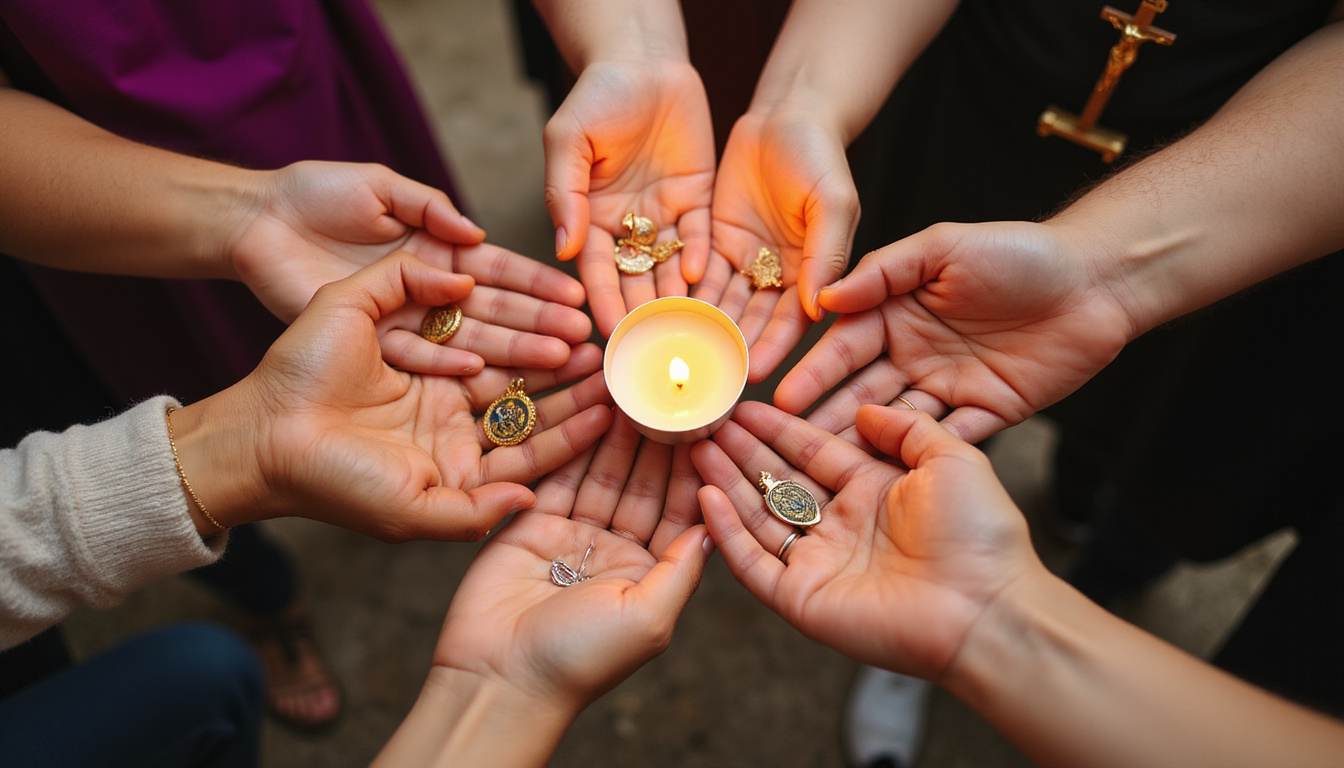
3. Wear a Blessed Sacramental Devotionally
Medals and scapulars are meant to remind, not adorn. Choose one or two sacramentals that truly resonate with your spiritual life, such as:
- A Miraculous Medal (reminding you of Mary’s help and intercession).
- A Brown Scapular (associated with living in a Marian spirit of prayer and penance).
- A Crucifix (reminding you of Christ’s sacrificial love).
Ask a priest to bless it, and wear it with conscious intention: “Lord, may this remind me to love You more faithfully today.”
4. Pray with a Rosary, Not Just Hold It
A rosary is more than a necklace or decoration. Even if you can’t pray the entire Rosary every day, you can:
- Pray one decade on your commute.
- Pray a decade with your family after dinner.
- Reflect on one mystery and let it shape your day (for instance, the Nativity inspiring gratitude, the Crucifixion inspiring sacrifice).
The beads help your hands stay focused while your mind and heart meditate on Christ.
5. Create a Simple Home Prayer Space
Using sacramentals, you can easily set up a small, dignified prayer corner:
Include:
- A crucifix
- A holy image (Jesus, Mary, or a favorite saint)
- A blessed candle (for use during prayer times)
- A Bible and your rosary
This doesn’t need to be elaborate—just a small, consistent space that signals, “This is where I meet God each day.”
6. Have Important Life Moments Blessed
Don’t hesitate to ask your priest or deacon for blessings:
- New home or apartment
- New car
- Wedding anniversary
- Before a dangerous trip or surgery
- New religious items (rosaries, medals, icons)
These blessings are sacramentals that invite God’s protection and grace into the concrete realities of your life.
A Simple List of Sacramentals to Start Using Today
If you’re wondering where to begin, here is a practical starter set:
- The Sign of the Cross – Morning, mealtime, night, and before big tasks.
- Holy Water – At your front door, used daily.
- Rosary – One decade a day to start.
- A Blessed Medal or Scapular – Worn with intention, not habit alone.
- A Crucifix in Your Home – In a visible place as a spiritual focal point.
- Family Meal Blessings – Short, sincere prayers before eating.
- Occasional House Blessing or Room Blessing – With holy water and prayer.
Pick two or three and commit to using them attentively. As they become natural, you can add more.
Sacramentals and Spiritual Warfare
Many people sense that sacramentals are connected to protection from evil—and rightly so, when understood properly.
- Holy water and the Sign of the Cross are traditional ways of rejecting evil and inviting God’s presence.
- Blessed crucifixes and medals are used to remind you of Christ’s victory over sin and death.
- Blessed homes are consecrated places where God’s name is invoked and honored.
However, the real “power” in spiritual warfare comes from:
- Living in a state of grace (regular Confession, Eucharist).
- Daily prayer and Scripture.
- Deep faith, hope, and charity.
Sacramentals support and intensify these realities; they are not substitutes for conversion and holiness.
Teaching Children the Meaning of Sacramentals
Sacramentals are ideal teaching tools for children because they’re physical, simple, and concrete.
You can:
- Let them fill a small bottle of holy water at church and explain how to use it prayerfully.
- Teach them to kiss the crucifix at bedtime as an act of love for Jesus.
- Help them make the Sign of the Cross slowly and properly, explaining what each word means.
- Invite them to light a blessed candle during family prayer time (with adult supervision).
The key is explaining not just what to do, but why: “This helps us remember Jesus and invite Him into our day.”
Frequently Asked Questions About Sacramentals
1. What is the difference between sacraments and sacramentals?
Sacraments were instituted directly by Christ and confer grace by the very fact of being performed (when received properly). Sacramentals are instituted by the Church and do not automatically confer grace; instead, they prepare you to receive and respond to God’s grace more fully through the Church’s prayer and your personal faith.
2. Are sacramentals necessary for salvation?
No, sacramentals are not strictly necessary for salvation, and the Church does not teach that you must use them to be saved. However, they are valuable helps on the journey: they strengthen faith, protect from evil, remind you of God’s presence, and draw you more deeply into the sacramental life of the Church.
3. Can I bless my own sacramentals, or do I need a priest?
You can absolutely pray over objects and ask God’s blessing yourself, especially in your family (for example, blessing your children). But for sacramentals in the proper sense—such as rosaries, medals, scapulars, and holy water—the Church normally asks that an ordained minister (priest or deacon) perform the official blessing according to the approved rites.
Let Sacramentals Open Your Life to Grace
Sacramentals are among the Church’s best-kept “open secrets”: simple, accessible, deeply biblical ways of inviting God into the ordinary fabric of your life. They won’t fix every problem or remove all suffering, but they can:
- Keep your heart anchored in God throughout the day
- Draw you closer to the sacraments
- Strengthen your family’s spiritual life
- Remind you constantly that you live in God’s presence
If you’ve rarely used sacramentals—or have only used them mechanically—this is an ideal moment to begin again with fresh understanding.
Choose one or two sacramentals you’ve discovered here and start using them today with deliberate faith and love. Ask your parish priest to bless your home, your rosary, or a medal. Set up a small prayer corner. Recover the habit of holy water and the Sign of the Cross.
As you do, you’ll find that these humble, physical signs open your eyes to a deeper reality: God is nearer, more involved, and more generous with His grace than you ever imagined.
Sacred objects often carry deep cultural and spiritual meaning. Learn how these symbols relate to history, spirituality, and the human mind by exploring more articles at SpiritualMindScience.com.