Holly Care Guide: Pruning, Feeding, and Year Round Beauty
Holly is one of the most versatile, attractive, and durable plants you can add to your landscape. From glossy evergreen leaves to bright winter berries, holly offers year-round interest with relatively simple care—if you understand its needs. This holly care guide covers pruning, feeding, watering, and general maintenance so you can enjoy lush foliage and vibrant color in every season.
Understanding Holly: Types and Basic Needs
Before you prune or feed, it helps to know what kind of holly you have. “Holly” generally refers to plants in the Ilex genus, but different species behave differently.
Common Types of Holly
- American holly (Ilex opaca) – Classic Christmas holly; large tree form, spiny leaves, red berries.
- English holly (Ilex aquifolium) – Deep green, very glossy leaves; many ornamental cultivars.
- Japanese holly (Ilex crenata) – Small leaves, often used as a boxwood substitute; popular in hedges and topiary.
- Chinese holly (Ilex cornuta) – Distinctive horned leaves, heavy berry production.
- Winterberry (Ilex verticillata) – Deciduous holly; drops leaves but keeps stunning red berries in winter.
Sun, Soil, and Water Basics
Most holly varieties share similar cultural needs:
- Light: Full sun to partial shade. Many form better berries and denser growth in more sun.
- Soil: Slightly acidic (pH 5.0–6.5), well-drained, rich in organic matter.
- Water: Even moisture, especially in the first 2–3 years. Once established, many hollies are somewhat drought tolerant.
- Hardiness: Most common hollies grow in USDA Zones 5–9, depending on the species.
If you’re not sure which holly you have, note leaf size and shape, whether it keeps leaves in winter, and the overall growth habit (tree, shrub, or low hedge). This can help you fine-tune care and pruning strategies.
Planting and Positioning Holly for Long-Term Health
Proper planting sets your holly up for decades of healthy growth.
Choosing the Right Spot
- Look for morning sun, afternoon shade in hotter climates to reduce leaf scorch.
- Avoid waterlogged areas; holly dislikes “wet feet.”
- Shelter from strong winter winds helps reduce desiccation and leaf burn.
Planting Basics
- Dig a wide hole, 2–3 times the width of the root ball, but no deeper.
- Set the plant at or slightly above soil level to prevent water pooling around the trunk.
- Backfill with native soil amended lightly with compost—avoid heavy peat-only mixes that hold too much water.
- Water thoroughly, then apply a 2–3 inch layer of mulch, keeping mulch a few inches away from the stem.
Newly planted holly should be watered regularly for at least the first growing season, and ideally for the first 2–3 years during dry spells.
Pruning Holly: Timing, Techniques, and Goals
Thoughtful pruning keeps holly dense, attractive, and productive. Mis-timed or overly aggressive pruning can reduce berries and stress the plant.
When to Prune Holly
Timing depends on your goal:
- Late winter to early spring (before new growth):
Best for structural pruning, size reduction, and rejuvenation. - Mid-summer (light trim):
Good for shaping hedges, maintaining clean lines, and controlling stray shoots. - After berry season (late winter):
If you enjoy berries through the holidays, delay pruning until they’ve finished their show.
Avoid heavy pruning in late fall; it can stimulate tender growth that may be damaged by winter cold.
How to Prune Safely and Effectively
- Use sharp, clean tools (bypass pruners, loppers, or a small pruning saw).
- Remove dead, damaged, or diseased wood first.
- Cut back to a branch junction or bud, avoiding long stubs.
- For large cuts, angle them slightly so water can run off.
- Step back frequently to assess overall shape.
Pruning for Shape vs. Pruning for Health
-
For shape (hedges and topiaries):
- Trim lightly and often rather than heavily and rarely.
- Maintain hedges slightly narrower at the top than the bottom so lower branches get sunlight.
- Don’t over-shear; a few selective cuts encourage natural, dense growth.
-
For health and rejuvenation:
- Thin crowded interior branches to improve air circulation.
- On neglected shrubs, reduce the height gradually—no more than one-third of the total height per year.
- For older hollies, rejuvenation pruning (cutting some main stems to 6–18 inches from the ground) can restart vigorous growth, but spread this over 2–3 years.
Remember: holly flowers and thus berries often develop on second-year or older wood, so extreme pruning will reduce berries for at least a season.
Feeding Holly: Fertilizers, pH, and Nutrient Needs
Holly is not a heavy feeder, but it does appreciate a balanced, thoughtful fertilizing routine, especially in poor soils or containers.
Soil pH and Holly Health
Holly prefers slightly acidic soil. If the pH drifts too high (too alkaline), you may see:
- Yellowing leaves with green veins (iron chlorosis)
- Poor growth and sparse foliage
You can test your soil pH with a home kit or via your local extension service (many universities offer testing and recommendations; see your regional cooperative extension resources as an authoritative reference, such as the USDA’s extension network (source)).
If your soil is too alkaline:
- Add elemental sulfur as recommended by a soil test.
- Mulch annually with pine needles, pine bark, or oak leaves, which gradually help maintain acidity.
What and When to Feed
- Best time: Early spring, just before new growth starts. In longer growing seasons, a light second application in late spring is sometimes helpful, but avoid late summer feeding in cold climates.
- Fertilizer type:
- A slow-release, balanced fertilizer formulated for acid-loving plants (commonly used for hollies, azaleas, and rhododendrons).
- Organic options like compost, well-rotted manure, or cottonseed meal improve soil over time.
- Avoid high-nitrogen quick-release products that push soft, weak growth.
How to Apply Fertilizer
- Measure your plant’s spread. Many fertilizers recommend a rate per square foot of root zone (often equal to the drip line area).
- Broadcast evenly around the base, starting a few inches from the trunk and extending past the drip line if possible.
- Lightly scratch into the top inch or two of soil.
- Water thoroughly to move nutrients into the root zone.
Leaf color and growth habit will tell you if feeding is adequate. Healthy holly foliage is typically a deep, glossy green on evergreen types.
Watering and Mulching for Year-Round Beauty
Water and mulch are as important as fertilizer in holly care.
Watering Guidelines
- Newly planted holly:
Water deeply 1–2 times per week in the absence of rain during the first growing season. - Established plants:
Water during extended dry spells, especially in summer and in late fall before the ground freezes (helps prevent winter desiccation). - Containers:
Check frequently—holly in pots dries out much faster than in-ground plants.
Aim for deep, infrequent watering rather than frequent shallow sprinkles. Deep soaking encourages roots to grow downward, making plants more resilient.
Mulching for Moisture and Health
Mulch offers several benefits for holly:
- Conserves soil moisture
- Moderates soil temperature
- Suppresses weeds
- Gradually improves organic matter
Use:
- 2–3 inches of organic mulch (shredded bark, leaf mold, pine needles).
- Keep mulch 2–4 inches away from trunks and stems to prevent rot and rodent damage.
Refresh mulch annually as it breaks down.
Encouraging Berries and Winter Color
Those bright red berries are one of holly’s biggest attractions, but they don’t appear by accident.
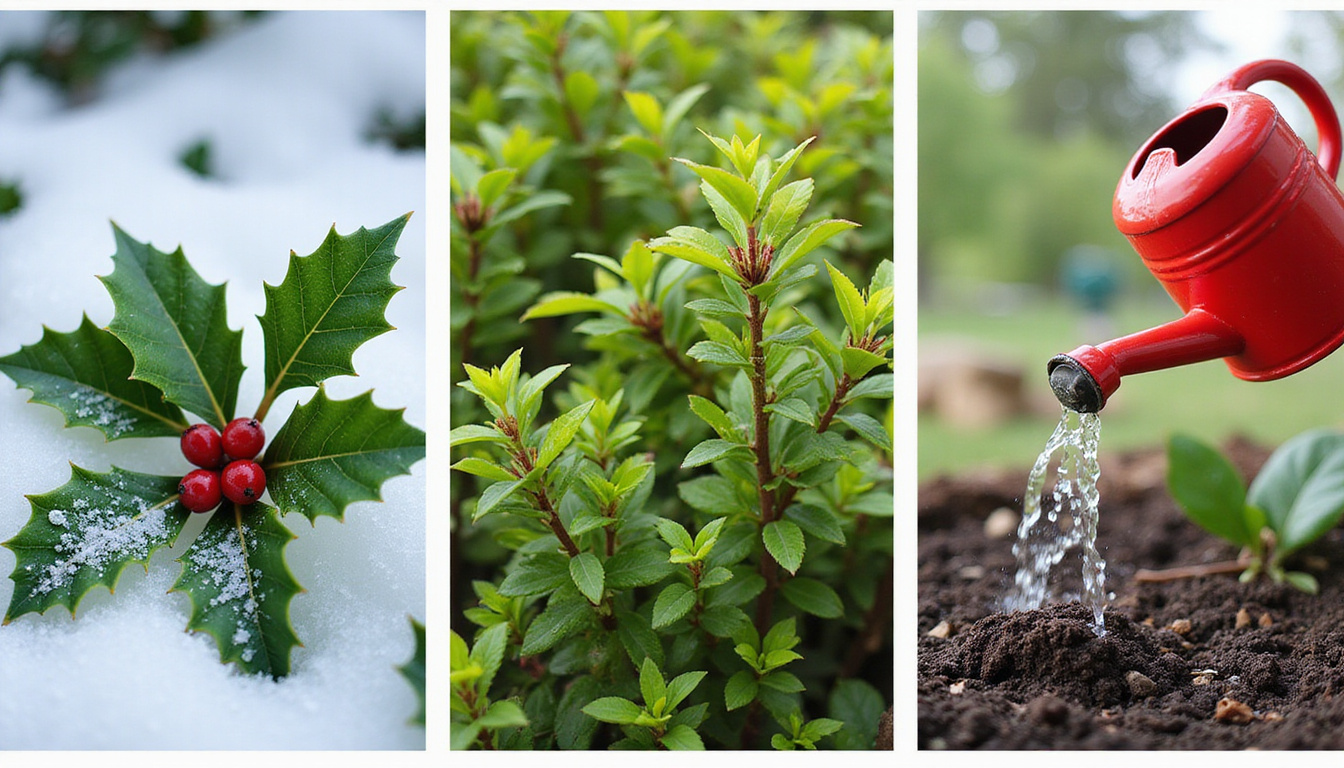
Male and Female Plants
Most hollies are dioecious, meaning individual plants are either male or female:
- Female plants produce berries.
- Male plants provide pollen but do not fruit.
To get berries:
- Plant at least one compatible male within about 30–50 feet of several females.
- Check variety labels; many nurseries list appropriate pollinators.
Some modern cultivars are self-fertile, but many traditional hollies are not.
Factors That Affect Berry Production
- Sunlight: More sun typically equals more flowers and berries.
- Pruning time: Heavy pruning in spring can remove flower buds and reduce berries later that year.
- Stress: Drought, nutrient deficiencies, or root damage can cause poor flowering or premature berry drop.
If you’re not seeing berries, check for flower presence in spring and confirm whether your plant is male or female.
Common Holly Problems and How to Prevent Them
Healthy holly is relatively trouble-free, but a few issues can appear.
Pests
- Scale insects: Small bumps on stems; can cause leaf yellowing. Treat with horticultural oil during dormant season or, for light infestations, prune affected branches.
- Spider mites: Fine webbing, stippled leaves in hot, dry conditions. Reduce by increasing humidity, hosing foliage, or using miticides labeled for hollies if needed.
- Leaf miners (on some species): Tunnels in leaves; prune and destroy affected foliage.
Diseases
- Leaf spot (fungal): Dark spots on leaves, often cosmetic. Improve air circulation, avoid overhead watering, and clean up fallen leaves.
- Root rot (in poorly drained soil): Plants wilt and decline; prevention by proper siting and avoiding overwatering is key.
Environmental Stress
- Winter burn: Brown, dry leaves on wind-exposed sides. Protect with burlap screens, anti-desiccant sprays (where appropriate), and deep watering before ground freeze.
- Nutrient issues: Yellowing leaves, especially on new growth, can indicate iron deficiency from high pH. Adjust pH and use chelated iron if recommended by a soil test.
Regular observation and prompt, measured action usually prevent small issues from turning serious.
Simple Holly Care Checklist
To keep your holly looking its best year-round, focus on these essentials:
- Choose the right location – well-drained, slightly acidic soil, appropriate sun.
- Water deeply in the first 2–3 years, then during droughts.
- Mulch annually with 2–3 inches of organic material.
- Feed in early spring with a slow-release, acid-loving fertilizer as needed.
- Prune in late winter or early spring for structure; touch up in summer for shape.
- Provide a compatible male if you want berries on female plants.
- Monitor for pests and stress, addressing problems early.
FAQ About Holly Care
1. How do I prune a holly bush without losing its berries?
Prune holly bushes in late winter or very early spring, focusing on removing dead or crossing branches and reducing size gradually. Avoid cutting heavily into branches that produced last year’s growth, since flowers (and berries) often form on wood that’s at least one year old. For maximum berries, delay any major cuts until after berry season.
2. What is the best fertilizer for holly trees?
The best fertilizer for holly trees is a slow-release, balanced formula for acid-loving plants, often labeled for hollies, azaleas, or rhododendrons. Apply in early spring, based on the size of the tree’s root zone and soil test results. In many landscapes, a combination of this fertilizer and an annual layer of compost or organic mulch is sufficient.
3. Why is my holly turning yellow and dropping leaves?
Yellowing leaves and drop in holly plants often point to stress: overly wet or poorly drained soil, drought, root disturbance, or nutrient imbalance (especially high soil pH causing iron deficiency). Check drainage, adjust watering, test soil pH, and avoid piling mulch against the trunk. Evergreen hollies also naturally shed some older interior leaves in spring, which is normal.
A healthy, well-sited holly will reward you with glossy foliage, structured form, and glowing winter berries for decades. By giving attention to planting, careful pruning, appropriate feeding, and consistent watering and mulching, you can transform holly from a background shrub into a four-season focal point in your garden.
If you’re ready to add or improve holly in your landscape, start by evaluating your site, testing your soil, and choosing cultivars that match your climate and design goals. Then put this holly care guide into action—your garden will gain depth, color, and year-round beauty, and you’ll enjoy an enduring, low-maintenance centerpiece for many seasons to come.
Throughout history, many plants and herbs have been associated with luck, protection, and prosperity. To explore their deeper spiritual, psychological, and scientific significance, visit SpiritualMindScience.com.