The endless knot is one of those symbols you’ve probably seen many times—on jewelry, tattoos, Buddhist art, or decorative textiles—without fully knowing what it means. At first glance it’s a simple, woven pattern with no beginning and no end. Look closer, though, and the endless knot opens into a rich world of symbolism: wisdom and compassion, karma and rebirth, eternal love, interconnectedness, and more.
This guide unpacks the surprising symbolism, meaning, and cultural uses of the endless knot, and offers practical ideas for using it respectfully in your own life.
What Is the Endless Knot?
The endless knot is a geometric design made of a single, continuous line that twists and overlaps to form a closed, interlaced pattern. There is no starting point and no finishing point. This seemingly simple feature—an unbroken line—is the heart of its symbolism.
You’ll commonly see the endless knot:
- In Tibetan Buddhism as one of the Eight Auspicious Symbols
- On Tibetan prayer flags, thangkas (sacred paintings), and ritual objects
- In Buddhist, Hindu, Jain, and some East Asian decorative arts
- In modern contexts like jewelry, tattoos, logos, and wedding décor
Its core message: everything is connected, and nothing truly ends.
Origins and History of the Endless Knot
The exact origin of the endless knot is difficult to pinpoint, but historians trace related knot patterns back thousands of years across Eurasia.
Early Visual Relatives
- Celtic knots in Europe share the interlaced, unbroken-line style, though the meanings and cultural contexts differ.
- Chinese knots (traditional decorative knotting) also play with continuous cord patterns and auspicious symbolism.
- Ancient architectural patterns in Greek and Roman mosaics used endless, interwoven designs for protection and decoration.
While similar motifs appear in many cultures, the endless knot as a sacred symbol is most closely associated with the Indian subcontinent and Tibet, especially within Buddhist and Hindu traditions.
Adoption in Tibetan Buddhism
In Tibetan Buddhism, the endless knot (Sanskrit: śrīvatsa in some contexts, Tibetan: dpal be’u) is one of the Eight Auspicious Symbols (Ashtamangala), along with the conch shell, lotus, parasol, and others (source: Buddhistdoor). These symbols are used to represent different aspects of the Buddha’s teachings and the Buddhist path.
Over time, the endless knot became a staple of Tibetan art:
- Decorating monastery walls and altars
- Woven into textiles and rugs
- Carved on ritual instruments and household items
- Printed on prayer flags, books, and amulets
Through Tibetan cultural influence, it spread into Mongolian, Bhutanese, and Himalayan artistic traditions as well.
Core Symbolism: What the Endless Knot Really Means
The beauty of the endless knot is that it carries multiple layers of meaning all at once. Here are the most important interpretations.
1. Interconnectedness of All Things
Each line of the knot loops back into itself, crossing and recrossing in a complex pattern. This visually represents the interdependence of all phenomena:
- Nothing exists in isolation
- Our actions affect others and our environment
- Our lives are woven into a larger fabric of relationships
In Buddhist philosophy, this relates to dependent origination—the idea that everything arises in dependence on conditions and causes.
2. Continuity and Eternity
Because the knot has no beginning or end, it’s a visual metaphor for:
- The infinite nature of time
- The continuity of life, death, and rebirth (samsara)
- The eternal truth of spiritual teachings
In many cultures today, this aspect makes the endless knot a popular symbol of eternal love, loyalty, and enduring connection.
3. Karma and Cause-and-Effect
The overlapping and interweaving lines evoke the tangled yet orderly pattern of karma—the law of cause and effect:
- Actions (good or bad) create ripples
- Those ripples interact and come back to us in unexpected ways
- Life events are interconnected, not random
The endless knot reminds practitioners to act with awareness and compassion, knowing everything is linked.
4. Union of Wisdom and Compassion
In Tibetan Buddhist interpretation, the endless knot also symbolizes the union of:
- Wisdom (insight into reality)
- Compassion (altruistic care for all beings)
Just as the knot’s lines are inseparable, authentic spiritual practice fuses understanding with kindness. Knowledge without compassion can become cold; compassion without wisdom can become blind. The endless knot visually unites the two.
5. Harmony and Balance
The balanced, symmetrical structure of the knot represents:
- Harmony between spiritual and material life
- Integration of body, speech, and mind
- Balance between yin and yang type dualities (though that language is more Chinese than Tibetan)
It’s a reminder to seek equilibrium, not extremes.
Cultural Uses of the Endless Knot
The endless knot appears in different ways depending on time, place, and tradition.
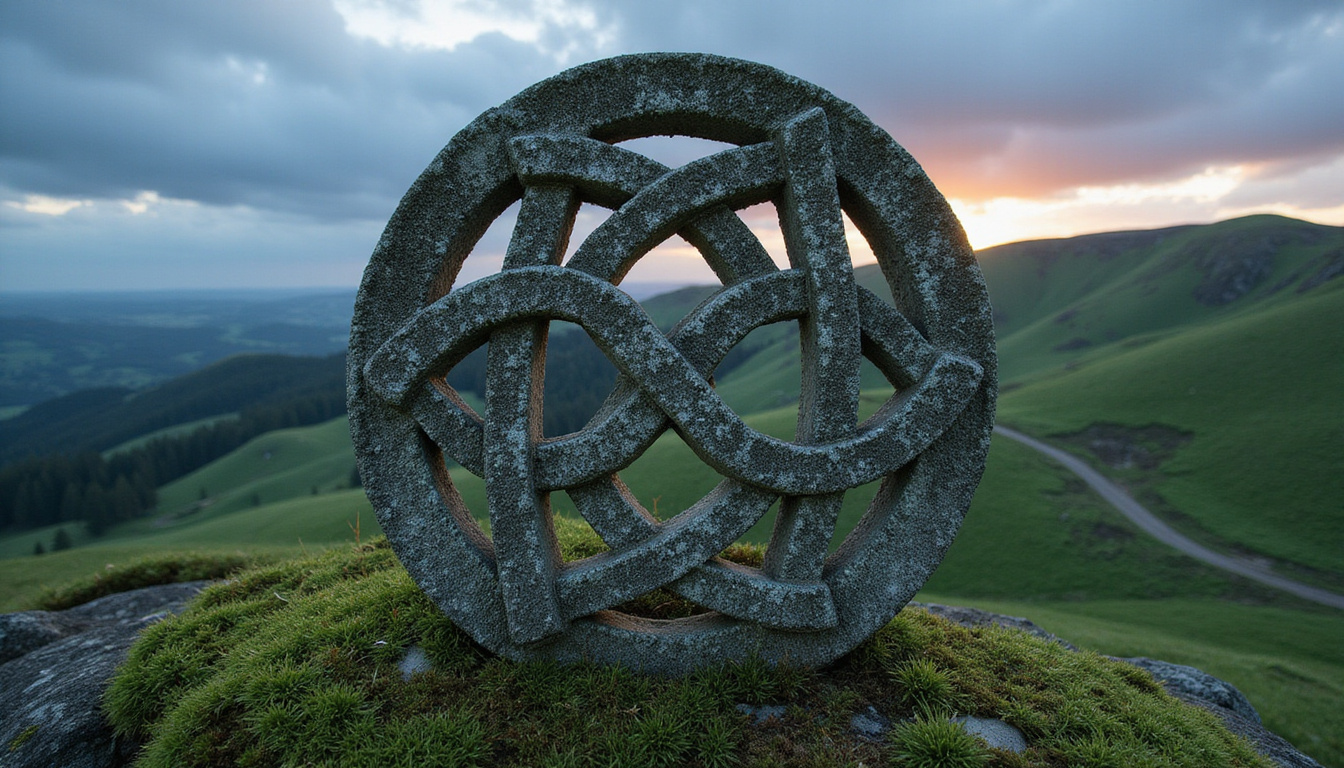
Endless Knot in Tibetan and Himalayan Cultures
In Tibet, Bhutan, and the Himalayan region, the endless knot is woven deeply into daily and spiritual life:
- Monasteries and temples: Carved on pillars, painted on walls, integrated into murals
- Offerings and rituals: Used to decorate butter sculptures, tormas (ritual cakes), or altar cloths
- Everyday objects: Printed on clothing, jewelry, carpets, door frames, and household décor
- New Year and celebrations: Appears in greeting cards, ceremonial scarves (khatas), and gift packaging as a blessing of good fortune and long life
For many Tibetans, it functions almost like a protective and auspicious emblem, keeping blessings “looped” continually.
Endless Knot in Hindu and Jain Traditions
In Hinduism, the endless knot (or closely related motifs) can symbolize:
- The eternal nature of Brahman (ultimate reality)
- The continuity of life and cosmic order
- Auspiciousness and prosperity
In Jainism, the śrīvatsa mark—sometimes represented as a knot-like emblem—is associated with the chest mark of certain Tirthankaras (spiritual teachers) and denotes spiritual excellence.
Endless Knot in Chinese, Korean, and Japanese Contexts
While not always named exactly the same way, similar knot motifs appear in East Asian cultures:
- China: Decorative knots (中国结) made from a single cord represent luck, longevity, and unity. Some patterns are visually very close to the endless knot and used in New Year décor, weddings, and gift wrapping.
- Korea and Japan: Interlaced knotwork in traditional crafts and clothing often represents long life, enduring relationships, and good fortune.
In modern East Asian-influenced design, the endless knot is frequently adopted as a pan-Asian symbol of good luck and connectedness.
Modern Global Uses
Today, the endless knot has traveled far beyond its original cultural homes:
- Jewelry and fashion: Pendants, rings, bracelets, scarf patterns, and textile prints
- Tattoos: Chosen to signify eternal love, spiritual journeys, or personal resilience
- Logos and branding: Used by wellness centers, yoga studios, ethical companies, or nonprofits to evoke interconnection and continuity
- Wedding and relationship symbolism: Integrated into invitations, vows, or ceremony décor as a metaphor for an unbreakable bond
As it spreads globally, many people resonate with its universal messages—interdependence, eternity, and harmony—whether or not they identify with a particular religion.
How to Use the Endless Knot Respectfully
Because the endless knot has deep religious significance, it’s important to incorporate it in ways that show understanding and respect.
Here are some thoughtful guidelines:
-
Learn its background first
Understand its Buddhist and South Asian roots. Knowing that it’s one of the Eight Auspicious Symbols adds depth to how you use it. -
Avoid trivial, disrespectful placements
Refrain from placing the endless knot on items or in contexts that could be seen as dirty, degrading, or mocking (e.g., bathroom mats, joke merchandise). -
Credit the culture when appropriate
If you use it in design, explain its Tibetan Buddhist or broader South Asian origins in accompanying text or branding copy. -
Align it with matching values
Because the endless knot embodies compassion, wisdom, and interdependence, try to use it in ways that genuinely reflect those values—sustainable products, fair-trade practices, community-focused projects, etc. -
Support source communities
When possible, buy endless knot items (jewelry, art, textiles) from Tibetan, Himalayan, or South Asian artisans, helping preserve authentic craftsmanship and provide fair income.
Endless Knot in Personal Practice and Everyday Life
You don’t need to be a Buddhist or scholar to find personal meaning in the endless knot. Some ways people integrate it into daily life include:
- Mindfulness reminder: Hanging an endless knot image near your workspace or meditation area as a visual cue that your actions affect others—and that every moment is part of a larger pattern.
- Relationship symbol: Using endless knot jewelry as a couple’s token to represent an enduring, evolving connection.
- Personal growth: Viewing your own life path—the twists, setbacks, and unexpected turns—as part of a continuous, meaningful “knot” of experience.
- Grief and remembrance: For some, the endless knot helps frame loss as a transformation in an ongoing web of connection, rather than a total end.
You might reflect with questions like:
- How are my choices today woven into others’ lives?
- Where do I see “endless knots” of habit—helpful or harmful—in my behavior?
- How can I bring more wisdom and compassion into my own network of relationships?
Quick Means at a Glance
To summarize, here’s a simple list of the main themes associated with the endless knot:
- Interconnectedness and interdependence
- Eternity, continuity, and the cycle of rebirth
- Karma and the law of cause and effect
- Union of wisdom and compassion
- Harmony and balance
- Auspiciousness, blessing, and prosperity
- Eternal love and lasting relationships (modern use)
FAQ About the Endless Knot
What does the endless knot symbolize in Buddhism?
In Buddhism, the endless knot symbol represents the interdependence of all things, the continuous cycle of birth and rebirth, and the inseparable union of wisdom and compassion. As one of the Eight Auspicious Symbols, it signifies the harmony and completeness of the Buddha’s teachings.
Is the endless knot a symbol of love?
Yes. While originally spiritual, the endless knot for love has become very popular in modern times. Its infinite, unbroken line makes it a powerful emblem of eternal love, loyalty, and long-term commitment, often used in wedding jewelry, couple tattoos, and anniversary gifts.
Is it okay to wear an endless knot if I’m not Buddhist?
Generally yes, as long as you do so respectfully. Many people worldwide wear endless knot jewelry or display the symbol because they value its messages of connection, balance, and continuity. It’s considerate to understand its Buddhist and South Asian roots, avoid trivializing it, and, when possible, support artisans from the cultures it comes from.
Weaving the Endless Knot Into Your Own Story
The endless knot is more than a pretty geometric pattern—it’s a visual philosophy. In its looping lines you can find a reminder that your life is connected to countless others, that your choices matter, and that wisdom and compassion are strongest when they’re woven together.
If the endless knot speaks to you, don’t leave it as an abstract idea. Bring it into your world in a conscious way:
- Choose a meaningful piece of endless knot art or jewelry to act as a daily reminder of connection and purpose.
- Incorporate the symbol into ceremonies, spaces, or projects that aim to foster harmony and long-term commitment.
- Use it as a personal prompt to act with more awareness, kindness, and responsibility in your relationships and decisions.
Let the endless knot inspire you to see—and strengthen—the invisible threads that bind you to others. In doing so, you’re not just wearing a symbol; you’re helping to weave a more compassionate, interconnected world.
Explore the Science Behind Spirituality
This guide explored the meaning and history of good luck symbols. To discover the psychology, consciousness, and scientific perspectives behind spiritual beliefs, visit SpiritualMindScience.com.