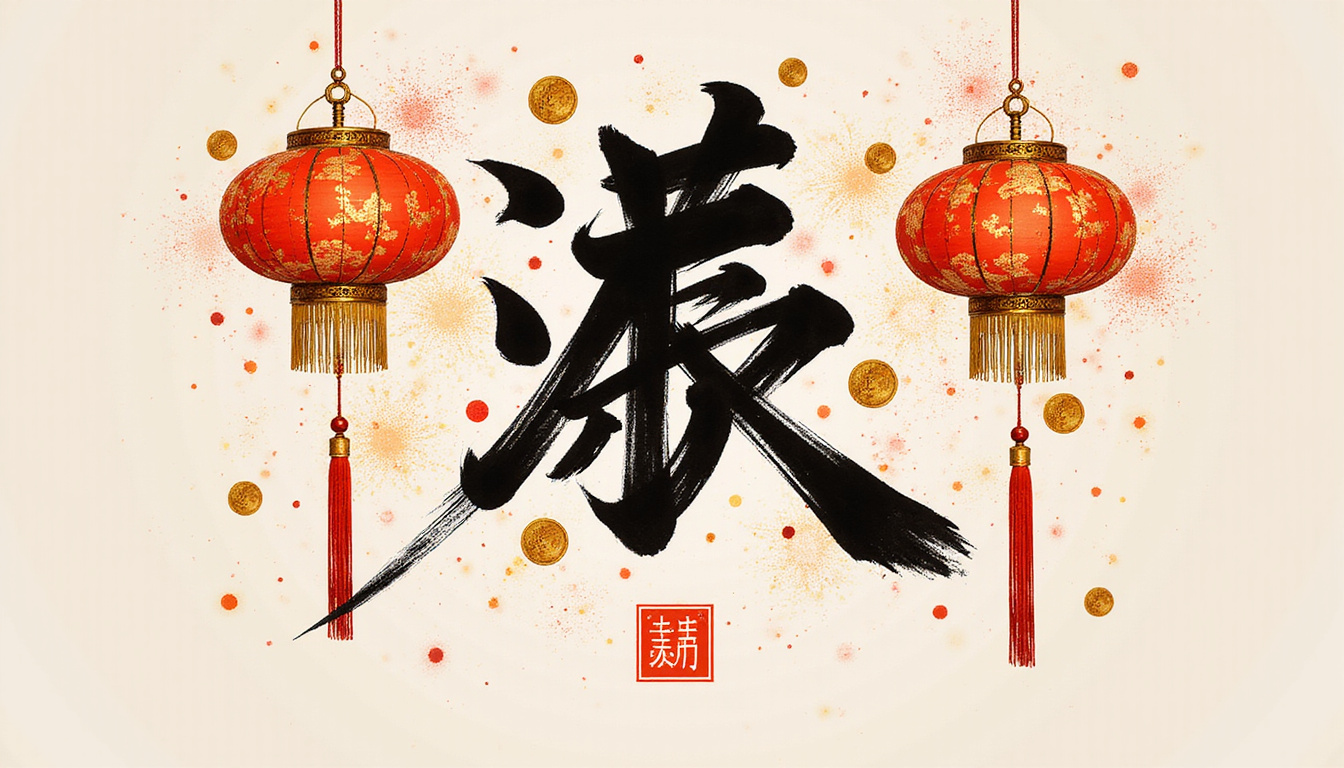
The Fu character (福) is one of the most recognizable symbols of good fortune in Chinese culture. You’ll see it on doors, red envelopes, Spring Festival couplets, and New Year decorations – often turned upside down. But few people outside Chinese-speaking communities really understand its deeper meaning, why it’s written the way it is, or how to use it thoughtfully to attract luck, prosperity, and protection in daily life.
This guide walks you through the origins, symbolism, and practical uses of the Fu character so you can invite more auspicious energy into your home or workspace in an authentic way.
What does the Fu character really mean?
At first glance, 福 is simply translated as “good fortune,” but its meaning is richer and more layered.
A breakdown of the character 福
The Fu character is made of two key parts:
- 礻 (the “spirit” or “altar” radical, a variant of 示)
- 畐 (indicating abundance and fullness)
Together, they convey the idea of “blessings granted by heaven,” combining spiritual support (示) with material completeness (畐). In traditional culture, this encompasses:
- Good luck and favorable circumstances
- Prosperity and material wealth
- Health and longevity
- A harmonious, thriving family
So when you display 福, you’re not just asking for random luck; you’re signaling a wish for holistic well-being and a life that feels full, safe, and prosperous.
Why is the Fu character upside down?
If you’ve walked through a Chinese neighborhood during Lunar New Year, you’ve likely noticed the Fu character pasted upside down on doors or walls. This isn’t a mistake; it’s intentional and deeply symbolic.
The wordplay: “Fu has arrived”
In Chinese, “upside down” (倒, dào) is a homophone for “arrive” (到, dào). So:
- 福倒了 (Fú dào le, “Fu is upside down”)
- Sounds like 福到了 (Fú dào le, “Fu has arrived”)
Turning the Fu character upside down creates a playful pun: by pasting it inverted, you’re symbolically saying “good fortune is arriving into this home.”
When should Fu be upside down – and when not?
It’s not always correct to turn the Fu character upside down. Traditionally:
Upside down Fu (福倒) is suitable for:
- Front doors and entrance gates
- Doors to living rooms or main family spaces
- New Year or celebratory decorations, where “arrival” is the core message
Right-side-up Fu (福正) is better for:
- Ancestral altars or shrines
- Calligraphy artworks on walls
- Gifts to elders or formal occasions
In more formal or spiritual contexts, keeping the Fu character upright shows respect and stability rather than playful wordplay.
Historical origins and cultural significance
The Fu character is deeply embedded in Chinese history and rituals, especially around the Spring Festival (Lunar New Year).
From royal courts to every household
- Ancient times: The character 福 appears in early Chinese texts as a wish for divine favor and agricultural abundance.
- Imperial era: Emperors would distribute calligraphed Fu characters to court officials and sometimes to the public as a royal blessing.
- Folk culture: Over time, ordinary households adopted the practice of writing or buying Fu paper prints to invite blessings at the start of the year.
A famous story from the Ming dynasty tells of the Empress ordering eunuchs to paste Fu characters across the palace for New Year. One servant mistakenly put a Fu upside down on a door. The emperor was initially angered, but someone quickly explained that “Fu is upside down” sounds like “Fu has arrived,” turning the error into an auspicious sign. The emperor liked the wordplay, and the custom took root and spread widely.
Fu at the heart of Spring Festival traditions
During Lunar New Year, displaying the Fu character is as essential as:
- Setting off fireworks
- Eating dumplings or rice cakes
- Posting red couplets on doorways
According to traditional belief, the Fu character:
- Wards off bad luck from the previous year
- Welcomes blessings from deities and ancestors
- Sets the intention for prosperity in the year ahead
The simple act of putting up this symbol becomes a yearly ritual of renewal and positive expectation.
How to use the Fu character to attract luck at home
To make the most of the Fu character’s auspicious energy, pay attention to placement, timing, and intention.
1. Ideal locations for Fu in your home
Here are some commonly recommended spots:
-
Front door or entrance gate
- Purpose: Invite good fortune into the household.
- Tip: Often placed upside down during New Year to signify “Fu has arrived.”
-
Living room or family room
- Purpose: Bring harmony, joy, and prosperity to shared family spaces.
- Tip: A framed Fu calligraphy on the main wall works well.
-
Kitchen or dining area
- Purpose: Symbolize abundance of food and resources.
- Tip: Smaller, tastefully placed Fu decals or art are better than oversized ones here.
-
Home office or study
- Purpose: Encourage career success and stable finances.
- Tip: Combine Fu with other symbols like wealth ships or mountain imagery for balance.
-
Wealth corners (e.g., following Feng Shui)
- Purpose: Amplify financial luck.
- Tip: In Feng Shui, this is often the far-left corner from the entrance of a room, but different systems vary.
2. Best times to display the Fu character
While you can display Fu year-round, certain times are especially powerful:
- Lunar New Year (Spring Festival): The classic time to paste paper Fu on red backing.
- New home move-in: To bless the new environment and clear old energy.
- Business openings or shop launches: To invite customers and prosperity.
- Weddings or pregnancy celebrations: To express wishes for a blessed new chapter.
If you follow the lunar calendar closely, many households will select an auspicious day – based on traditional almanacs or a feng shui practitioner – to post the Fu character for maximum effect.
Common styles and variations of the Fu character
The Fu character isn’t always written in the same way. Its style and the images surrounding it can subtly shift the blessing’s focus.
Calligraphy styles
- Regular script (楷书): Clear, formal, and easy to read. Suitable for gifts and framed art.
- Running script (行书): Slightly cursive, with more movement and flow. Often used by calligraphy enthusiasts.
- Grass script (草书): Very cursive and abstract; usually for artistic displays rather than everyday decoration.
- Seal script (篆书): Ancient, pictographic style; often seen on seals and sophisticated works.
Popular motifs combined with Fu
You’ll often see the Fu character surrounded by or combined with other symbols:
- Bats (蝠, fú): Another pun – “bat” and “Fu” sound the same, making bats a symbol of good fortune.
- Peaches: Represent longevity and immortality.
- Fish (鱼, yú): Sound like “surplus,” symbolizing continual abundance.
- Children or family scenes: Emphasize blessings for descendants and family happiness.
- Gold ingots, coins, or treasure chests: Highlight financial prosperity.
Choosing a design that aligns with your personal goals (wealth, health, family, career) helps focus the intention of your Fu display.
How to respectfully incorporate the Fu character in modern life
If you’re not from a Chinese cultural background, you can still use the Fu character in a way that’s both appreciative and respectful.
Do’s and don’ts for using Fu
Do:
- Learn the basic meaning and traditions attached to the symbol.
- Place it in clean, tidy areas to show respect and invite positive energy.
- Use quality materials (good paper, tasteful prints, or properly framed art).
- Consider consulting friends, elders, or cultural resources if you’re unsure.
Don’t:
- Use the Fu character on shoes, doormats, or anything you’ll step on.
- Put it in bathrooms or locations considered unclean.
- Distort or “joke” with the character in ways that might be offensive.
- Commercialize it in a context that mocks or trivializes the culture.
Approached thoughtfully, integrating the Fu symbol into your décor or branding can be a meaningful gesture of cultural appreciation and a way to engage with traditional ideas about luck and blessing.
DIY: Write your own Fu character for stronger intention
If you want to go deeper than buying a pre-printed decoration, try writing the Fu character yourself. The process can act as a mindfulness ritual and intention-setting exercise.
Simple steps to write your own Fu
-
Prepare your materials
- Red paper or a red card (red symbolizes joy and protection).
- Black ink or marker (traditional is ink and brush, but pen is fine).
- A clean, quiet space.
-
Center your mind
- Think about what “good fortune” means to you: health, creativity, stability, loving relationships.
- Hold that intention as you write.
-
Write 福 slowly and deliberately
- Focus on each stroke as a conscious act.
- Don’t worry about perfect calligraphy; sincerity matters more.
-
Decide orientation
- For an entrance or New Year decoration, you might turn it upside down to welcome “arrival.”
- For a framed piece of art or altar, keep it upright.
-
Place it with care
- Clean the area first.
- Put it at a comfortable eye level and ensure it’s firmly attached or properly framed.
This process blends cultural tradition with personal reflection, making the Fu character more than just décor – it becomes a symbolic anchor for your goals and gratitude.
Fu character in global and digital culture
Beyond traditional uses, the Fu character has found its way into global design, fashion, and even digital communication.
- Home décor and interior design: Minimalist or modern Fu prints appear in living rooms, cafés, and coworking spaces, often integrated with contemporary art styles.
- Fashion: Clothing, jewelry, and accessories sometimes feature stylized versions of 福, especially around Lunar New Year.
- Digital stickers and emojis: Messaging apps in East Asia include Fu-themed stickers for greeting friends and family during holidays.
When used thoughtfully, these modern adaptations keep the symbol alive and evolving, while still connected to its roots in blessing and positive intention.
For those wanting to explore more about Chinese New Year symbols and customs, institutions like the British Museum offer accessible resources that discuss objects associated with luck and prosperity (source: The British Museum).
FAQ about the Fu character and Chinese good luck symbols
Q1: What is the meaning of the Chinese Fu symbol for good luck?
The Fu symbol (福) mainly represents good fortune, blessings, and a full, prosperous life. It includes ideas of wealth, health, happiness, and family harmony, rather than just random luck.
Q2: Why do people hang the Chinese character Fu on doors at New Year?
People paste the character Fu on doors at Lunar New Year to invite blessings into the household and to symbolically “seal in” good luck for the coming year. When placed upside down, it creates the pun that “good fortune has arrived.”
Q3: How can I use the Chinese character Fu for luck in my home?
Place a Fu character at your front door, in your living room, or in your workspace. Keep the area clean, choose a design that resonates with your goals (wealth, health, family), and decide whether to display it upright or upside down based on tradition and context.
Bring the Fu character into your life with intention
The Fu character is more than a decorative symbol: it’s a centuries-old expression of humanity’s wish for a good, meaningful life. By understanding its origins, respecting its traditions, and placing it thoughtfully in your space, you’re not just copying a custom – you’re consciously inviting in a mindset of blessing, gratitude, and possibility.
If you feel drawn to this symbol, start small: choose a Fu design you genuinely like, or write your own and place it somewhere meaningful. Let it serve as a daily reminder that luck isn’t only about chance; it’s also about the intentions you set, the environment you create, and the values you live by.
Explore the Science Behind Spirituality
This guide explored the meaning and history of good luck symbols. To discover the psychology, consciousness, and scientific perspectives behind spiritual beliefs, visit SpiritualMindScience.com.