Selecting a processional cross is a meaningful decision for any church, chapel, or Christian school. It’s more than a liturgical accessory; it’s a visible proclamation of faith that leads the community in worship, processions, and special celebrations. Whether you’re replacing an aging cross, purchasing your first one, or upgrading to a more dignified design, this guide will walk you through key considerations for choosing, caring for, and using a processional cross in worship.
What Is a Processional Cross and Why It Matters
A processional cross is a cross or crucifix mounted on a staff or pole and carried at the front of liturgical processions. It is:
- A symbol of Christ’s presence leading the congregation.
- A focal point for reverence as the assembly stands, bows, or makes the sign of the cross.
- A unifying visual for the entire worship space, tying together altar, sanctuary, and nave.
Across many Christian traditions—Roman Catholic, Anglican, Lutheran, Orthodox, and others—the processional cross plays a central role at the start and conclusion of Mass or services, during feast days, funerals, confirmations, and outdoor processions (source: USCCB).
Understanding its spiritual and liturgical significance will help you select a cross that truly fits your community’s worship life.
Key Factors When Choosing a Processional Cross
Before you browse catalogs or visit a church supply store, clarify how the processional cross will be used and who will carry it. Then evaluate these core factors.
1. Denominational Tradition and Style
Different Christian traditions emphasize different visual elements in their processional crosses:
- Roman Catholic & Anglo-Catholic: Often prefer a crucifix (with corpus), sometimes with ornate detailing, INRI scroll, or budded extremities.
- Mainline Protestant (Anglican, Lutheran, Methodist, Reformed): May choose a plain cross, a Christus Rex figure, or a more simplified crucifix.
- Orthodox: Typically use very distinctive cross forms, sometimes double- or triple-bar crosses with rich iconographic detail.
- Non-denominational / Evangelical: Frequently prefer simple, unadorned crosses that emphasize resurrection and simplicity.
Match the visual style of the processional cross to your tradition’s theology, existing sanctuary art, and congregational expectations.
2. Materials: Wood, Brass, Bronze, and More
The material affects the cross’s appearance, weight, durability, and maintenance needs.
Common options include:
-
Solid brass
- Classic warm gold tone
- Durable and long-lasting
- Requires regular polishing to prevent tarnish (unless lacquered)
-
Bronze
- Rich, dignified color
- Very durable
- Can be polished bright or left to develop a patina
-
Gold- or silver-plated over brass
- Striking visual impact
- More expensive
- Must be handled gently to preserve the plating
-
Wood (oak, maple, walnut, etc.)
- Warm, organic look
- Lighter weight for younger acolytes
- May be combined with metal fittings or corpus
-
Alloy or aluminum
- Lightweight
- More affordable
- Modern appearance; may lack the richness of brass/bronze
Aim for a material that complements your altar furnishings—candlesticks, tabernacle, sanctuary lamps—so your processional cross feels like part of a cohesive set.
3. Height, Weight, and Carry Comfort
A beautiful processional cross that’s too heavy or awkward quickly becomes a burden to the crucifer (the person who carries it).
Consider:
-
Height
- Commonly 6–8 feet (about 1.8–2.4 m) total.
- Taller crosses have strong visual impact in large spaces, but might be difficult to maneuver through low doorways or narrow aisles.
-
Weight
- Test the assembled cross and staff when possible.
- Youth and older servers benefit from lighter designs or hollow staffs.
- Heavier solid-brass or bronze crosses may be best for parishes with strong adult crucifers.
-
Balance and grip
- Look for a comfortable hand grip on the staff (sometimes a turned or knurled section).
- A well-balanced processional cross will not feel top-heavy.
If you have a regular team of acolytes, get their input or arrange a trial to see how the cross feels in actual use.
4. Design Details and Symbolism
Beyond the basic shape, the design of the processional cross communicates theological meaning:
- Plain vs. crucifix (cross with corpus)
- Cross form: Latin cross, Greek cross, budded/cross fleury, Celtic cross, Orthodox multi-bar cross
- Corpus style: Traditional, stylized, Christus Rex, or resurrected Christ
- Engravings or symbols: IHS, Chi-Rho, Alpha and Omega, doves, vines, or patron-saint imagery
- Finish: High-polish/mirror, satin, antiqued, or patinated
Choose a design that resonates with your worship style. Highly ornate designs suit traditional, formal liturgies, while clean lines and minimal decoration align with contemporary worship spaces.
5. Construction Quality and Durability
For something used weekly (or more), construction quality matters greatly:
- Secure fittings where the cross attaches to the staff
- Sturdy joints that won’t wobble after repeated use
- A solid base (if used as an altar or sanctuary cross between processions)
- Corrosion-resistant finishes, especially if used outdoors or in humid climates
Request information on warranties, repair options, and replacement parts. A quality processional cross is a decades-long investment.
6. Budget and Value
Prices range widely, from modest to very high-end liturgical art. When budgeting, factor in:
- Cross head and staff
- Optional base for standing display
- Protective storage case or rack
- Engraving or customization
Instead of only asking “What is the cheapest option?”, ask, “What offers the best long-term value for our liturgical needs and parish resources?” In some communities, parishioners may contribute specifically toward a dignified processional cross as a memorial or thanksgiving gift.
Matching Your Processional Cross to Your Worship Space
A processional cross should look at home in your church, not like it belongs to a different building.
Ask:
- What finishes and materials are already in use?
- Brass candlesticks, a bronze tabernacle, or a natural-wood altar?
- How tall is the ceiling and nave?
- A small cross can disappear visually in a large, vaulted church; a very tall cross can overwhelm a small chapel.
- What is the overall aesthetic?
- Gothic, traditional, baroque, mid-century modern, contemporary minimal?
When possible, view sample photos of the processional cross in a context similar to your own worship space, or use simple mockups (even on paper) to visualize scale and proportion.
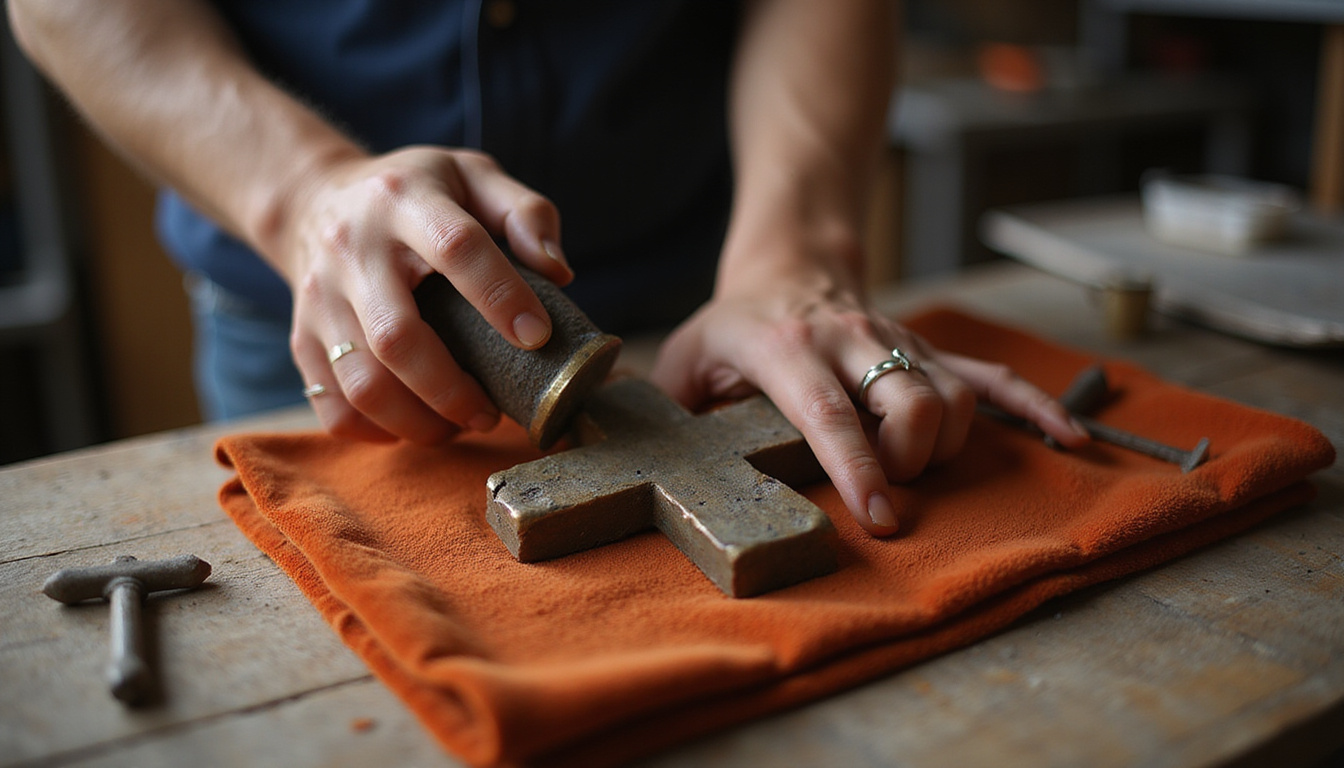
Caring for Your Processional Cross: Maintenance Essentials
Proper care will preserve both the beauty and reverence of your processional cross for years to come. Establish a clear, simple maintenance routine.
1. Regular Cleaning
General tips:
- Dust routinely with a soft, dry microfiber cloth to prevent buildup.
- Avoid harsh chemicals or abrasive pads that scratch metal or wood.
- Use cleaners specifically recommended for the material:
- Brass/bronze: Non-abrasive metal polish; avoid over-polishing lacquered pieces.
- Plated metal: Mild soap and water; gentle dry; no abrasive polishes.
- Wood: Light dusting; occasional application of a suitable wood polish if recommended by the manufacturer.
Always test any new polish on a small, inconspicuous area first.
2. Handling and Storage
Treat the processional cross as a sacred object:
- Always carry with two hands when moving it, and stand it securely when setting down.
- Store vertically on a dedicated rack or mount, or in a stable floor stand, away from high-traffic areas.
- If you have a carrying case, use it for transport, especially for outdoor processions or shared spaces.
- Keep away from direct heating vents or damp basements to prevent warping or corrosion.
Train acolytes and crucifers to handle the processional cross respectfully, both in and out of liturgy.
3. Inspection and Repairs
Designate someone (sacristan, altar guild member, deacon, or verger) to inspect the processional cross periodically:
- Check for loose screws or fittings.
- Ensure the cross is firmly attached to the staff.
- Look for cracks in wood or damage to plating.
- Address wobbling or leaning immediately.
If repairs are needed, consult the original manufacturer or a reputable liturgical goods specialist. Avoid DIY fixes that might weaken structural integrity, especially where the cross attaches to the staff.
Worship Tips: Using a Processional Cross with Reverence
Once you’ve chosen your processional cross and established a care routine, focus on how it’s used during worship.
1. Training Crucifers and Acolytes
Offer simple, clear training, especially for new servers:
- How to lift and carry the processional cross:
- Firm but gentle grip at the designated handle.
- Keep the shaft vertical; avoid leaning or swinging.
- Hold at a consistent height, slightly above eye level for adult crucifers.
- How to stand with it:
- Feet shoulder-width apart, steady and still.
- Cross facing forward, not turned or angled.
- How to turn in processions:
- Pivot smoothly; don’t drag the base if it’s in a socket.
- Maintain a dignified pace—neither rushed nor sluggish.
Encourage practice sessions in the empty church before major feasts or special liturgies.
2. Processional Order and Ritual Actions
The processional cross typically leads the way:
- Entrance procession: Cross leads, followed by candles, Gospel book, choir, ministers, and presider, depending on tradition.
- At the altar or sanctuary:
- Some traditions have the crucifer bow or genuflect before placing the cross in its stand.
- The processional cross may become the altar cross during the service.
- Exit procession: Cross once again leads the ministers and assembly out.
Teach the congregation when to stand, bow, or make the sign of the cross as the processional cross passes, according to your local custom. These gestures express a shared reverence for Christ whom the cross signifies.
3. Outdoor and Special Processions
For processions outside the church—Palm Sunday, Corpus Christi, Rogation processions, funerals, or community events—plan ahead:
- Confirm the stability and weight of the cross for uneven ground or wind.
- Use a sturdier base or staff if the regular stand won’t work outdoors.
- Protect the cross from rain with covers or umbrellas when possible.
- Brief your crucifer on the route, pace, and any special stops.
In some traditions, an outdoor processional cross becomes a powerful public witness of faith, so choosing a durable model suitable for outdoor use is wise.
Quick Checklist for Buying a Processional Cross
Use this checklist to guide your final decision:
- Define your denominational and aesthetic requirements (plain cross vs. crucifix, ornate vs. simple).
- Match materials and finish to existing sanctuary furnishings.
- Confirm height and weight work for your typical crucifers.
- Examine construction quality, including joints and fittings.
- Determine whether you need a base or stand for display between processions.
- Consider budget, including storage case and any customization.
- Ask about warranty, repair services, and expected lifespan.
Taking time on these steps will help you select a processional cross that serves your community beautifully for years to come.
FAQ: Common Questions About Processional Crosses
1. What is the proper height for a church processional cross?
For most churches, a processional cross between 6 and 8 feet tall (including staff) is appropriate. Larger, vaulted spaces benefit from taller crosses, while smaller chapels may prefer something closer to 6 feet for visual balance and easier handling.
2. How should a processional crucifix be stored when not in use?
Store the processional crucifix upright on a secure rack or in a stable stand, away from entrances and high-traffic areas. If possible, use a dedicated sacristy space or locked cabinet. Avoid leaning it in corners, which can damage the staff and increase the risk of falling.
3. Can the same processional cross be used as an altar cross?
Yes. Many churches place the processional cross in a stand near or behind the altar after the entrance procession, allowing it to serve as the altar cross during the service. If you plan to do this, choose a design and size that remains visually appropriate when stationary in the sanctuary.
Bring Beauty and Reverence to Your Worship with the Right Processional Cross
A well-chosen, well-cared-for processional cross does more than adorn your liturgy; it leads your community in prayer, frames your most sacred moments, and visually proclaims the central mystery of the Christian faith. By considering tradition, materials, design, comfort, and care, you can select a cross that will serve your congregation faithfully for years, even generations.
If your church is discerning a purchase or replacement, gather a small team—clergy, sacristy staff, and lay leaders—to review options together using this guide. Then invest in a processional cross that truly reflects who you are as a worshiping community and helps you follow Christ, visibly and reverently, every time you gather in his name.
Sacred objects often carry deep cultural and spiritual meaning. Learn how these symbols relate to history, spirituality, and the human mind by exploring more articles at SpiritualMindScience.com.