Used thoughtfully, turquoise can completely transform your home—from calm, spa-like bedrooms to energetic, welcoming living spaces. This blue-green hue sits beautifully between cool and warm, making it one of the most versatile colors in interior design. Whether you love bold statements or subtle accents, you can use turquoise to elevate every room without overwhelming your space or your budget.
Below are simple, practical design secrets to help you work turquoise into your home with confidence.
Why turquoise Works So Well in Interior Design
turquoise is often associated with tropical waters, clear skies, and gemstones, which gives it a naturally uplifting and soothing energy. In design terms, it has three key advantages:
-
It’s emotionally balanced.
- The blue side feels calming and focused.
- The green side feels fresh and restorative.
Together, they create a relaxing yet energizing atmosphere.
-
It pairs with many styles.
From boho and coastal to modern, mid-century, and even traditional, turquoise can adapt simply by changing what you pair it with. -
It plays well with light.
In bright rooms, turquoise looks airy and vibrant. In low light, it can feel cozy and enveloping, especially in deeper shades.
Understanding Shades of turquoise (and How to Choose Yours)
Not all turquoise is the same. Picking the right shade is the difference between “chic and intentional” and “kid’s playroom gone wrong.”
1. Light turquoise: Soft and Airy
Think sea glass or a slightly minty blue-green.
- Great for: Bedrooms, bathrooms, small spaces, nursery rooms.
- Best for: Creating calm, spa-like vibes or brightening dark corners.
- Pairs well with: White, light gray, blond wood, rattan, linen.
2. Classic turquoise: The “Gemstone” Hue
This mid-tone turquoise is what most people picture—vibrant but not neon.
- Great for: Living rooms, entryways, kitchens, home offices.
- Best for: Feature walls, accent furniture, art, textiles.
- Pairs well with: Tan, camel, navy, brass, black, warm whites.
3. Deep turquoise: Moody and Sophisticated
A richer, darker turquoise edging toward teal.
- Great for: Dining rooms, offices, reading nooks, cozy bedrooms.
- Best for: Dramatic walls, cabinetry, statement furniture.
- Pairs well with: Walnut, charcoal, off-white, antique brass, leather.
Quick tip:
Test at least two turquoise paint samples on your wall and check them at different times of day. Light changes everything.
Building a Color Palette Around turquoise
Before you start buying decor, define your palette. A simple, cohesive color plan makes your home feel designer-level even on a budget.
Neutrals That Love turquoise
- Crisp white – Fresh, beachy, modern.
- Cream / warm white – Soft, inviting, perfect for traditional or boho.
- Light gray – Clean and contemporary.
- Beige / greige – Cozy and versatile.
Accent Colors That Work Beautifully
- Coral or peach – Lively, tropical, and fun.
- Navy – Sophisticated and balanced.
- Mustard or gold – Warm contrast; great for pillows and art.
- Blush – Romantic and gentle; ideal in bedrooms.
- Charcoal or black – Adds grounding, modern edge.
Try this simple formula:
- 60% neutral (walls, large furniture)
- 30% supporting color (wood tones, rugs, curtains)
- 10% turquoise accents (pillows, vases, art)
For a bolder look, reverse the last two so turquoise becomes 30%.
Living Room: Make a Statement Without Overdoing It
The living room is where turquoise can really shine. You don’t need to repaint everything—strategic touches go a long way.
Easy turquoise Updates for the Living Room
-
Pillows & throws:
Mix solid turquoise pillows with patterned ones that include small pops of the same hue. This instantly connects the room. -
Art & wall decor:
One or two turquoise-heavy pieces above the sofa or console table can anchor the space. -
Accent furniture:
A turquoise armchair, ottoman, or side table adds character without overwhelming the room. -
Rug:
A rug with subtle turquoise woven into the pattern ties together disparate elements.
Design tip:
If your sofa is a neutral color (gray, beige, or white), turquoise textiles are the fastest way to make the room feel curated and styled.
Bedroom: Creating a Calm, Restful Retreat
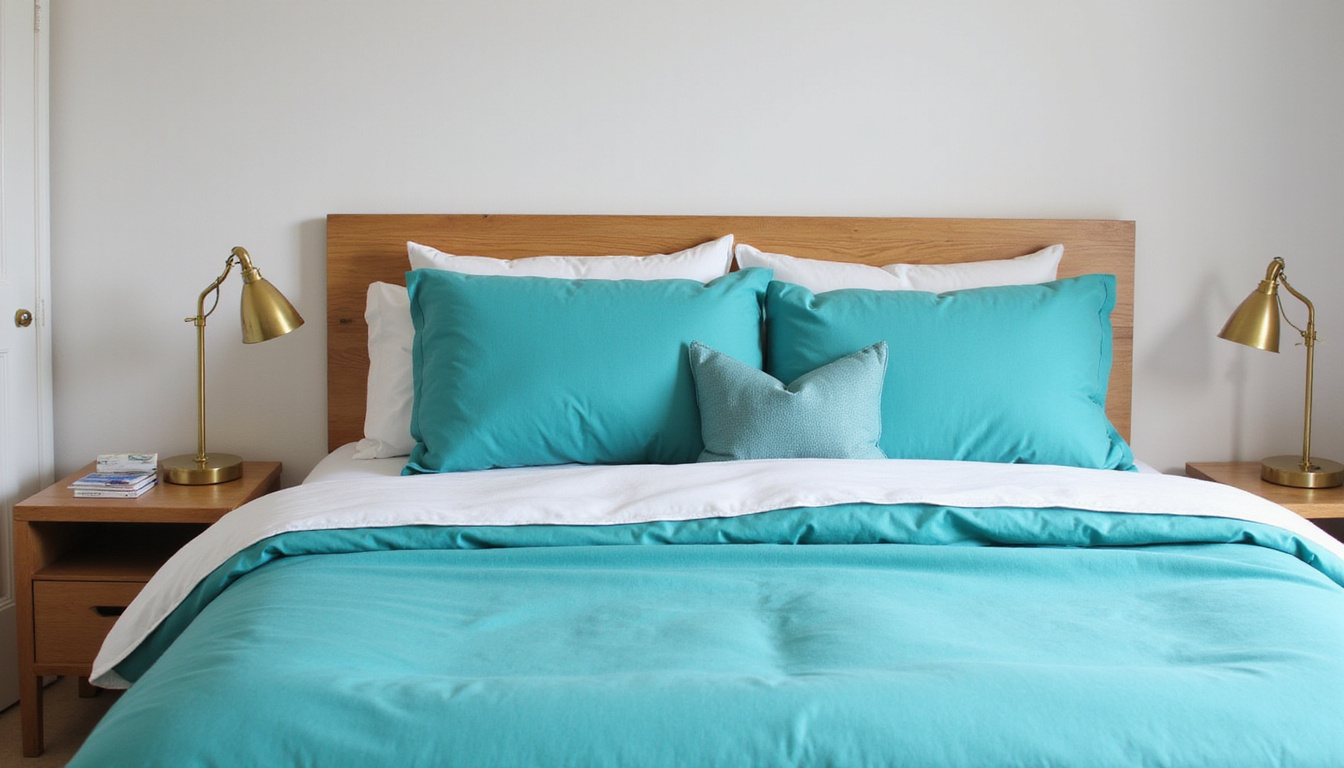
turquoise is ideal for bedrooms because it promotes calm while still feeling happy and uplifting.
How to Use turquoise in the Bedroom
-
Bedding as a focal point:
Use a turquoise duvet, quilt, or comforter with white or cream sheets. Add two or three coordinating pillows. -
Softly painted walls:
Choose a lighter turquoise for walls to get that boutique-hotel feel—especially effective if you keep furniture simple. -
Headboard or bench:
An upholstered turquoise headboard or end-of-bed bench adds a tailored, high-end look. -
Layer textures:
Combine linen, velvet, cotton, and knitted throws in similar tones for a cozy, expensive-looking result.
Keep lighting warm (soft white, not harsh cool white bulbs) so the room doesn’t start to feel cold or clinical.
Bathroom: Spa Vibes with Minimal Effort
Because of its connection to water, turquoise is a natural fit for bathrooms.
Small Changes, Big Impact
-
Shower curtain and towels:
Switching to turquoise textiles can completely change the look in minutes. -
Wall tiles or backsplash:
A strip of turquoise mosaic tile or a feature wall in the shower instantly creates spa energy. -
Accessories:
Soap dispensers, toothbrush holders, jars, and artwork in coordinating turquoise tones make the room feel intentional.
For small bathrooms, stick to lighter turquoise and pair with lots of white to keep the space from feeling cramped.
Kitchen & Dining: Fresh, Inviting, and On-Trend
Turquoise has a long history in kitchen decor (think vintage 1950s appliances) but it feels very current when done thoughtfully.
Simple turquoise Ideas for Kitchens
-
Bar stools or chairs:
Paint or purchase turquoise seating to bring color into an otherwise neutral kitchen. -
Backsplash pops:
Add a turquoise tile backsplash or inject turquoise within a mostly white or gray pattern. -
Open shelving:
Display turquoise dishes, mugs, or glassware for subtle, everyday color. -
Cabinetry (for the bold):
Turquoise lower cabinets with white uppers and warm hardware (brass or gold) feel modern yet timeless.
In dining rooms, a turquoise rug under the table or turquoise upholstered chairs can redefine the whole space without changing the table itself.
Entryway & Hallway: Small Areas, Big turquoise Moments
These transitional spaces are perfect for experimenting.
-
Accent wall in turquoise:
One bold wall in the entry or a hallway turns a forgettable area into a feature. -
Console styling:
Use a turquoise lamp, tray, or vase on a console table, and repeat the color once more in art or a runner. -
Front door:
A turquoise-painted front door feels cheerful and welcoming and adds major curb appeal.
Balancing turquoise with Texture and Pattern
Color alone isn’t enough; the textures and patterns you choose determine how polished your space looks.
Textures that Complement turquoise
- Natural fibers: Jute, seagrass, rattan, wicker, and linen prevent turquoise from feeling too synthetic.
- Wood: Light oak for coastal looks, walnut or mahogany for richer, more classic spaces.
- Metals: Brass and gold warm up turquoise; chrome and brushed nickel keep things cool and modern.
Using Pattern Wisely
To avoid visual chaos:
- Repeat turquoise in 2–3 places within the same room.
- Mix one bold pattern (e.g., large geometric or floral) with two quieter ones (solid or small-scale).
- Aim to keep at least one large area—walls or rug—mostly neutral so the eye has a place to rest.
Common turquoise Mistakes and How to Avoid Them
Even a great color can go wrong without a plan. Watch out for:
-
Using only one shade everywhere
- Solution: Layer 2–3 related turquoise tones for depth.
-
No grounding neutrals
- Solution: Add white, cream, gray, or wood to keep things balanced.
-
Too much saturation in small spaces
- Solution: Use lighter versions on walls and keep bold turquoise to accents.
-
Clashing undertones
- Solution: Decide if your turquoise is more blue or more green and choose complementary colors accordingly.
According to color psychology research, blue-green hues like turquoise can boost feelings of calm and clarity when used in balanced environments (source: Verywell Mind).
Quick-Start turquoise Makeover Checklist
Use this simple list to bring turquoise into your home step by step:
- Choose your main shade: light, classic, or deep turquoise.
- Pick 1–2 neutrals to pair with it (white, cream, gray, beige).
- Decide where turquoise will live:
- Walls
- Textiles (pillows, curtains, rugs, bedding)
- Furniture
- Accessories (vases, art, lamps)
- Start small with textiles and art before committing to paint.
- Repeat turquoise at least twice per room to make it feel intentional.
- Adjust lighting (bulb color and lamp placement) so the turquoise reads how you want—calm, vibrant, or moody.
FAQ: Decorating with turquoise
How do I decorate with turquoise in a small room?
In small rooms, use light turquoise on either the walls or textiles and keep the rest of the space mostly white or light neutral. Add just a few accents (like a cushion, small rug, and piece of art) so the turquoise feels airy rather than crowded.
What colors go with turquoise in home decor?
turquoise pairs beautifully with white, cream, gray, navy, blush, coral, mustard, tan, and natural wood tones. For a calm palette, mix turquoise with white and light wood. For a more dramatic look, combine turquoise with navy, charcoal, and brass accents.
Is turquoise a good color for a living room?
Yes. A turquoise living room can feel vibrant yet relaxing when you balance it with neutrals. Try turquoise pillows, throws, and artwork on a neutral sofa first. If you love the effect, consider a single turquoise accent wall or a statement chair to deepen the look.
turquoise has the power to refresh every room—without requiring a full remodel or a huge budget. By choosing the right shade, pairing it with supportive neutrals, and repeating it thoughtfully through textiles, art, and accents, you can create a home that feels cohesive, uplifting, and uniquely yours.
If you’re ready to transform your space, start today with one room and a single turquoise element—a pillow, a vase, or a piece of art. Let that first touch guide your palette, build from there, and watch how quickly your home shifts from ordinary to unforgettable.
Explore the Science Behind Spirituality
This guide explored the meaning and history of good luck symbols. To discover the psychology, consciousness, and scientific perspectives behind spiritual beliefs, visit SpiritualMindScience.com.