If you want a garden that dazzles with lush color well into autumn, few plants beat the chrysanthemum. Often called “mums,” these long-blooming perennials offer incredible variety in shape, size, and hue—from soft pastels to fiery oranges and deep burgundies. With the right care, you can transform your beds, borders, and containers into a carpet of blooms that last for weeks.
This guide walks you through everything you need to know: choosing the right types, planting, watering, feeding, pruning, overwintering, and keeping your mums healthy year after year.
Why Chrysanthemums Deserve a Spot in Your Garden
Chrysanthemums aren’t just pretty; they’re hardworking garden staples.
Key benefits of growing chrysanthemums:
- Extended fall color: They bloom when many other plants are fading.
- Huge variety: Hundreds of shapes (daisy, pompom, spider, anemone) and colors.
- Pollinator-friendly: Late-season nectar for bees and other beneficial insects.
- Versatile use: Great in beds, borders, pots, and as cut flowers.
- Cold-hardy (many varieties): Can return year after year with proper care.
Understanding whether your chrysanthemum is a hardy garden mum or a florist mum is the first step to long-term success.
Types of Chrysanthemums: Hardy vs. Florist Mums
Not all mums behave the same in the garden. When you buy them, labels can be confusing, so it’s worth knowing the difference.
Hardy Garden Mums
- Bred for cold tolerance and garden performance.
- Often labeled as “garden mums” or “hardy mums.”
- Plant them in the ground by late summer so roots establish before frost.
- More likely to return each year if properly mulched and sited.
Florist Mums
- Bred primarily for greenhouse or indoor display and bouquets.
- Sold in full bloom in fall as decorative potted plants.
- Less hardy; many will not survive winter outdoors in colder zones.
- Treat them as seasonal annuals unless you live in very mild climates.
If your goal is a long-term display, choose hardy garden chrysanthemums from reputable nurseries. For instant seasonal color in containers, florist mums are perfect.
Choosing the Right Site for Your Chrysanthemum
Chrysanthemums are sun-loving, bloom-heavy plants. The site you choose will directly affect how many flowers you get and how healthy they are.
Sun Requirements
- Aim for full sun: at least 6 hours of direct light daily.
- In very hot climates, light afternoon shade can prevent scorched foliage and wilting.
- Too much shade leads to weak stems and fewer, smaller blooms.
Soil and Drainage
- Prefer well-draining, fertile soil.
- Ideal pH: slightly acidic to neutral (around 6.5 is ideal).
- Heavy clay? Amend with compost and coarse sand or fine gravel.
- Very sandy? Add organic matter (compost, aged manure) to retain moisture.
Poor drainage is a common cause of chrysanthemum failure. Waterlogged soil quickly leads to root rot and plant decline.
Planting Chrysanthemums: Timing, Spacing, and Technique
Correct planting sets your mums up for years of color.
When to Plant
- Spring: Best time for hardy mums; they have the whole season to root and bulk up.
- Late summer/early fall: Still possible in many regions, but water and mulch carefully so roots establish before hard freezes.
- Container chrysanthemums purchased in bloom can be planted in the ground, but their winter survival rate may be lower if planted too late.
Spacing
- Space plants 18–24 inches apart, depending on variety.
- Good air circulation helps prevent fungal disease and keeps foliage dry.
How to Plant
-
Prepare the soil
Loosen soil 8–12 inches deep and mix in 2–3 inches of compost. -
Dig the hole
Hole should be twice as wide as the root ball and just as deep. -
Set the plant
Place the chrysanthemum with the top of its root ball level with the soil surface—don’t bury the crown. -
Backfill and firm
Fill in around the roots, gently firming the soil to remove air pockets. -
Water thoroughly
Soak the root zone well and add a thin mulch layer to retain moisture.
Watering and Feeding: How to Keep Mums Blooming Strong
Chrysanthemums like consistent moisture, especially during active growth and budding, but they dislike soggy soil.
Watering Guidelines
- Water deeply and regularly, allowing the top inch of soil to dry between waterings.
- In hot, dry weather, you may need to water 2–3 times per week, especially for container mums.
- Water at the base of the plant, not overhead, to protect foliage from disease.
- Reduce watering once blooming slows and the plant prepares for dormancy.
Fertilizing Chrysanthemums
Feeding your chrysanthemum properly builds strong roots and abundant buds.
- In spring, apply a balanced, slow-release fertilizer (e.g., 10-10-10).
- Repeat light feedings every 4–6 weeks until midsummer.
- Avoid heavy high-nitrogen fertilizers late in the season; they promote foliage at the expense of flowers.
- For organic options, use compost, fish emulsion, or liquid seaweed.
Stop fertilizing by late July in most climates so the plant can focus on setting buds for fall bloom.
Pinching and Pruning: The Secret to Bushy, Flower-Filled Plants
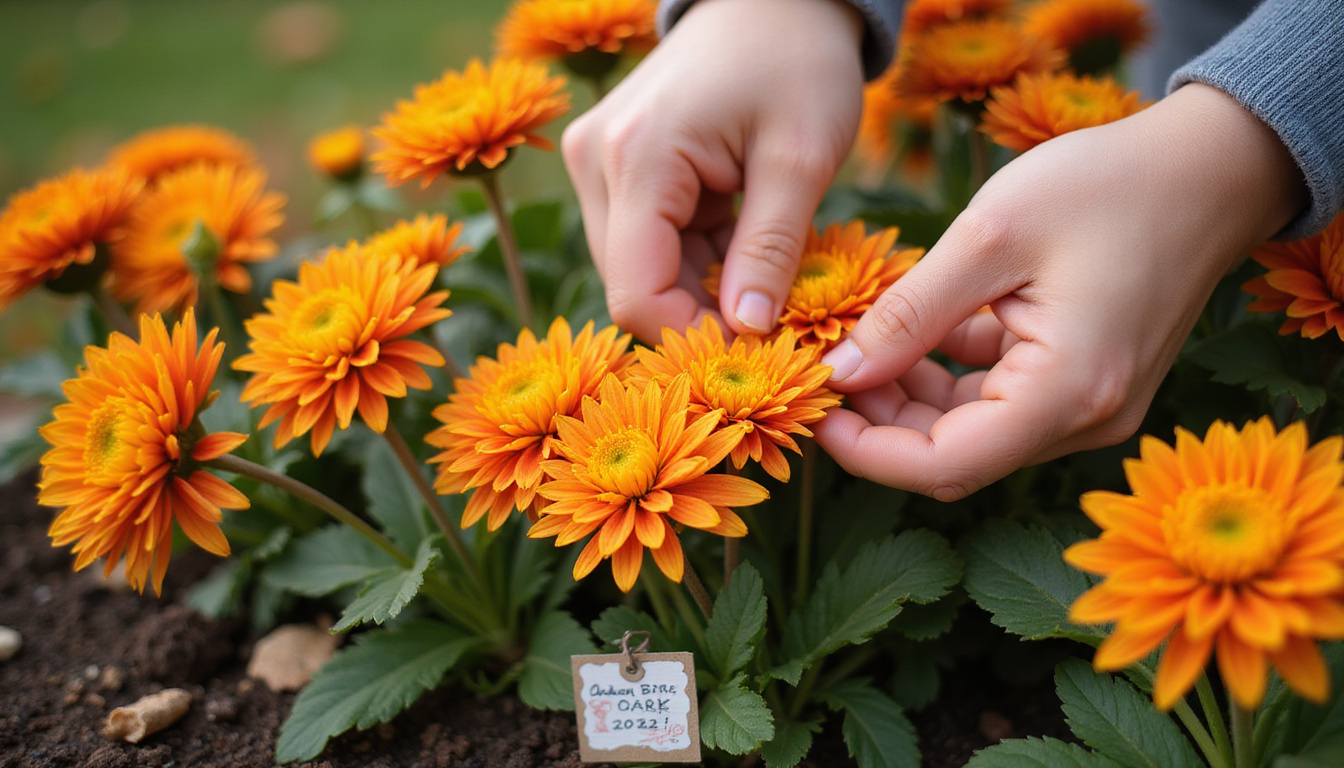
One of the best-kept chrysanthemum care secrets is regular pinching. This simple technique transforms leggy, floppy stems into compact, rounded plants loaded with blooms.
How and When to Pinch
- Start when plants are 6–8 inches tall in late spring.
- Pinch or snip off the top 1–2 inches of each stem, just above a leaf node.
- Repeat every 2–3 weeks until about early to mid-July, depending on your region.
Each pinch encourages branching, and more branches mean more flowers and a fuller plant.
Pruning After Flowering
- Once blooms fade, you can:
- Deadhead (remove spent flowers) to tidy the plant.
- In colder areas, cut stems back to 4–6 inches after first hard frost, then mulch heavily.
- In milder climates, wait until early spring to do a hard cutback, as stems can provide some winter protection.
Overwintering Chrysanthemums for Year-After-Year Color
Whether your chrysanthemum will return depends on variety and how you protect it during cold weather.
In Cold Climates (USDA Zones ~3–6)
- Choose hardy garden mums labeled for your zone.
- After frost kills the tops, cut stems to 4–6 inches.
- Apply a thick mulch layer (4–6 inches) of straw, shredded leaves, or bark over and around the plant crown.
- Do not fertilize late in the season; encourage dormancy.
- Remove some mulch in early spring so new shoots can emerge.
In Mild Climates (USDA Zones ~7–9+)
- Many chrysanthemums will remain semi-evergreen or green at the base.
- Light mulch helps moderate soil temperature and retain moisture.
- Cut back lanky growth in late winter or early spring to encourage fresh, bushy growth.
If you’re unsure about hardiness, consider taking cuttings in late summer and overwintering them indoors as insurance.
Growing Chrysanthemums in Containers
Chrysanthemums are ideal for containers and patio displays, especially when you want a burst of immediate fall color.
Container Tips
- Use a well-draining potting mix, not garden soil.
- Choose pots with large drainage holes.
- Select a container at least 12–14 inches wide for one standard mum.
- Water more frequently than in-ground plants; containers dry faster.
- Feed with a balanced liquid fertilizer every 2–3 weeks until buds fully form.
When container chrysanthemums fade, you can:
- Compost them if they are florist mums you treat as annuals, or
- Plant them in the ground (ideally before hard frost) and mulch well, understanding winter survival isn’t guaranteed in cold zones.
Pest and Disease Prevention for Healthy Chrysanthemums
With proper spacing, watering, and hygiene, chrysanthemums stay relatively problem-free. Still, watch for common issues and act early.
Common Pests
- Aphids: Small, soft-bodied insects on new growth.
- Control: Spray with a strong stream of water or use insecticidal soap.
- Spider mites: Tiny, cause stippled leaves and fine webbing.
- Control: Increase humidity, wash foliage, use miticide if necessary.
- Leaf miners and caterpillars: Chew or tunnel through leaves.
- Control: Handpick or use targeted biological controls like Bacillus thuringiensis (Bt).
Common Diseases
- Powdery mildew: White, powdery coating on leaves.
- Prevention: Provide good air circulation, avoid overhead watering, remove infected foliage.
- Botrytis (gray mold): Brown spots, fuzzy gray mold in damp, cool conditions.
- Prevention: Clean up dead plant material, ensure good drainage.
- Root rot: Yellowing, wilting, blackened roots from saturated soil.
- Prevention: Improve drainage, avoid overwatering.
Following basic integrated pest management practices can help keep your chrysanthemum plants robust (source: University of Minnesota Extension).
Simple Chrysanthemum Care Checklist
Use this quick list as a seasonal reminder:
-
Spring
- Plant new hardy mums.
- Improve soil with compost.
- Start regular watering and fertilizing.
- Begin pinching when plants are 6–8 inches tall.
-
Early to Mid-Summer
- Continue pinching every 2–3 weeks until early/mid-July.
- Maintain steady moisture.
- Side-dress with compost or balanced fertilizer.
-
Late Summer to Fall
- Stop pinching so buds can form.
- Stake if stems are tall or top-heavy.
- Deadhead to keep plants tidy.
- Enjoy peak chrysanthemum bloom.
-
Late Fall to Winter
- Cut back after hard frost (cold climates).
- Mulch heavily over crowns.
- In mild climates, prune lightly and protect from excessive winter rain.
Chrysanthemum FAQ
How do you keep chrysanthemums blooming longer?
To extend chrysanthemum bloom time, keep soil consistently moist but not soggy, deadhead spent flowers regularly, and protect plants from extreme heat. Avoid heavy fertilizer once flower buds are clearly formed, as this can disrupt blooming.
Are chrysanthemums indoor or outdoor plants?
Most chrysanthemums are best as outdoor plants, especially hardy garden mums. Florist mums sold in full bloom can be grown indoors for a few weeks as temporary decor near a bright window, but they generally perform far better in outdoor conditions with ample light.
How do you care for potted chrysanthemum flowers?
For potted chrysanthemum care, place the container in a bright location with at least several hours of direct sun, water whenever the top inch of soil feels dry, and ensure excess water drains away freely. Feed with a balanced liquid fertilizer until buds fully color, then reduce feeding and focus on steady moisture for prolonged flowering.
Bring Your Garden to Life with Chrysanthemums
With their late-season color, remarkable variety, and relatively low maintenance needs, chrysanthemums are some of the most rewarding plants you can grow. By choosing the right types, giving them sun and well-drained soil, pinching for fullness, and protecting them through winter, you’ll enjoy a carpet of blooms year after year.
If you’re ready to transform your garden with blooming success, start planning your chrysanthemum display today. Visit a trusted local nursery, pick out a mix of hardy garden mums in colors you love, and put these care tips into action—your future fall garden will be a showstopper you can’t wait to share.
Throughout history, many plants and herbs have been associated with luck, protection, and prosperity. To explore their deeper spiritual, psychological, and scientific significance, visit SpiritualMindScience.com.