Snake symbolism is one of the oldest and most powerful symbolic systems in human history. Across thousands of years and countless cultures, the snake has been feared, revered, worshipped, and misunderstood. From ancient myth and religious texts to modern psychology and dreams, the meanings attached to snakes are rich, layered, and often contradictory.
This guide explores the hidden meanings of snakes, how different cultures interpret them, what it can mean to dream of snakes, and why this symbol still holds such cultural power today.
Why Are Snakes So Symbolically Powerful?
At the heart of snake symbolism is the animal’s real-life nature: silent, elusive, sometimes deadly, but also essential to many ecosystems. This blend of beauty, danger, and mystery makes snakes perfect carriers of deep symbolic meaning.
Key reasons snakes became such powerful symbols:
- They shed their skin, suggesting rebirth and transformation.
- Many are venomous, representing danger, mortality, or divine punishment.
- They move close to the ground, tied to the earth, the underworld, and hidden realms.
- They appear suddenly and silently, symbolizing surprise, secret knowledge, or hidden threats.
These natural traits became the raw material out of which spiritual traditions, myths, and psychological interpretations were built.
Ancient Roots: Snakes in Myth and Religion
Across civilizations, snake symbolism shows up in surprising and often opposing ways – as both protector and destroyer, healer and tempter, bringer of wisdom and agent of chaos.
Snakes in the Ancient Near East and the Bible
In Judeo-Christian tradition, the snake is most famously the tempter in the Garden of Eden, linked to sin, deception, and the fall of humankind. This image influenced much of Western culture’s negative view of snakes.
Yet even within the Bible and related traditions, the symbolism is not purely negative:
- The bronze serpent of Moses: In the Book of Numbers, Moses raises a bronze serpent on a pole so that those bitten by snakes can look at it and be healed. The snake here becomes a symbol of protection and divine healing.
- Serpents as wisdom: In the New Testament, Jesus says, “be wise as serpents and innocent as doves,” hinting at a long-standing association between snakes and a sharp, discerning mind.
So even in a culture that often demonizes serpents, snake symbolism holds both danger and wisdom.
Greek and Roman Snake Symbolism
In ancient Greece and Rome, snakes often belonged to the realm of the gods:
- Asclepius, god of medicine: The Rod of Asclepius—a staff entwined with a single serpent—is still a symbol of medicine today. Here, the snake stands for healing, renewal, and the delicate balance between poison and cure.
- Ouroboros: The image of a snake eating its own tail appears in later Greco-Egyptian and Gnostic traditions, symbolizing eternity, cycles of creation and destruction, and the unity of beginning and end.
- Household and underworld spirits: In Roman culture, snakes could represent guardian spirits of the home and ancestors, as well as powers of the underworld and the dead.
This duality—life and death, healing and poison—is central to snake symbolism in the classical world.
Hinduism and Buddhism: Power, Protection, and Awakening
In South Asian traditions, snakes (often called naga or nāga) hold a revered place:
- Nagas: Semi-divine serpent beings in Hindu and Buddhist lore, nagas can guard treasures, bodies of water, and sacred spaces. They are powerful, sometimes dangerous, but not inherently evil.
- Kundalini: In yogic traditions, kundalini energy is depicted as a coiled serpent at the base of the spine. Awakening this serpent represents spiritual enlightenment, the rise of consciousness through the body’s energy centers.
- Vishnu and Shiva:
- Vishnu is often shown resting on the cosmic serpent Shesha.
- Shiva wears snakes around his neck, symbolizing conquering fear, ego, and animal instincts.
Here, snake symbolism leans strongly toward spiritual power, transformation, and protection.
Snakes in Indigenous and African Traditions
Many Indigenous and African cultures have complex, nuanced views of snakes:
- Aboriginal Australian traditions: The Rainbow Serpent appears in many Dreamtime creation stories as a being that shapes the landscape, brings water, and establishes law—both creative and potentially destructive.
- West African and Afro-Caribbean traditions:
- In Vodou, the serpent spirit Dambala is a creator deity linked to wisdom, peace, and the origin of life.
- In some African cosmologies, snakes are linked to ancestors and the continuity of life.
In these contexts, snakes often symbolize life force, ancestral power, creation, and the deep energies of earth and water.
Core Themes in Snake Symbolism
Despite cultural differences, several themes repeat across the world:
-
Transformation and Rebirth
Shedding skin is the most obvious symbol: letting go of the old, emerging renewed. Snakes often appear in rituals and stories about life transitions, spiritual initiation, or identity shifts. -
Life, Death, and Healing
Venom can kill, but in controlled doses it can also heal. This paradox makes the snake a symbol of medicine, mortality, and the fine line between harm and cure. -
Wisdom and Forbidden Knowledge
From Eden’s serpent to oracles and shamans, snakes are tied to secret knowledge—sometimes spiritual, sometimes dangerous, sometimes liberating. -
Sexuality and Creative Energy
The serpent’s shape, movements, and association with life force link it to sexuality, fertility, and primal creative energy, both feared and revered. -
Protection and Guardianship
Temple snakes, guardian nagas, household serpents—snakes often stand as spiritual sentries, keeping watch over sacred places, thresholds, and hidden treasures.
Psychological and Spiritual Meanings: Snakes as Inner Symbols
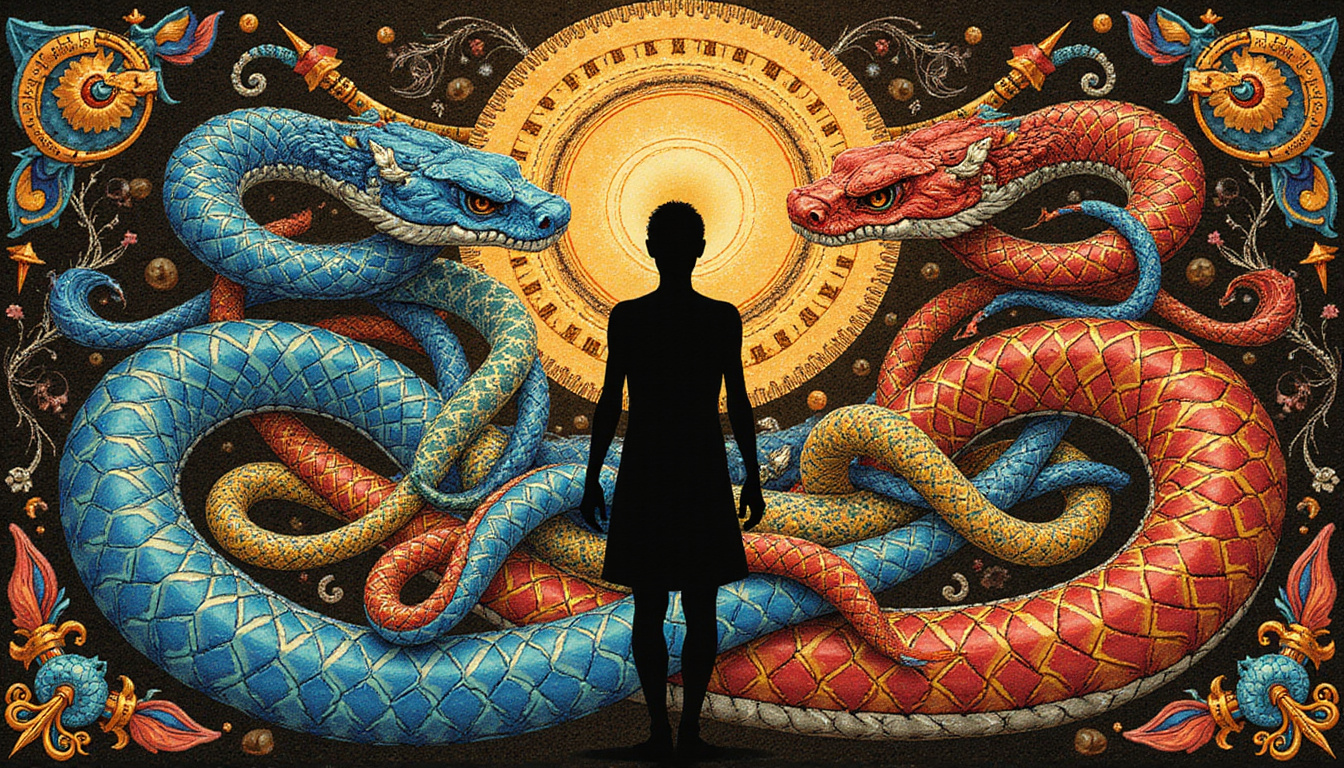
Modern psychology, particularly Jungian and depth psychology, treats snake symbolism as a window into the unconscious.
Jungian Perspective
Carl Jung saw snakes as archetypal symbols of the unconscious, instinctual energy, and the deep psyche. Because they are ancient creatures connected to the earth and often feared, they can represent:
- Repressed instincts or desires.
- Untapped psychic or spiritual energy.
- The “shadow” – parts of ourselves we deny or avoid.
When snake imagery arises in dreams or creative work, it may point toward transformation that begins in these deeper layers of the self.
Energy, Instinct, and Intuition
Spiritually and psychologically, snakes can represent:
- Raw life energy: Vitality, passion, survival drive.
- Intuition: A “gut-level” knowing, subtle perception, instinctive guidance.
- Transformation through discomfort: Just as a snake must shed an old skin that no longer fits, personal growth often requires discomfort, vulnerability, and stepping into the unknown.
This makes snake symbolism especially relevant during times of transition, healing, or inner work.
Snake Symbolism in Dreams: What It Can Mean
Dreams of snakes are among the most common animal dreams and often leave a strong emotional impact. There is no single universal meaning, but certain patterns show up commonly.
Common Dream Scenarios and Possible Meanings
Interpretation always depends on personal context, but here are some general themes:
-
Being bitten by a snake
- A wake-up call: something in your life that you’ve ignored now demands attention.
- Hidden threat: betrayal, toxic dynamics, or unresolved problems.
- Healing crisis: the “sting” of truth or the painful beginning of a healing process.
-
A snake shedding its skin
- Personal transformation: you may be outgrowing an identity, relationship, or belief.
- Renewal: moving through grief, recovery, or a major life change.
-
Friendly or protective snakes
- Support from your instincts or intuition.
- A powerful inner resource or ally you’re starting to recognize.
-
Snakes in your home
- Something deeply personal (family, private life, inner world) is shifting.
- Unconscious material surfacing into everyday life.
-
Many snakes together
- Overwhelm by change or emotion.
- Intense energy, healing, or transformation in multiple areas at once.
The emotional tone of the dream—fear, curiosity, calm, fascination—often says more than the literal scenario. Fear may point to resistance to change or hidden truths; curiosity can signal readiness to grow.
Snakes in Modern Culture and Media
Today’s cultural landscape still taps into deep snake symbolism:
- Branding and logos: Medical organizations use the Rod of Asclepius, while luxury brands sometimes use serpents to signal power, mystery, or sophistication.
- Literature and film: From magical serpents to villains associated with snakes, storytellers tap into the age-old link between serpents and hidden power, danger, or wisdom.
- Tattoos and personal symbols: Many people choose snake tattoos to represent resilience, transformation, survival, spiritual awakening, or shedding an old life.
Popular culture often simplifies snakes into “good” or “evil,” but the enduring fascination comes from their deeper, more ambiguous meanings.
How to Work with Snake Symbolism in Your Own Life
If snakes keep appearing in your dreams, art, readings, or daily life, you can engage with the symbolism consciously.
Possible approaches:
- Journaling: Write about your feelings and associations with snakes. When did they first scare or fascinate you? How have those feelings changed over time?
- Mapping life changes: Notice if snake dreams or imagery coincide with major transitions—moving, career shifts, breakups, health changes, or spiritual exploration.
- Creative expression: Draw, paint, or write stories involving snakes. Let the image lead and see what themes emerge.
- Mindful reflection: Ask what “skin” in your life might be ready to shed—habits, roles, beliefs, or relationships that no longer fit who you’re becoming.
By treating snake symbolism as a living dialogue rather than a fixed code, you can uncover meanings that are specific and personal to you.
A Brief Note on Science and Real Snakes
While symbolism is powerful, it’s also useful to remember the ecological importance of actual snakes:
- They control rodent populations and help maintain balanced ecosystems.
- Many species are non-venomous and pose no threat to humans.
- Research on snake venom has contributed to medical advances, including blood pressure medications and potential treatments for various conditions (source: U.S. National Institutes of Health).
Understanding real snakes can soften fear and deepen respect for the animal behind the symbol.
FAQ: Common Questions About Snake Symbolism
1. What does a snake symbolize spiritually?
Spiritually, snake symbolism often represents transformation, healing, and the awakening of inner power. In many traditions, snakes embody life force energy, intuition, and the capacity to shed old patterns. Depending on context, they can also signal the need to face fears or hidden aspects of the self.
2. Is seeing a snake a good or bad omen?
Whether seeing a snake is a good or bad sign depends on cultural background and personal belief. In some cultures, a snake is a powerful protector or a sign of upcoming change; in others, it may be seen as a warning or reminder to stay alert. Symbolically, an encounter with a snake usually points to change, heightened awareness, or something beneath the surface that deserves attention.
3. What does dreaming of snakes mean emotionally?
Dream snake symbolism often mirrors your emotional landscape. Fearful snake dreams may reflect anxiety, feeling threatened, or resisting change. Calm or curious encounters with snakes in dreams can indicate readiness for growth, healing, or exploring deeper layers of your psyche. The dream’s mood and your waking-life context are key to interpretation.
Snake symbolism endures because it speaks to some of the deepest truths of human life: that change is inevitable, that danger and healing are often intertwined, and that real growth comes from engaging with what we fear or don’t fully understand.
If snakes have been appearing in your dreams, your art, or your everyday life, don’t dismiss them as mere coincidence. Start a conversation with the symbol: explore your associations, track when and how it appears, and reflect on what you may be ready to shed or embrace. By working consciously with snake symbolism, you can transform fear into insight and uncertainty into a powerful catalyst for personal and spiritual growth.
Animals have inspired symbols and beliefs across cultures for centuries. Discover how these traditions connect with psychology, spirituality, and human consciousness at SpiritualMindScience.com.