Wolf symbolism has fascinated people across cultures for thousands of years. Whether appearing in ancient myths, modern tattoos, spirit animal guides, or recurring dreams, wolves stir something deep within the human psyche. At their core, wolves represent a powerful blend of hidden strength, unshakable loyalty, and untamed freedom—qualities many of us crave in our own lives.
This guide explores the many layers of wolf symbolism so you can understand what the wolf may be trying to tell you—and how to embody its energy in practical, grounded ways.
The Deeper Meaning of Wolf Symbolism
At its heart, wolf symbolism weaves together three primary themes:
- Inner strength and resilience
- Loyalty, family, and social bonds
- Wild freedom and instinctual wisdom
Across cultures, wolves are rarely one-dimensional. They are both feared and revered, seen as dangerous predators and wise teachers. This duality is part of their power: the wolf asks you to acknowledge both your light and your shadow, your civilized self and your wild nature.
Wolves as Symbols of Inner Strength and Courage
Wolves are built for survival. They endure harsh winters, long migrations, and unpredictable environments. As a symbol, the wolf reflects:
- Resilience under pressure – pushing forward even when circumstances are bleak.
- Quiet power – wolves don’t roar like lions; their strength often shows in persistence and strategy.
- Courage to stand alone – the lone wolf archetype speaks to walking your path, even when it’s unpopular.
If wolf symbolism keeps showing up for you, it may be calling you to:
- Trust your capacity to overcome current challenges
- Tap into a deeper, quieter confidence
- Stand firm in your values, even when others disagree
This isn’t about aggressive dominance. It’s about grounded, calm strength: knowing your own power and not needing to prove it.
Loyalty, Pack Energy, and the Power of Community
One of the strongest aspects of wolf symbolism is loyalty. Real wolves live in highly structured family units (packs), with complex social roles, cooperative hunting, and shared care of pups. They show us that:
- True strength is often collective
- Healthy hierarchy and clear roles reduce conflict
- Protection and care for the vulnerable is a sign of maturity
Symbolically, the wolf pack can mirror:
- Your family, chosen or biological
- Your work team or community
- Any tight-knit group where trust and mutual support matter
If the wolf is your recurring symbol, ask yourself:
- Who is “your pack”?
- Are you supporting them as fully as they support you?
- Are there relationships you’ve outgrown, or boundaries you need to strengthen?
Wolf energy reminds you that you don’t have to do everything alone—but also that the right people matter more than the many people.
The Wild Freedom of the Wolf: Instinct, Intuition, and Authenticity
While wolves are deeply social, they are also powerful symbols of wild freedom. They are not domesticated. They live by their instincts and the rhythms of nature.
In symbolic language, the wolf represents:
- Intuition – sensing what’s unseen, trusting your gut.
- Authenticity – dropping masks and social performance.
- Connection to nature – aligning with cycles, seasons, and your own natural pace.
You may feel called by wolf symbolism when:
- You’re out of alignment with your true self
- You’re living by others’ expectations instead of your own truth
- You’ve been ignoring your body’s signals and intuitive nudges
The wolf doesn’t ask permission to be what it is. It simply is. That authenticity is a key part of its magic.
Wolf Symbolism in Different Cultures and Traditions
Wolf symbolism is rich and varied across the world. While details differ, a few themes appear again and again: power, guidance, and the thin line between danger and wisdom.
Native American Traditions
Different tribes view wolves in unique ways, but some recurring themes include:
- Teacher and pathfinder – wolves show the way and teach survival.
- Symbol of loyalty and family – the pack reflects strong tribal bonds.
- Connection to the spirit world – wolves can act as messengers or guides.
In some stories, the wolf is revered as a creator or culture hero; in others, it’s a warning about taking too much or dishonoring the land.
Norse and European Mythology
In Norse myth:
- Fenrir, a giant wolf, embodies untamed chaos and destiny.
- Odin, the Allfather, is associated with wolves Geri and Freki, who accompany him—connecting wolves to war, wisdom, and leadership.
In European folklore more broadly, wolves can represent:
- The fear of the wild and the unknown (“the big bad wolf”)
- The danger of giving in to animal instincts without conscience
- Hidden power that threatens rigid social order
These stories reflect a human struggle: how to live with our wildness without being consumed by it.
Asian and Other Cultural Views
In parts of Central and East Asia, wolves are linked to:
- Ancestry and origin myths – for example, the Turkic peoples have legends of wolf ancestors.
- Guardianship and protection – wolves as protectors of sacred places or founders of clans.
Taken together, these global perspectives show wolves as complex: creators and destroyers, protectors and threats, guides and tests.
The Spiritual Meaning of Seeing Wolves in Dreams or Real Life
When wolf symbolism shows up repeatedly—through dreams, art, synchronicities, or real-life encounters—it often signals a personal message.
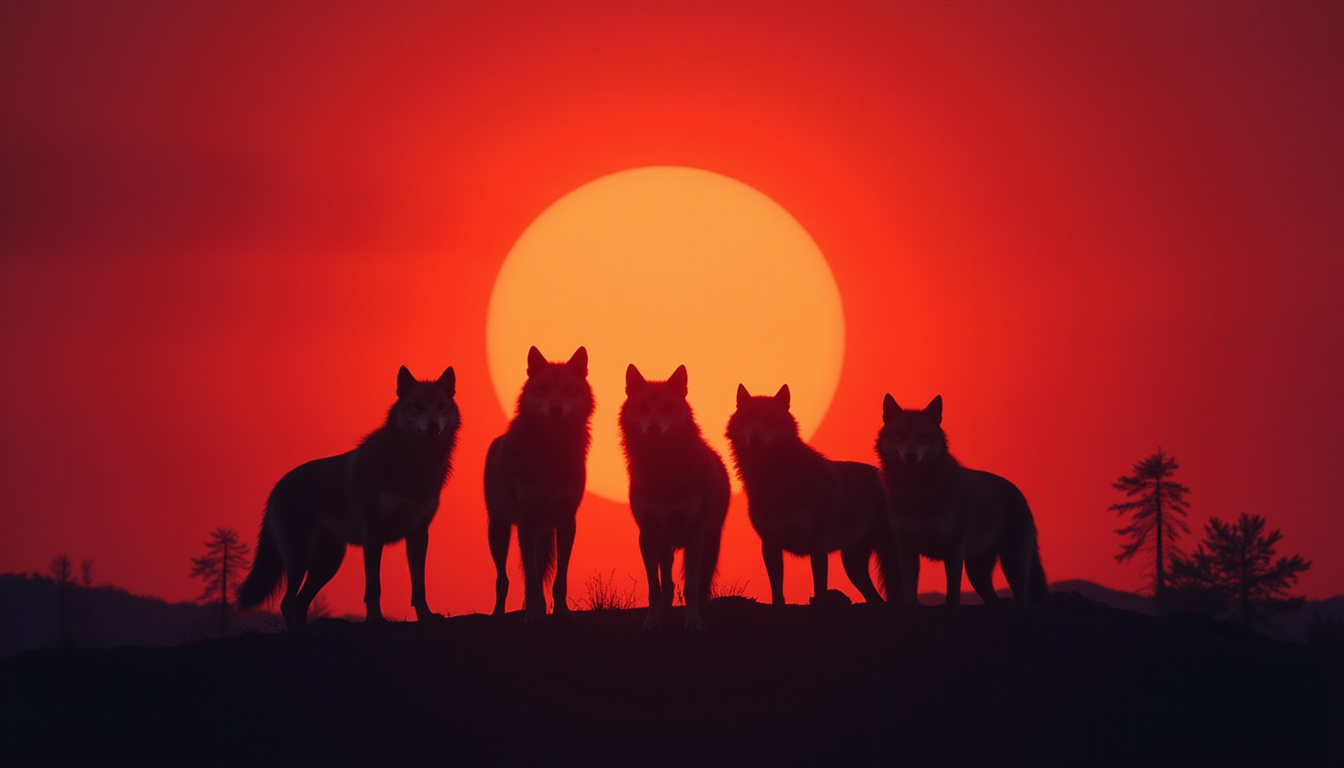
Common Wolf Dream Themes
-
Being chased by a wolf
- May reflect fears about your own instincts, anger, or desires.
- Can symbolize a person or situation that feels threatening or overwhelming.
-
Running with a pack of wolves
- Suggests belonging, support, and shared purpose.
- May point to finding your community or stepping into your role within a group.
-
A lone wolf watching you calmly
- Represents intuition and self-reliance.
- May be inviting you to trust your inner wisdom and accept solitude when needed.
-
A friendly or protective wolf
- Symbolizes a spirit guide, inner protector, or wise teacher energy.
- Encourages you to lean into courage and live more authentically.
There’s no one-size-fits-all meaning; your emotions in the dream are key. Fear suggests unresolved inner conflict; calm or awe points to guidance and growth.
Wolf as a Spirit Animal or Totem
In modern spiritual and shamanic frameworks, the wolf spirit animal often appears to those who are:
- Natural leaders, but sometimes reluctant ones
- Deeply loyal, yet fiercely independent
- Highly intuitive and sensitive to group dynamics
- Drawn to truth, authenticity, and emotional depth
If you feel a strong connection to wolves, you may share these traits. The wolf totem invites you to:
- Balance independence with healthy interdependence
- Lead by example, not by force
- Develop your intuitive and spiritual awareness
- Protect your energy and those you love
Many people work with wolf energy through meditation, visualization, or ritual (for example, imagining a wolf guide while journaling or during nature walks).
Wolves in Modern Culture: From Villain to Icon
Today, wolf symbolism shows up everywhere—from sports team mascots to tattoos, fantasy novels, and environmental campaigns. Modern themes include:
- Rebellion and nonconformity – “lone wolf” archetypes in film and literature.
- Survivor energy – characters who endure hardship and remain unbroken.
- Conservation and rewilding – wolves as icons for restoring balance to ecosystems.
Ecologically, wolves are a keystone species; their presence can transform entire habitats by regulating prey populations and allowing vegetation to recover (as documented in the reintroduction of wolves to Yellowstone National Park, which reshaped river patterns and biodiversity) (source).
This modern perspective mirrors symbolic themes: when wildness is respected and integrated, ecosystems—and people—can return to balance.
How to Work with Wolf Symbolism in Your Daily Life
If you feel drawn to wolf energy, there are grounded, respectful ways to integrate it:
-
Clarify your “pack”
- Identify the few people you are willing to be fiercely loyal to—and who reciprocate that loyalty.
-
Strengthen your intuition
- Spend time in quiet reflection, meditation, or nature.
- Notice gut feelings and small inner nudges instead of dismissing them.
-
Honor your wildness
- Schedule time for unstructured, “non-productive” experiences: wandering in nature, free writing, dancing, or any activity that lets you drop your mask.
-
Practice courageous communication
- Like wolves with clear body language and vocalizations, say what you mean directly and kindly.
- Set boundaries as a form of protection, not punishment.
-
Cultivate resilience
- Just as wolves survive harsh winters, build habits that help you withstand stress: sleep, movement, supportive relationships, and honest self-reflection.
A Simple Wolf-Inspired Reflection Exercise
Once a week, journal on these questions:
- Where did I show strength quietly this week, rather than loudly?
- Did I honor my pack—support, protect, or show up for them?
- Where did I ignore my instincts, and what was the result?
- What would the “wolf” in me do differently next week?
Over time, this can help you embody the qualities that attract you to wolf symbolism in the first place.
Quick Reference: Core Aspects of Wolf Symbolism
- Strength and resilience
- Loyalty and pack bonding
- Intuition and instinct
- Wild freedom and authenticity
- Leadership and guidance
- Balance of solitude and community
- Respect for the natural order
When you see the wolf, ask: Which of these qualities am I being invited to develop right now?
FAQ About Wolf Symbolism and Meaning
1. What does it mean when you see a wolf repeatedly?
Seeing a wolf symbol repeatedly—whether in media, dreams, art, or real life—often suggests a message around strength, loyalty, or freedom. Wolf symbolism may be urging you to trust your instincts, examine your relationships (your “pack”), or reclaim a more authentic, untamed part of yourself.
2. What does a wolf represent spiritually as a spirit animal?
Spiritually, a wolf spirit animal typically represents intuition, protection, and leadership within a community. It can indicate that you’re being called to step into a guiding role, maintain strong boundaries, and balance independence with loyalty to those you love.
3. What is the meaning of a lone wolf symbol or lone wolf tattoo?
A lone wolf symbol or tattoo often stands for self-reliance, inner strength, and walking a unique path. It doesn’t always mean isolation or antisocial behavior; for many, it reflects a choice to live by personal truth rather than conforming to group expectations, while still respecting the idea of “pack” at a deeper level.
Wolf symbolism is more than an aesthetic or a trend—it’s a mirror held up to the wild, wise, and loyal parts of yourself. If the wolf keeps appearing in your life, it may be asking you to reclaim your strength, honor your true nature, and choose your “pack” with intention.
If you’re ready to explore this energy more deeply, start today: pay attention to where you feel called to be braver, more authentic, and more connected—to both people and the natural world. Let the wolf be your guide as you build a life that feels strong, loyal, and unapologetically free.
Animals have inspired symbols and beliefs across cultures for centuries. Discover how these traditions connect with psychology, spirituality, and human consciousness at SpiritualMindScience.com.