Our homes, cities, and farms may feel thoroughly modern, but the creatures living alongside us are still guided by ancient codes. To understand why your dog circles before lying down, or why birds migrate thousands of miles with unerring precision, you need to look backward—to ancestral animals and the instincts they passed down over millions of years. These deeply rooted behaviors still shape the lives of modern pets and wildlife today.
In this guide, we’ll decode how ancestral instincts work, what science knows about them, and how recognizing them can transform the way you live with and care for animals.
What Are “Ancestral Animals” and Why Do They Matter?
When we talk about ancestral animals, we mean the wild predecessors of today’s species—the wolves behind our dogs, the wildcats behind our house cats, ancient ungulates behind cattle and horses, and even early primates behind humans.
These ancestral species:
- Lived in a very different, often harsher environment
- Developed instincts that improved survival and reproduction
- Passed these traits forward through genetic inheritance and natural selection
Even after domestication, urbanization, and habitat change, those instincts remain largely intact. Domestication tweaks behavior and appearance, but it does not erase millions of years of evolutionary programming.
Understanding this has practical benefits:
- It explains puzzling pet behaviors
- It sheds light on wildlife conservation and rewilding
- It helps us design better environments and enrichment for animals
Instincts: The Legacy of Ancestral Animals
Instincts are behaviors that animals perform without being taught. They’re essentially behavioral “software” written by evolution into the nervous system of each species.
Some of the most important instinct types inherited from ancestral animals include:
- Predatory and hunting behavior
- Territoriality and social structure
- Flight, freeze, and defensive responses
- Mating and parenting rituals
- Navigation and migration patterns
Each of these core instincts shows up in both pets and wild animals, often in surprisingly similar ways.
Hidden Wolves: Ancestral Instincts in Modern Dogs
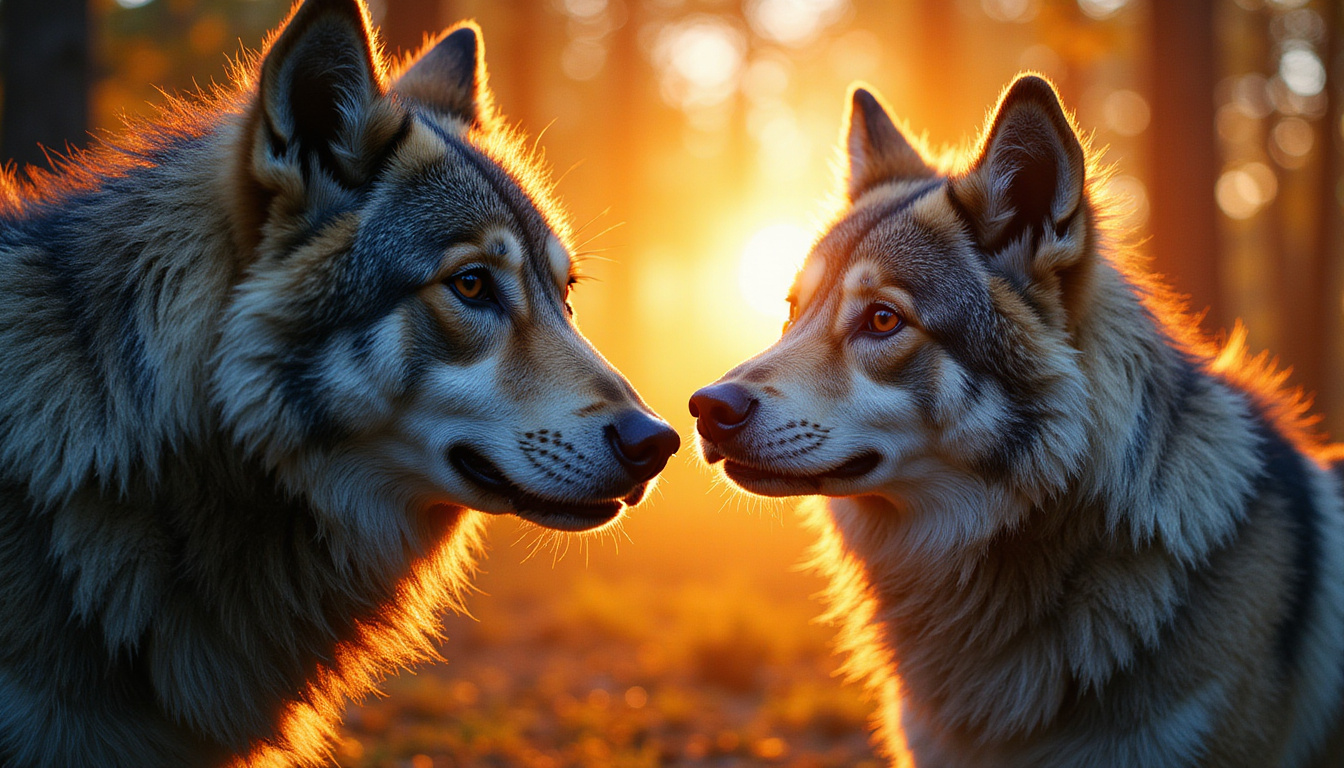
Modern dogs are genetically very close to gray wolves. Even the smallest lapdog carries a behavioral legacy from these ancestral animals.
Pack structure and social bonding
Dogs are hard-wired to live in social groups:
- They read subtle body language and social cues
- They look to leaders for guidance and security
- They seek cooperative relationships and routines
This explains why:
- Many dogs suffer separation anxiety—they’re not made to be alone
- Clear, consistent rules make dogs calmer and more confident
- Positive, structured leadership feels natural to them
Hunting instincts in play behavior
Your dog’s games mirror ancestral hunting sequences:
- Chasing a ball or squirrel
- Shaking a toy (like shaking prey)
- Tug-of-war (competing over a carcass)
While these seem playful, they are outlets for deeply rooted predatory patterns. That’s why high-energy or working breeds need structured activities—without an outlet, instincts can become frustration or misbehavior.
Denning and nesting behavior
Behaviors like:
- Circling before lying down
- Scratching or pawing at bedding
- Seeking small, covered spaces (under tables, in crates)
are modern echoes of wolves clearing and checking a safe sleeping spot. Crate training works well when the crate is presented as a secure “den,” tapping directly into this ancestral drive.
The Little Tiger at Home: Feline Ancestry in Domestic Cats
Domestic cats are only partially domesticated compared to dogs. Genetically and behaviorally, they closely resemble African wildcats and other small wild felines.
Solitary hunters with shared space
Ancestral animals in the cat family are ambush predators:
- They stalk, pounce, and deliver a rapid killing bite
- They patrol territories and scent-mark boundaries
- They tolerate social contact, but on their own terms
In modern cats this shows up as:
- Bursts of wild play, especially at dawn and dusk (prime hunting times)
- Rubbing faces on furniture and people (scent-marking)
- Preference for vertical space (perches, shelves) to survey territory
The “zoomies” and mock hunting
Those sudden high-speed runs through the house?
- They mimic ambush and chase sequences
- They burn off predatory energy that would otherwise go into hunting
Interactive play with feather wands or fishing-rod toys isn’t just entertainment; it’s fulfilling an ancestral need to stalk and “kill.” Skipping this mental and physical stimulation can lead to anxiety, aggression, or destructive scratching.
Hooves and Herds: Ancestral Animals Behind Horses, Cows, and Sheep
Grazing animals evolved in open landscapes, surrounded by predators. Their instincts are tuned to survival as prey.
The vigilant prey mindset
Key traits of these ancestral animals:
- Hyper-awareness of movement, sound, and smell
- Strong flight instinct (run first, analyze later)
- Reliance on the herd for security
Modern consequences:
- Horses may spook at seemingly trivial changes (a fluttering bag mimics predator movement)
- Cattle feel safer and calmer in stable groups
- Sudden isolation stresses herd animals, triggering pacing or vocalization
Constant foraging and movement
Wild ancestors grazed or browsed for many hours per day. When modern management restricts movement or grazing:
- Horses may develop stereotypies (cribbing, weaving)
- Cows may become aggressive at feeding times
- Goats and sheep may “escape” fences in search of variety and safety
Management that respects these ancestral patterns—frequent small meals, social housing, room to move—supports physical and mental health.
Wild Echoes: How Ancestral Instincts Guide Wildlife Survival
In wildlife, ancestral instincts are not just quirks—they’re life-or-death assets.
Migration and navigation
Birds, sea turtles, salmon, and whales migrate using:
- The sun and stars
- Earth’s magnetic field
- Olfactory cues and water chemistry
These behaviors are so deeply rooted that even captive-bred animals often show migratory restlessness at precise seasons—a powerful echo of their ancestral animals. Studies show some birds in captivity flutter and orient in the direction they “should” be migrating, despite never having done it before.
Predator–prey arms races
Over evolutionary time, predators and prey shape each other’s instincts:
- Gazelles develop zig-zag flight patterns
- Big cats refine stealth and ambush tactics
- Rodents specialize in vigilance and rapid reproduction
Each small advantage in instinct or behavior can mean the difference between life and death, and those advantages pass forward.
Domestication vs. Ancestry: What Really Changes?
Domestication changes animals in three major ways:
- Body – size, coat color, skull shape
- Brain – stress responses and social tolerance
- Behavior – reduced fear and aggression toward humans
Yet, foundational instincts from ancestral animals persist:
- Chickens still dust-bathe and forage, even with plenty of feed
- Pigs root and dig given any opportunity
- Dogs still form complex hierarchies in multi-dog households
Research shows domestication tends to soften or redirect instincts, not remove them. For example, herding dogs channel predatory sequences into circling and grouping livestock rather than killing them—a modified ancestral behavior shaped by selective breeding (source: National Institutes of Health).
Why Instincts Persist in a Rapidly Changing World
Evolution works on timescales of thousands to millions of years. Human changes—urbanization, indoor pets, artificial lighting, climate shifts—are extremely recent in comparison.
Instincts persist because:
- They were highly successful for most of a species’ evolutionary history
- Genetic systems change slowly unless there is extreme pressure
- Many instincts remain useful, even in altered forms
But there’s a cost: mismatches between ancient instincts and modern environments.
Common instinct–environment mismatches
- High-energy working dogs in small apartments with little stimulation
- Nocturnal or crepuscular animals forced into daytime-only routines
- Wildlife facing light pollution that disrupts migration or hunting
- Zoo animals in barren enclosures without mental challenges
Recognizing these mismatches is the first step to better welfare and smarter coexistence with animals.
Applying Ancestral Insight: Practical Tips for Pet Owners
You don’t need a biology degree to use the lessons of ancestral animals in everyday pet care. You only need to ask: “What did this animal’s ancestors do all day, and how can I honor some of that?”
Here are practical ways to apply that thinking:
-
For dogs (wolf ancestry)
- Provide daily “jobs”: scent games, fetch, agility, or food puzzles
- Maintain consistent social structure and clear rules
- Allow safe sniff walks instead of only brisk, controlled heelwork
-
For cats (wildcat ancestry)
- Schedule short hunting-style play sessions before meals
- Offer vertical territory: cat trees, shelves, window perches
- Use scratching posts and scent (catnip, silvervine) to satisfy marking drives
-
For horses and herd animals
- Enable social contact and turnout with others when possible
- Provide forage-based diets with slow feeders
- Introduce new objects and changes gradually, respecting their flight instinct
-
For small pets (rabbits, rodents, birds)
- Create tunnels, hideouts, and foraging opportunities
- Let them shred, dig, or chew appropriate materials
- House social species in compatible pairs or groups
Aligning care with evolutionary history usually leads to calmer, healthier, and more resilient animals.
Checklist: Are You Honoring Your Pet’s Ancestral Instincts?
Use this quick list to reflect on your animal’s daily life:
- [ ] Does my pet have a way to express natural hunting or foraging behaviors?
- [ ] Does my animal get species-appropriate social contact (with people or conspecifics)?
- [ ] Is there enough mental challenge (training, toys, puzzles, novel experiences)?
- [ ] Can my pet choose hiding spots or safe spaces when stressed?
- [ ] Does the daily schedule roughly respect natural active/rest cycles?
- [ ] Is the environment rich enough to explore, not just endure?
Each checked box brings your pet’s modern life closer to what their ancestral animals prepared them for.
FAQ: Understanding Ancestral Animals and Instincts
Q1: How do ancestral animals influence modern pet behavior?
Ancestral animals shape modern pets through inherited instincts—patterns like hunting, social structure, territory marking, and parenting. Even with generations of domestication, these instincts remain encoded in DNA, guiding how pets respond to their environment and to humans.
Q2: Can we “train out” instincts from ancestral animals?
You can redirect or manage instinctive behaviors but rarely remove them. Training, enrichment, and management work best when they channel ancestral drives (like hunting or herding) into acceptable outlets rather than trying to suppress them entirely.
Q3: Do ancestral animal instincts affect wildlife conservation?
Yes. Conservationists must consider ancestral instincts—migration, mating rituals, territoriality—when designing reserves, reintroduction programs, and corridors. Ignoring the instincts shaped by ancestral animals can cause reintroductions to fail or stress wildlife populations.
The Next Step: Live With, Not Against, Animal Ancestry
Every time your dog sniffs the wind, your cat stalks an invisible foe, or a flock of birds wheels across the sky, you’re watching evolution in motion—a living legacy of ancestral animals written into behavior.
You can fight those instincts, or you can work with them.
If you’re a pet guardian, start today: adjust one part of your animal’s routine to better match their evolutionary needs. If you care about wildlife, support habitat designs and policies that respect instinctive migration, feeding, and social patterns.
When we honor the hidden instincts shaped by ancestral animals, we don’t just make animals’ lives better—we deepen our own understanding, empathy, and connection to the natural world.
Animals have inspired symbols and beliefs across cultures for centuries. Discover how these traditions connect with psychology, spirituality, and human consciousness at SpiritualMindScience.com.