The mysterious, comma-shaped magatama has fascinated historians, spiritual practitioners, and jewelry lovers for over a thousand years. These ancient Japanese amulets appear in myths, imperial regalia, and archaeological sites across the archipelago, hinting at a deep well of symbolism and power. Today, magatama are experiencing a revival, worn both as fashion pieces and as spiritual talismans believed to attract protection, luck, and harmony.
In this guide, you’ll learn what magatama are, where they came from, what they symbolized in ancient Japan, and how modern people use them today.
What Is a Magatama?
At its simplest, a magatama is a curved, comma-shaped bead with a hole for stringing. They are usually:
- Made from stone, jade, agate, glass, or crystal
- Slightly asymmetrical and curved like a comma or a fetus
- Small enough to wear as a pendant or bead
Ancient examples date back to Japan’s Jōmon and Kofun periods (roughly 1,000 BCE–600 CE), where they served as:
- Status symbols for elites
- Ritual objects in religious ceremonies
- Offerings placed in burial mounds
Over time, these beads became associated with divine power and played a part in Japan’s foundational myths.
Origins: Where Did Magatama Come From?
Archaeological discoveries show that magatama first appeared in prehistoric Japan and the Korean peninsula. Early specimens often used natural stones that were polished and drilled, gradually evolving into more stylized and standardized shapes.
Early Historical Periods
-
Jōmon Period (c. 14,000–300 BCE)
The earliest curved beads emerge, likely used as ornaments and ritual objects. These were often made from stone, bone, or shell. -
Yayoi Period (c. 300 BCE–300 CE)
Agriculture, social hierarchy, and metal tools spread, and magatama became more refined. Jade and glass versions appear, suggesting increased trade and craftsmanship. -
Kofun Period (c. 300–538 CE)
Massive burial mounds (kofun) often contain large numbers of magatama, indicating their role as symbols of political power and sacred authority.
Research suggests magatama may have been influenced by similar ornaments in neighboring cultures, but their specific religious and political role became distinctly Japanese over time (source: Metropolitan Museum of Art).
The Shape: Symbolism of the Comma Curve
The unique shape of the magatama is the source of much speculation. While there’s no single definitive answer, scholars, priests, and modern practitioners propose several overlapping interpretations:
-
Fetal or Embryonic Form
The curved shape with a rounded end resembles a fetus. This links magatama to:- Birth and rebirth
- Vital energy and life force
- Ancestral continuity
-
Crescent Moon
Others see the magatama as a tiny crescent moon, symbolizing:- Cycles of nature
- Intuition and hidden knowledge
- The unseen spiritual world
-
Animal Fang or Claw
Early pieces might have evolved from wearing real fangs or claws as trophies. In this view, magatama represent:- Strength and protection
- Hunter’s prestige
- Tamed wild power
-
Part of the Mitama (Soul)
In Shinto thought, the soul can be seen as having multiple aspects. Some modern interpretations view each magatama as:- A fragment of spiritual essence
- A vessel for kami (deities) or ancestral spirits
The enduring appeal of the curve lies in its ambiguity: it can be life, moon, claw, or soul all at once, making the magatama a deeply layered symbol.
Magatama in Japanese Myth and Imperial Regalia
The magatama isn’t just an ornament—it appears in the core myths of Japan and in the symbols of the emperor’s authority.
The Sacred Imperial Treasures
Japan’s emperor is traditionally associated with the Three Imperial Regalia:
- A sword (Kusanagi-no-Tsurugi)
- A mirror (Yata-no-Kagami)
- A strand of magatama jewels (Yasakani-no-Magatama)
This necklace of magatama represents the spiritual legitimacy and continuity of the imperial line. According to tradition, these treasures were given by the sun goddess Amaterasu to her descendants.
The Rock Cave of the Sun Goddess
One of Japan’s most famous myths describes how Amaterasu, offended by her brother, hides in a cave, plunging the world into darkness. To lure her out, the other gods:
- Hang a jeweled strand of magatama outside the cave
- Perform rituals and dances
- Attract her curiosity with shimmering beauty and sacred noise
When Amaterasu peeks out, the gods pull her fully from the cave, restoring light to the world. In this story, magatama act as:
- Lures for divine attention
- Objects of beauty and power
- Tools to restore cosmic order
This myth cements magatama’s role as conduits between humans, deities, and the natural world.
How Magatama Were Used in Ancient Japan
In excavations across Japan, magatama appear in a variety of contexts. These uses reveal how central they were to ritual and social life.
Status and Power
High-ranking individuals often wore necklaces or bracelets featuring magatama, sometimes combined with other beads or metal fittings. They signaled:
- Political authority
- Wealth and access to trade networks
- Connection to sacred or ancestral power
Ritual and Burial
Magatama are frequently found in:
- Burial mounds of elites
- Ritual deposits and offering sites
- Temple and shrine contexts
Their placement suggests they were considered valuable offerings for deities and the dead, ensuring protection and prestige in the afterlife.
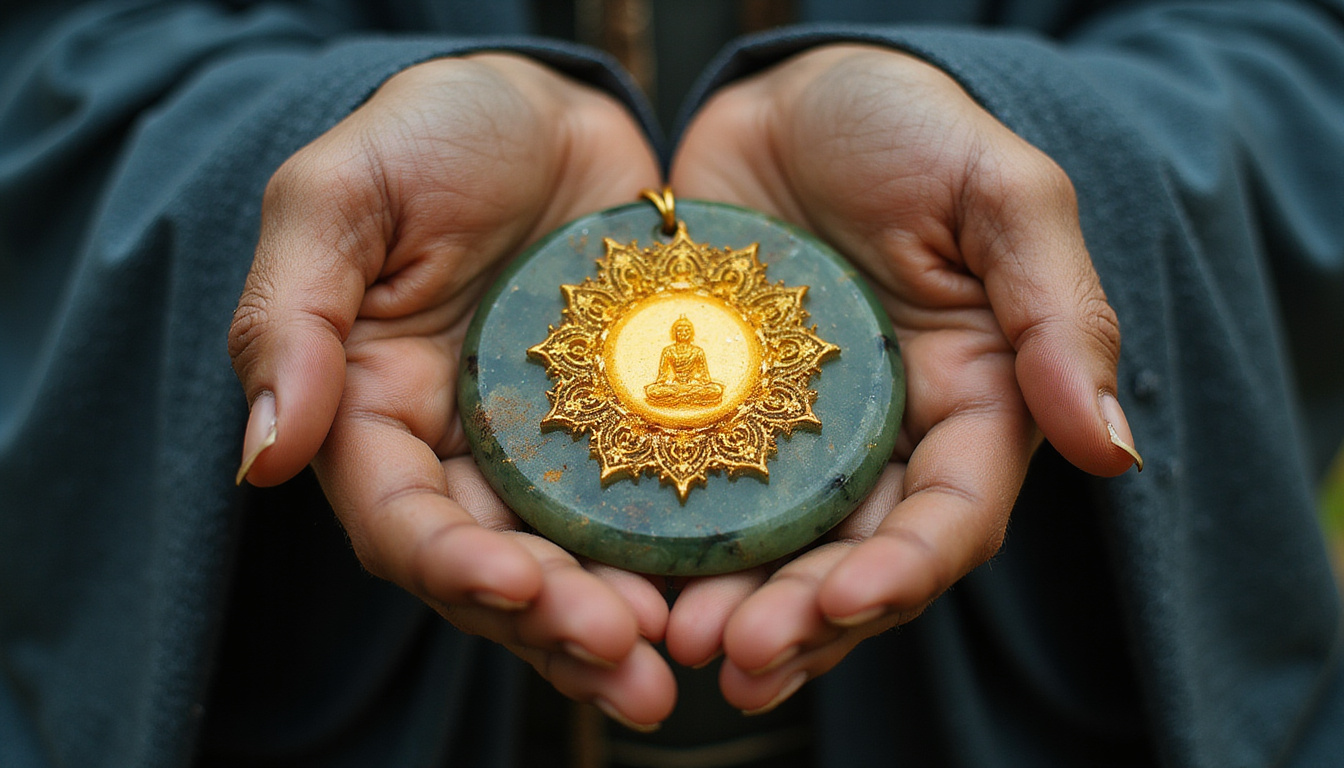
Divine Mediation
Given their role in myths and imperial regalia, magatama were likely understood as:
- Amulets that carry or attract kami (spirits/deities)
- Bridges between visible and invisible realms
- Tools for legitimate rulers to access divine sanction
Materials and Colors: Do They Have Different Meanings?
Traditional magatama came in a variety of materials, and many modern practitioners associate specific energies or meanings with each.
Common materials include:
-
Jade (nephrite or jadeite)
Historically prized, especially green jade. Often associated with vitality, longevity, and protection. -
Agate and Carnelian
Reddish or orange stones linked to courage, passion, and grounding. -
Crystal or Quartz
Clear or milky stones, associated with clarity, purification, and amplifying energy. -
Glass
Appears in later periods; sometimes brightly colored. Linked to trade and early technological sophistication.
Some color associations many people use today:
- Green: growth, healing, harmony
- Red/Orange: protection, vigor, motivation
- White/Clear: spiritual clarity, purification
- Black: grounding, warding off negativity
These meanings blend traditional reverence for certain stones with modern crystal and energy lore.
Modern Spiritual Uses of Magatama
While not everyone believes in the mystical aspects of stones, numerous practitioners in Shinto, folk religion, and modern spiritual communities view magatama as powerful amulets.
Common modern uses include:
-
Protection
Worn to shield against misfortune, malice, or energetic “noise.” -
Luck and Prosperity
Especially in green or golden hues, thought to attract favorable opportunities and financial luck. -
Harmony and Relationships
Pairs of magatama are sometimes exchanged as tokens of connection, meant to promote mutual understanding and balanced relationships. -
Spiritual Alignment
Used during meditation or prayer to connect more deeply with kami, ancestors, or one’s own inner clarity.
It’s worth noting that Shinto itself often emphasizes gratitude and relationship with nature rather than fixed “magical powers,” so how people use magatama can vary widely depending on tradition and personal belief.
How to Choose and Use a Magatama Today
If you’re drawn to magatama, you can incorporate them into your daily life in thoughtful and respectful ways.
1. Choosing Your Magatama
Consider the following when selecting a piece:
-
Material:
- Jade for traditional symbolism
- Quartz for clarity and versatility
- Agate or carnelian for strength and vitality
-
Size and Shape:
- Smaller for discreet, everyday wear
- Larger for ceremonial or decorative use
- Pay attention to how the curve “feels” to you—more rounded vs. sharper
-
Color:
- Align it with an intention (healing, protection, calm, etc.)
- Or simply choose what your intuition and aesthetic sense prefers
-
Craftsmanship:
- Hand-carved pieces may carry more personal resonance
- Look for quality drilling and polishing so it’s comfortable to wear
2. Ways to Wear or Carry Magatama
You can use a magatama in many flexible ways:
- Necklace pendant, close to the heart
- Bracelet or mala-style bead
- Charm attached to a keychain or bag
- Pocket amulet for occasional touch and grounding
- Small altar or shrine piece for focus in prayer or meditation
3. Simple Personal “Activation” Ritual
You don’t need complex ceremonies. Many people follow a simple, personal approach:
- Cleanse the piece (water-safe stone: rinse; otherwise, wipe gently or place on dry salt nearby).
- Hold it in your hands, breathe deeply, and quietly state your intention (e.g., “May this magatama help me stay calm and grounded”).
- Wear or place it somewhere meaningful and revisit that intention regularly.
This process is as much about your own focus and mindfulness as any external “power.”
Caring for Your Magatama
To respect both the physical object and its symbolic role, treat your magatama with care:
- Avoid harsh chemicals or ultrasonic cleaners, especially for jade and softer stones.
- Store it in a soft pouch or box to prevent scratches.
- Remove before intense physical activity if the cord or metal fittings are delicate.
- Wipe occasionally with a soft cloth to keep surface oils and residues from building up.
Some people also like to periodically “reset” their magatama energetically by:
- Leaving it in indirect sunlight or moonlight
- Placing it briefly on a bed of dry salt (without burying, if the stone is sensitive)
- Pairing it with a cleansing crystal like clear quartz or selenite nearby
Frequently Asked Questions About Magatama
What is the spiritual meaning of magatama?
Spiritually, magatama are often seen as symbols of life energy, protection, and connection to the divine. Their comma-like shape is linked to the fetus, the moon, or a fragment of the soul, making them powerful emblems of rebirth, intuition, and sacred authority.
How are magatama used in Japanese culture today?
Modern Japanese people may wear magatama as jewelry, purchase them as protective charms from shrines, or display them as cultural artifacts. In both traditional and neo-spiritual practices, a magatama amulet can be used for protection, luck, or as a way to feel closer to Shinto traditions and ancestral roots.
Are magatama good luck charms?
Many people consider magatama to be good luck charms, particularly when made of jade or other auspicious stones. They are believed to attract positive energy, ward off misfortune, and support the wearer’s intentions—whether for health, prosperity, or emotional balance.
Embrace the Legacy of Magatama in Your Own Life
The magatama carries thousands of years of history in its small, curved form—echoes of prehistoric artisans, ancient rulers, and enduring myths of sun goddesses and sacred treasures. Whether you’re drawn to its role in Japanese culture, its spiritual symbolism, or simply its elegant shape, a magatama can become a deeply personal talisman.
If this ancient amulet speaks to you, take the next step: explore authentic magatama pieces, learn about their materials and stories, and choose one that resonates with your own intentions. Worn over your heart, carried in your pocket, or placed on a small altar, a magatama can be a daily reminder of protection, purpose, and connection to something larger than yourself.
Explore the Science Behind Spirituality
This guide explored the meaning and history of good luck symbols. To discover the psychology, consciousness, and scientific perspectives behind spiritual beliefs, visit SpiritualMindScience.com.