Anthurium Care Secrets: Grow Vibrant Blooms Indoors Without Mistakes
If you’ve ever admired the glossy leaves and long-lasting, heart-shaped flowers of an anthurium, you already know why it’s one of the most popular indoor plants. But while it looks exotic, you don’t need a greenhouse or advanced skills to keep it thriving. With a few insider care secrets and an understanding of what this tropical plant really wants, you can enjoy vibrant blooms indoors year-round—without the common mistakes that cause yellow leaves, crispy tips, or no flowers at all.
Understanding Anthurium: The Basics
Anthuriums are tropical plants native to Central and South America. In the wild, many grow as epiphytes, clinging to trees rather than living in soil. That background explains almost everything about proper anthurium care: they like moisture, airflow around their roots, filtered light, and warmth.
Most people grow:
- Anthurium andraeanum and hybrids (the classic “flamingo flower” with red, pink, white, or purple spathes)
- Anthurium scherzerianum (with twisted, curly spadices)
- Foliage types like Anthurium clarinervium and Anthurium crystallinum (grown more for dramatic leaves than flowers)
The general care is similar, but flowering types need slightly more light and consistent feeding to bloom well indoors.
Light: The #1 Factor for Anthurium Blooms
If your anthurium isn’t flowering, light is usually the culprit.
Ideal Light Conditions
- Bright, indirect light is best.
- Place near an east- or north-facing window, or a few feet back from a bright south/west window with a sheer curtain.
- Anthuriums can adapt to medium light, but you’ll see fewer blooms and slower growth.
Signs of Too Much or Too Little Light
- Too little light
- No blooms or very few
- Dark green, stretched leaves
- Slow growth
- Too much light
- Faded or bleached leaves
- Brown, crispy patches (sunburn) on leaves or flowers
If you’re growing under grow lights, aim for 10–12 hours per day and keep lights far enough away that leaves don’t heat up.
Watering Anthurium the Right Way (and Avoiding Rot)
Overwatering is the most common mistake with anthurium. Its roots like consistent moisture, but they also need air.
How Often to Water
Water when:
- The top 1–2 inches of soil feel dry, and
- The pot feels noticeably lighter when lifted.
For most indoor environments, that means watering about once a week, slightly more in summer and less in winter.
Proper Watering Technique
- Water thoroughly until excess drains out the bottom.
- Discard any water left in the saucer after 10–15 minutes.
- Never let the plant sit in standing water.
Signs You’re Over- or Under-Watering
- Overwatering
- Yellowing lower leaves
- Mushy stems or roots
- A sour or “swampy” smell in the soil
- Underwatering
- Drooping, limp leaves
- Dry, brown leaf edges
- Soil pulling away from the pot’s edges
If you suspect root rot, remove the plant from its pot, trim mushy roots, and repot in fresh, airy mix.
The Perfect Soil Mix for Anthurium
Standard heavy potting soil holds too much moisture around anthurium roots. Remember: many species are epiphytes, so they’re happiest in a chunky, well-draining medium.
Ideal Anthurium Potting Mix
Aim for a mix that is:
- Light and airy
- Well-draining but moisture-retentive
- Rich in organic matter
You can create your own blend:
- 40% high-quality indoor potting soil
- 30% orchid bark or chunky pine bark
- 20% perlite or pumice
- 10% coconut coir or sphagnum moss
This kind of mix mimics the loose, organic material they cling to in nature and dramatically reduces the risk of overwatering.
Temperature and Humidity: Recreating the Tropics Indoors
Anthuriums thrive in the same conditions most people find comfortable, with a little extra humidity.
Temperature Range
- Ideal: 65–80°F (18–27°C)
- Avoid:
- Drafts from leaky windows or doors
- Direct blasts from heating or AC vents
- Temperatures below 55°F (13°C)
Cold stress can cause leaf damage, slowed growth, and dropped buds.
Humidity Needs
Anthuriums prefer 60–80% humidity, but usually do fine around 50% with good watering habits. To boost humidity:
- Use a humidifier near your plant group.
- Place the pot on a pebble tray with water below (not touching) the pot.
- Group plants together to create a microclimate.
Misting can offer a short-term boost, but it’s not enough alone and can encourage leaf spots if air circulation is poor.
Fertilizing Anthurium for Continuous Blooms
Healthy, regular feeding is one of the key secrets to an anthurium that flowers all year indoors.
What Kind of Fertilizer?
Use a balanced, water-soluble fertilizer, such as:
- 10-10-10
- 20-20-20
- A “bloom booster” formula with slightly higher phosphorus (middle number)
Dilute to ¼–½ the recommended strength for houseplants. Anthuriums are sensitive to salt buildup from overfeeding.
Fertilizing Schedule
- Spring through early fall: Feed every 4–6 weeks.
- Late fall and winter: Reduce to every 8–10 weeks or pause if growth slows significantly.
Occasionally flush the soil with plenty of plain water to wash away built-up fertilizer salts.
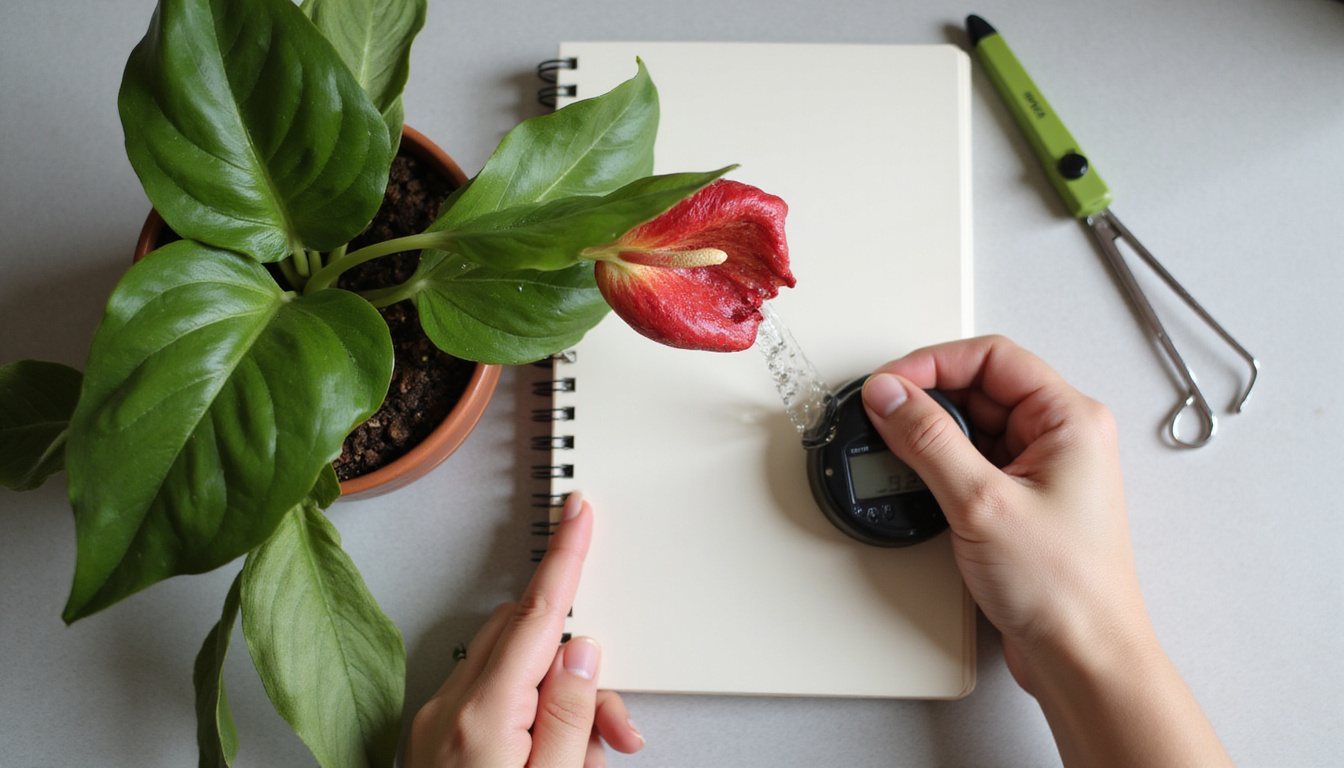
Choosing the Right Pot and Repotting Anthurium
Your anthurium’s container matters more than you might think.
Pot Choice
- Use a pot with drainage holes—non-negotiable.
- A snug pot encourages blooming slightly more than an oversized one.
- Clay/terracotta dries faster (good for heavy waterers), while plastic holds moisture longer.
When to Repot
Repot every 2–3 years, or when you notice:
- Roots circling the pot or growing out of drainage holes
- Very fast-drying soil
- Declining growth even with proper care
Move up only one pot size (for example, from 4" to 6") and refresh the soil with a fresh, chunky mix.
Common Anthurium Problems (and How to Fix Them)
Even with good care, issues can arise. Most have simple solutions once you know the cause.
1. No Flowers or Very Few Flowers
Possible causes:
- Not enough light
- Irregular or weak feeding
- Old blooms not removed (plant keeps spending energy on them)
Fixes:
- Move to a brighter, indirect light spot.
- Start a consistent fertilizing routine.
- Cut spent blooms down at the base of their stems.
2. Yellow Leaves
- Older bottom leaves yellowing: Often normal aging.
- Multiple leaves yellowing at once: Likely overwatering or poor drainage.
- Pale or yellowish new growth: Nutrient deficiency or too much direct sun.
Adjust watering, check drainage, and review lighting and feeding.
3. Brown Leaf Tips and Edges
Common reasons:
- Air that is too dry
- Underwatering or inconsistent watering
- Fertilizer burn from overfeeding or not flushing soil
Increase humidity, water more consistently, and reduce fertilizer strength.
4. Pests: Aphids, Mealybugs, Spider Mites
Anthuriums aren’t magnets for pests, but they’re not immune.
Look for:
- Sticky leaves (aphids)
- White cottony blobs (mealybugs)
- Fine webbing and speckled leaves (spider mites)
Treat by:
- Gently washing leaves with water and mild soap
- Applying insecticidal soap or neem oil according to label directions
- Isolating the plant from others until pests are gone
For detailed pest control guidance, you can consult resources like university extension publications or gardening organizations (for example, the University of Florida IFAS houseplant guidelines are a useful reference: UF/IFAS Gardening Solutions – source).
Simple Routine: Anthurium Care Checklist
To keep anthurium care stress-free, use this quick routine:
- Check soil moisture weekly; water when top 1–2" are dry.
- Verify bright, indirect light; adjust position if growth slows or leaves scorch.
- Maintain room temperatures between 65–80°F (18–27°C).
- Aim for moderate to high humidity; use a humidifier or pebble tray if air is dry.
- Feed lightly every 4–6 weeks during the growing season.
- Remove faded blooms and damaged leaves to keep the plant tidy and productive.
Propagating Anthurium: Expand Your Collection
Once you’ve mastered care, you can create more plants by division.
Division Method
- Gently slide the plant from its pot.
- Locate natural clumps or stems with their own roots.
- Separate them carefully, ensuring each division has roots and at least one healthy stem.
- Pot each division in fresh anthurium mix and water lightly.
- Keep in bright, indirect light with slightly elevated humidity while they establish.
New divisions may pause flowering while focusing on root growth, then resume blooming once settled.
Frequently Asked Questions About Anthurium Care
1. Why isn’t my anthurium plant flowering?
If your anthurium plant has healthy green leaves but no blooms, it’s usually not getting enough light or nutrients. Move it to a brighter spot with indirect sun and start a light, regular fertilizer schedule. Also remove old flowers to encourage new ones.
2. How often should I water indoor anthurium flowers?
For indoor anthurium flowers, water about once a week, but only when the top inch or two of soil is dry. Avoid strict schedules; always check the soil first. Overwatering causes root rot, while underwatering leads to drooping and dry leaf tips.
3. Is anthurium poisonous to pets or humans?
Yes. Anthurium plants contain calcium oxalate crystals that can irritate the mouth and digestive tract if chewed or eaten by pets or people. Keep them out of reach of curious cats, dogs, and young children, and contact a vet or medical professional if ingestion occurs.
Bring Consistent Color Indoors With Anthurium
With the right balance of light, moisture, and nutrition, an anthurium can reward you with lush foliage and long-lasting, colorful blooms for much of the year. It’s less about constant fussing and more about understanding what the plant is telling you: drooping leaves, faded flowers, or yellowing foliage are all simple signals you can learn to read and correct.
If you’ve been struggling with lackluster growth or reluctant blooms, use this guide as your blueprint. Adjust the light, fine-tune your watering, refresh the soil, and start a gentle feeding routine. Then, consider adding a few more varieties—flowering kinds for color, foliage types for drama—to create a tropical corner that brightens your space in every season.
Start with one anthurium today, dial in the care using these secrets, and you’ll quickly gain the confidence to grow a whole collection of vibrant, mistake-free blooms indoors.
Throughout history, many plants and herbs have been associated with luck, protection, and prosperity. To explore their deeper spiritual, psychological, and scientific significance, visit SpiritualMindScience.com.