Guardian lions have watched over temples, palaces, and family homes for more than a thousand years—and they can play a meaningful protective role in your home today. Whether you’re drawn to their powerful symbolism, their striking appearance, or their place in feng shui, understanding guardian lions will help you place and use them correctly so they don’t become mere decoration, but active spiritual “gatekeepers.”
This guide walks you through the origins, meanings, placement rules, and modern uses of guardian lions so you can confidently invite this ancient protection into your space.
What Are Guardian Lions?
Guardian lions—often called Fu Dogs, Foo Dogs, Imperial Lions, or Shishi—are stylized lion statues traditionally placed in pairs at entrances. Despite the “dog” nickname, they are lions and originate from Buddhist and Chinese imperial culture.
They are believed to:
- Guard against negative energies and evil spirits
- Protect wealth and status
- Enhance authority and power of the occupants
- Create a boundary between chaos outside and harmony inside
Historically, only the imperial family and high-ranking officials could use guardian lions on a grand scale. Today, smaller versions appear in homes, offices, shops, and gardens around the world.
Origins and Symbolism of Guardian Lions
Buddhist Roots and Imperial Power
Guardian lions entered China along with Buddhism from India. Lions, not native to China, were known through stories and tribute animals and quickly became symbols of:
- Courage and strength
- Spiritual guardianship
- Royal and divine power
Placed at temples, tombs, and government buildings, they guarded sacred and important places. Over time, they became closely associated with the emperor and state power, which is why you still see them in front of palaces and banks today.
Yin and Yang: The Male and Female Pair
Guardian lions always come in pairs, expressing the balance of yin and yang:
-
Male lion (yang)
- Usually on the right side as you face the entrance
- Has a ball under his paw
- Symbolizes protection of the external world: power, career, reputation, and the building itself
-
Female lion (yin)
- Usually on the left side as you face the entrance
- Has a cub under her paw
- Symbolizes protection of the internal world: family, children, relationships, and the home’s energy
Together, they represent complete protection—outside and inside, material and emotional, seen and unseen.
How Guardian Lions Protect Your Home
Energetic Gatekeepers
In feng shui, the main door is called the “mouth of qi,” where life-force energy enters. Guardian lions stand sentry at this energetic gateway to:
- Filter out harmful or chaotic energy
- Guard against malice, theft, or ill intent
- Intensify the protective qi around your threshold
They don’t “attack” but rather repel and dissolve what doesn’t belong in your space, like spiritual bouncers.
Psychological Security
Beyond tradition, there’s a very practical, modern benefit: seeing strong, confident statues at your door subtly reinforces a sense of safety and stability. This can:
- Make your home feel more grounded and secure
- Signal to visitors (and potential intruders) that this space is cared for and protected
- Strengthen your own intention to keep your home peaceful and safe
Symbolism and psychology work together: when you assign guardian meaning to these lions, they become anchors for your protective mindset.
Where to Place Guardian Lions (Without Making Common Mistakes)
Correct placement matters. In traditional practice, improperly positioned guardian lions are considered ineffective—or even unlucky. Here’s how to get it right.
1. Always Place Them as a Pair
A single lion represents incomplete energy. Always use:
- One male + one female
- Same size, style, and material
- Same height or pedestal level
An imbalanced pair can symbolically represent conflict or broken partnership.
2. Position Relative to the Door
The key rule: “left lion, right lion” is based on the perspective of standing inside your home looking out.
So:
- Male lion on the right (as you look out through the door)
- Female lion on the left
From the outside looking in, they will appear reversed, which is correct.
If the pieces are not clearly male/female, look for:
- Ball under paw → male
- Cub under paw → female
If there are no symbols, choose one to be male and one female and keep that designation consistent.
3. Facing Direction
Guardian lions must face outward, never inward.
- Faces turned toward the street, driveway, or main path
- They “watch” what approaches your home
- Never turn them toward each other or toward the interior—this is seen as them “fighting” or guarding the wrong thing
4. Elevation and Base
Whenever possible:
- Place them on low pedestals, platforms, or steps
- Keep both lions at the same height
- Avoid placing one significantly higher than the other
Equal height symbolizes harmony between masculine and feminine protection.
Choosing the Best Guardian Lions for Your Space
Size and Scale
Match the size of your guardian lions to the scale of your home:
- Apartment or condo: small to medium statues, often 6–12 inches, are sufficient
- Single-family home: medium to large lions for the porch or entry steps
- Large property or business: larger, more imposing statues to match the architecture
A good rule: each lion should feel noticeable but not overwhelming. If they visually “dwarf” your door, they may feel intimidating rather than protective.
Materials and Finishes
Common materials include:
- Stone or marble – Traditional, durable, and symbolically strong
- Bronze or metal – Powerful, heavy, associated with authority and wealth
- Resin or ceramic – Affordable and versatile for indoor use
- Wood – Warmer, more subtle; good for interiors
For outdoors, choose weather-resistant stone or metal. Indoors, lighter materials are fine.
Style: Traditional vs. Modern
Traditional guardian lions are highly stylized, with curly manes, bared teeth, and ornamental bases. Modern interpretations may be minimal or abstract.
Both can work, but:
- Traditional forms carry stronger cultural symbolism
- Modern versions may blend better with contemporary architecture
Choose a style that both honors the protective meaning and suits your aesthetic so you actually enjoy seeing them every day.
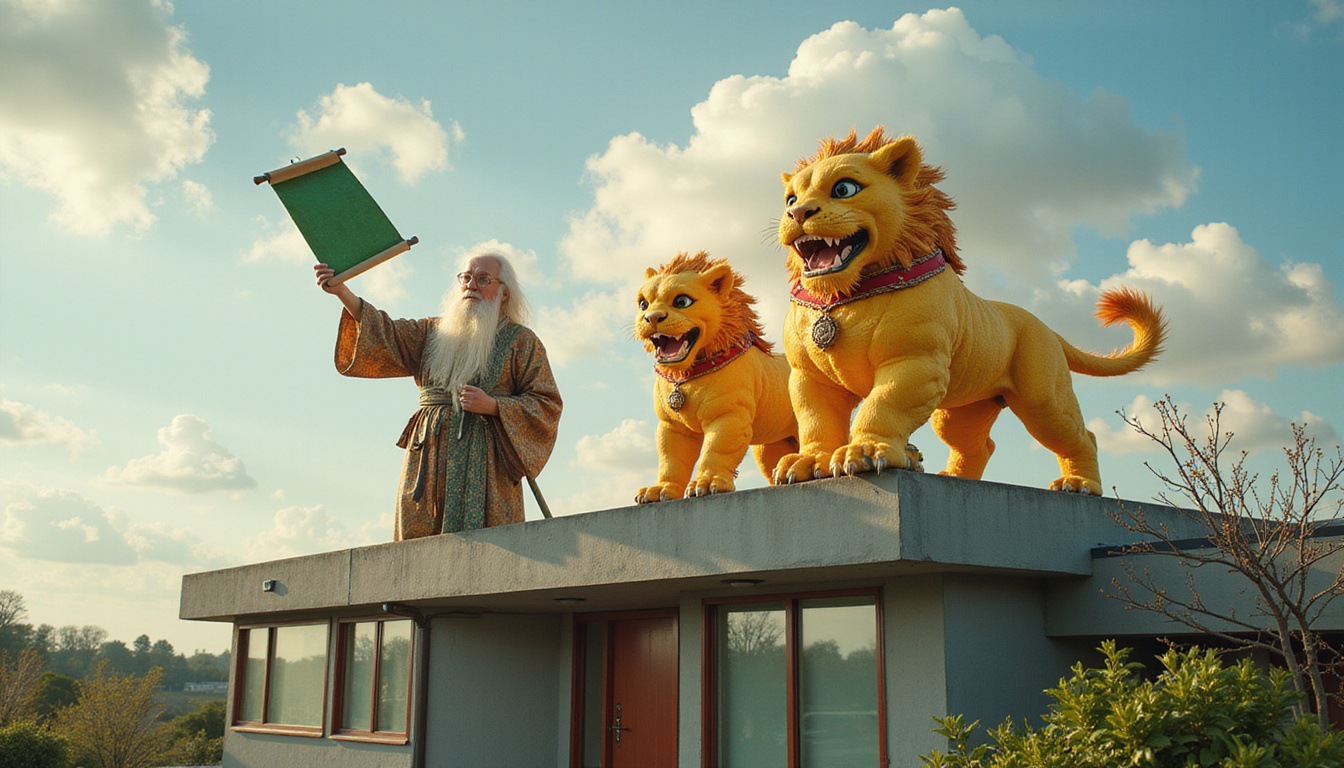
Guardian Lions in Feng Shui Practice
While feng shui traditions vary, many practitioners agree on these principles:
- Place guardian lions at the main entrance, not random interior doors
- Use them when your door faces:
- Busy roads
- Sharp corners or “poison arrows”
- Neglected or chaotic buildings
- Keep the area around them clean, uncluttered, and well-lit
They’re especially recommended for:
- Homes on dead-end streets or at T-intersections
- Ground-floor apartments on busy city streets
- Businesses needing protection of assets and reputation
The Feng Shui Society and other organizations emphasize that symbolic cures like guardian lions should be used alongside, not instead of, practical safety measures like good locks, lighting, and security (source: Feng Shui Society).
Everyday Rituals to “Activate” Your Guardian Lions
You don’t need elaborate ceremonies, but a simple intentional practice strengthens their role.
Consider:
-
Cleansing
- Wipe the statues with a clean cloth before placing them
- Optionally, use incense, sound (gentle bell), or sunlight
-
Intention Setting
- Stand at your door and place a hand on each lion
- Silently or aloud state your intention:
- “Guard this home from harm.”
- “Protect the peace of all who live here.”
- “Keep away those who wish us ill.”
-
Maintenance
- Dust or clean them regularly
- Repair chips or cracks when possible
- Don’t allow clutter or trash to accumulate near them
These small, mindful acts keep the protective symbolism alive in your awareness.
Indoors vs. Outdoors: Can Guardian Lions Go Inside?
Yes—guardian lions can be placed indoors, especially in apartments or in climates where outdoor placement is difficult.
Good indoor locations:
- Just inside the main entrance, flanking the doorway
- On a console table facing the door
- At the entrance to a dedicated meditation, altar, or sacred room
Less ideal locations:
- Bedrooms (especially near the bed) – the energy can feel too strong
- Bathrooms or kitchens – symbolically disrespectful
- On the floor in high-traffic areas where they’re easily kicked or bumped
Wherever they are, treat them as honored guardians, not casual decor.
Common Mistakes to Avoid
When working with guardian lions, watch out for these pitfalls:
- Using only one statue – Breaks the yin-yang balance
- Facing them inward – Misdirects protective energy
- Placing them randomly – They’re meant for entrances, not coffee tables
- Cluttering the area – Obstructs both physical and symbolic protection
- Disrespectful use – Avoid using them as doorstops or plant stands
Staying mindful of their role as sacred protectors helps you avoid turning them into empty ornaments.
Quick Placement Checklist
Use this list when you’re ready to set up your guardian lions:
- [ ] Do you have two lions (male and female)?
- [ ] Are both lions the same size and style?
- [ ] Are they placed at or near the main entrance?
- [ ] From inside looking out, is the male on the right and female on the left?
- [ ] Are they facing outward toward the approach to your home?
- [ ] Are they on a stable, level base, ideally at the same height?
- [ ] Is the surrounding area clean, uncluttered, and respected?
- [ ] Have you set a clear intention for protection and peace?
If you can check all of these, your guardian lions are well-positioned to do their job.
FAQ About Guardian Lions
1. How do guardian lions differ from Chinese guardian dogs or Fu Dogs?
The terms often overlap. “Fu Dogs” or “Chinese guardian dogs” are Western nicknames for the same statues—stylized lions, not dogs. In traditional Chinese culture, they’re guardian lions associated with imperial protection, Buddhism, and feng shui.
2. Can I use guardian lion statues in a modern home for protection?
Yes. Guardian lion statues can be powerful protective symbols in modern homes. The key is proper placement at the main entrance, respectful treatment, and a clear intention. They adapt well to contemporary architecture as long as you honor their role as guardians.
3. Are guardian lion feng shui cures suitable for apartments or rentals?
Absolutely. Small pairs of guardian lions are popular feng shui cures for apartment doors, especially on busy or noisy hallways. Place a matching pair on a console or shelf just inside the door, facing outward, with the male on the right and female on the left as you look out.
Invite Ancient Protection Into Your Home
Guardian lions are far more than beautiful statues—they’re enduring symbols of courage, stability, and protection that have safeguarded homes and sacred spaces for centuries. By understanding their origins, honoring their symbolism, and placing them with care, you can transform them from mere decor into meaningful guardians of your own threshold.
If you’re ready to strengthen the energetic and psychological protection around your space, start by choosing a pair of guardian lions that resonates with you, position them at your entrance, and set a clear intention for safety and peace. Let these ancient sentinels stand watch, so you and your loved ones can relax, feel supported, and truly call your home a sanctuary.
Explore the Science Behind Spirituality
This guide explored the meaning and history of good luck symbols. To discover the psychology, consciousness, and scientific perspectives behind spiritual beliefs, visit SpiritualMindScience.com.