The swastika is one of the most powerful and polarizing symbols in the world. For billions of people across Asia, it is an ancient sign of good fortune, cosmic harmony, and the divine. For many in the West, it is inextricably linked with Nazism, genocide, and hate. Understanding how one symbol came to embody such contradictory meanings requires looking at its deep history, its violent 20th-century misuse, and current efforts at cultural reclamation.
What Is the Swastika?
The swastika is a geometric symbol composed of a cross with four equal arms bent at right angles, usually in a clockwise or counterclockwise direction. The English word “swastika” derives from the Sanskrit svastika, often translated as “conducive to well-being” or “good fortune.”
Key points about its visual form:
- Four arms radiating from a central point
- Each arm bent at a 90° angle
- Can appear tilted or standing “flat”
- Used in both clockwise and counterclockwise orientations in different cultures
This simple structure has made the swastika easy to draw and adapt, which helped it spread—independently or through cultural exchanges—across continents for thousands of years.
Ancient Origins: A Global Symbol of Auspiciousness
Long before its 20th-century appropriation, the swastika appeared in countless ancient cultures. Archaeological evidence suggests its use stretches back at least 7,000 years.
The Swastika in Ancient India
In the Indian subcontinent, the swastika has been a sacred sign since antiquity:
- Hinduism: The right-facing (clockwise) swastika symbolizes the sun, prosperity, and the god Vishnu; the left-facing version is sometimes associated with the goddess Kali or esoteric practices. It appears on temples, homes, marriage invitations, and religious offerings.
- Buddhism: The swastika represents the Buddha’s footprints, eternity, and the wheel of dharma. It’s commonly seen on statues, in manuscript colophons, and on temple gates across India, East Asia, and Southeast Asia.
- Jainism: The swastika is one of the religion’s primary symbols, representing the four states of existence (heavenly, human, animal/plant, and hellish beings) and reminding practitioners of the path toward liberation.
In all three faiths, the symbol is overwhelmingly associated with auspiciousness, spiritual power, and ethical living.
The Swastika Across Eurasia
The swastika also appears across ancient Europe and Asia:
- Neolithic Europe: Found on pottery, jewelry, and carvings in sites across modern-day Ukraine, Greece, and the Balkans.
- Ancient Greece and Rome: Used as a decorative motif known as the “gammadion” or “tetraskelion.”
- Central and East Asia: Common on textiles, metalwork, and religious art among Turkic, Tibetan, Chinese, and Mongolian cultures, often symbolizing eternity or cosmic order.
Because the shape is simple, it may have been invented independently in multiple regions. Its recurring association with the sun, motion, and good fortune suggests a shared human tendency to link rotating patterns with life and renewal.
The Swastika in Indigenous Cultures
The symbol is also present in various Indigenous traditions:
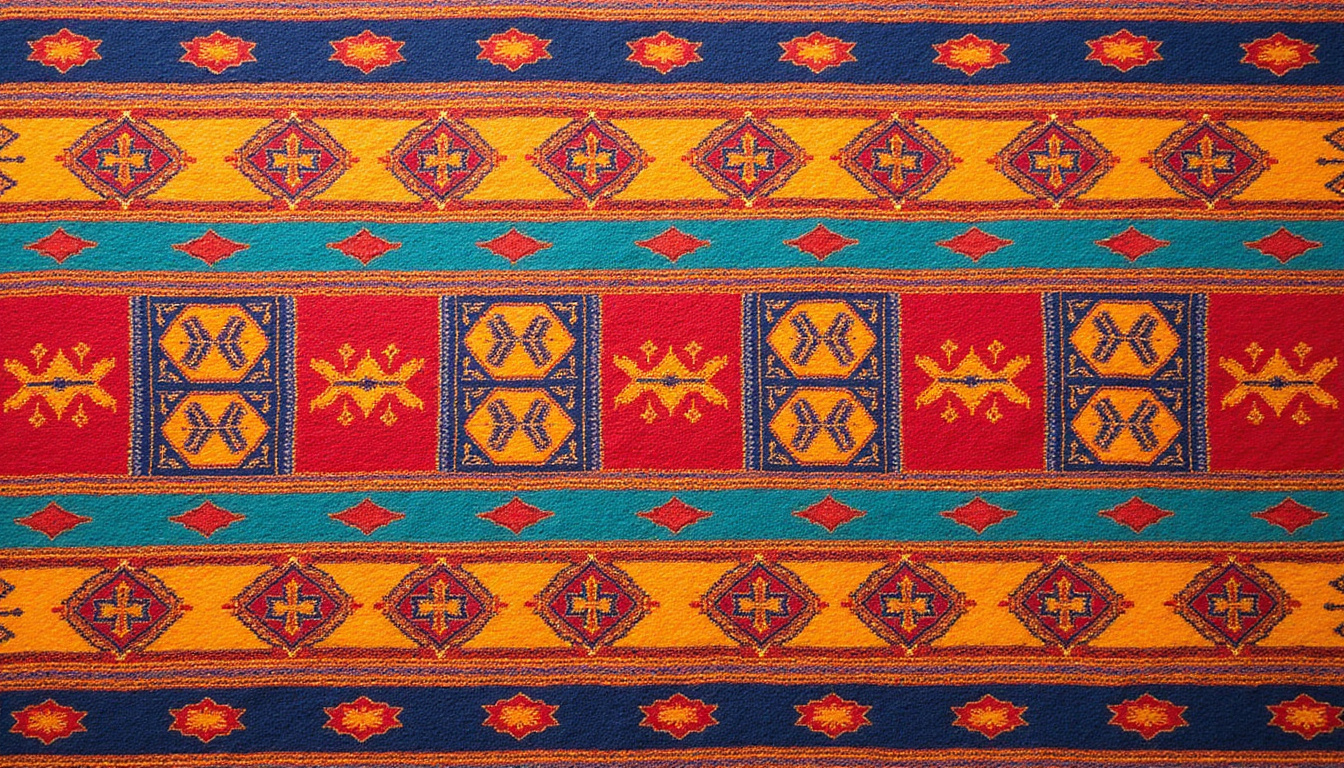
- Native American cultures: Variations appear in Navajo weaving, Mississippian pottery, and Southwestern rock art; meanings often relate to migration, the four directions, or whirling logs (a traditional motif).
- Arctic and Siberian cultures: Sometimes linked to the polar star and seasonal cycles.
By the late 19th century, the swastika was recognized among scholars as a common ancient symbol of good fortune and cosmic balance (source: Encyclopaedia Britannica).
The Swastika Before Nazism: A Global “Good Luck” Emblem
In the late 19th and early 20th centuries, Western fascination with archaeology, “Oriental” religions, and esotericism brought the swastika into mainstream European and American visual culture as a fashionable sign of luck and exoticism.
You could find it:
- On postcards and greeting cards wishing prosperity
- As a decorative element in architecture and floor tiles
- On military insignia in some European countries
- In logos and trademarks for companies, hotels, and consumer goods
- On scout badges and early sports team logos
In this period, the swastika was generally understood in the West as a positive, vaguely “Eastern” or “ancient” symbol. That meaning changed radically with the rise of the Nazi movement in Germany.
Nazi Appropriation and Transformation of Meaning
The most catastrophic chapter in the history of the swastika began in the early 20th century with its adoption by German nationalist and völkisch (ethno-nationalist) groups.
Why the Nazis Chose the Swastika
Adolf Hitler and other Nazi ideologues were heavily influenced by:
- Pseudo-scientific racial theories that imagined an “Aryan” master race
- Misinterpretations of Indo-European linguistic and cultural connections
- Occult and nationalist movements that had already been using the swastika as an “Aryan” emblem
Hitler adopted a black, right-facing swastika rotated at a 45-degree angle inside a white circle on a red background as the emblem of the Nazi Party. In Mein Kampf, he described the design in racial and nationalist terms, seeking a bold, striking symbol to represent German “renewal” and racial ideology.
From Sacred Sign to Emblem of Genocide
Between 1933 and 1945, as the Nazis took power and waged war:
- The swastika became the official flag of Nazi Germany.
- It appeared on uniforms, banners, armbands, vehicles, and official documents.
- It was omnipresent in propaganda celebrating militarism, antisemitism, and expansionism.
Because of the Holocaust and the devastation of World War II, the symbol’s meaning in Europe and North America became inseparable from:
- Antisemitism and racism
- Totalitarian ideology
- War crimes and crimes against humanity
- White supremacist hate
In the Western public imagination, the historical, cultural, and religious contexts of the swastika were largely erased or forgotten, overshadowed by its Nazi usage.
Legal and Social Responses: Bans and Restrictions
After World War II, many countries confronted the question: what should be done with the Nazi swastika?
Legal Approaches
Some examples:
- Germany and Austria: Strict laws prohibit the public display of Nazi symbols, including the specific Nazi swastika, except for clearly defined uses such as education, art, and historical documentation.
- Other European countries: Some have partial bans or hate-speech laws under which Nazi symbols can be prosecuted when used to promote hate.
- Asia and elsewhere: In countries where the swastika is primarily a religious symbol (like India, Japan, and much of Southeast Asia), it generally remains legal and widely used.
A major challenge is distinguishing between the Nazi emblem and traditional forms used in religious and cultural contexts. Many legal systems rely on intent, context, and design specifics (such as orientation, color scheme, and accompanying imagery).
Social and Cultural Reactions
Outside of formal laws, social norms also shape reactions:
- In many Western contexts, any swastika—Nazi-style or not—can provoke fear, anger, or deep hurt, especially among Holocaust survivors and their descendants.
- In many Asian contexts, people are often surprised that a sacred symbol of blessing is seen as hateful elsewhere.
- Tourist misunderstandings are common when Western visitors encounter swastikas at temples, shrines, or on store signs in Asian countries.
This clash of perceptions is central to today’s debates about the symbol’s future.
Cultural Reclamation: Can the Swastika Be Saved?
In recent years, efforts have emerged to “reclaim” the swastika’s older, positive meanings, especially in communities where it has been a sacred symbol for millennia.
Religious and Cultural Communities Speaking Out
Hindu, Buddhist, and Jain organizations have increasingly:
- Emphasized the distinction between the swastika and the Nazi hooked cross (often called the Hakenkreuz in German).
- Explained traditional meanings of luck, well-being, and spiritual power.
- Advocated for respectful recognition of their religious rights to use the symbol.
Likewise, some Indigenous groups have discussed the pre-Nazi presence of similar motifs in their art and ceremonies, arguing against a blanket association with Nazism.
Educational Campaigns and Renaming Efforts
Various initiatives aim to:
- Educate the public about the symbol’s wide and ancient history.
- Encourage media and institutions to differentiate between Nazi and non-Nazi uses.
- In some cases, rename the Nazi symbol “hooked cross” or “Nazi cross” to avoid conflating it with the broader term “swastika.”
However, reclamation is complex:
- For many Jewish communities and others directly impacted by Nazi crimes, the image—regardless of intent—can be traumatizing.
- For religious communities, relinquishing a sacred symbol because of a 20th-century abuse can feel like surrendering their heritage.
Navigating these tensions requires sensitivity, context awareness, and dialogue.
Distinguishing the Nazi Swastika from Traditional Forms
While all variations share a basic structure, there are clues that help differentiate context and meaning:
-
Design and Orientation
- Traditional swastikas appear in many orientations (upright, tilted) and directions (clockwise and counterclockwise).
- The Nazi emblem is typically a black, right-facing swastika, rotated 45 degrees, on a white circle and red background.
-
Setting and Accompanying Symbols
- In temples, shrines, or religious texts, the symbol is usually accompanied by other sacred imagery and motifs.
- On extremist banners, graffiti, or propaganda, it may appear with slogans, skulls, or other hate symbols.
-
Cultural and Geographic Context
- A swastika carved on an ancient stone in a European archaeological site is a historical artifact.
- A swastika on a modern jacket at a neo-Nazi gathering is a declaration of ideology.
-
Intent
- Intent matters legally and ethically: is it being used to express faith, as a historical object, or to intimidate and spread hate?
Understanding these distinctions doesn’t erase trauma, but it can reduce confusion and help societies develop more nuanced responses.
How to Talk About the Swastika Responsibly
Given its layered history, discussing the swastika calls for care and precision. A few guidelines can help:
- Use specific language: When referring to Nazi usage, adding terms like “Nazi,” “hooked cross,” or “Hakenkreuz” provides clarity.
- Acknowledge both histories: Recognize the symbol’s association with genocide and its much older sacred role for other communities.
- Center those affected: Respect the lived experiences of Holocaust survivors and marginalized groups targeted by contemporary hate groups.
- Listen to practicing communities: Take seriously the perspectives of Hindus, Buddhists, Jains, and Indigenous peoples for whom the symbol remains meaningful and benign.
Balancing these considerations is part of broader conversations about symbols, memory, and cultural rights.
FAQ: Common Questions About the Swastika Symbol
Q1: Is the swastika always a Nazi symbol?
No. The swastika long predates Nazism and appears in many cultures as a symbol of good fortune, the cosmos, and spiritual power. However, in much of the West, the image is strongly associated with Nazism because of its central role in the regime’s identity and propaganda. Context—design, location, and intent—matters greatly when interpreting the symbol.
Q2: What does the swastika mean in Hinduism, Buddhism, and Jainism?
In these religions, the swastika is a sacred sign. In Hinduism, it is linked with prosperity, the sun, and the divine; in Buddhism, with the Buddha’s qualities and the eternity of dharma; in Jainism, with the four realms of existence and the path to liberation. It is used on temples, altars, and religious objects as a blessing, not as a political emblem.
Q3: Why is the swastika banned in some countries but common in others?
Countries like Germany and Austria restrict the Nazi version of the swastika as part of broader laws against promoting Nazism and hate. In countries such as India, Japan, and across much of Asia, the swastika is culturally and religiously important and is not tied to Nazi ideology, so it remains visible and legal. These differing histories shape how each society regulates and perceives the symbol.
Understanding the swastika’s story—its ancient origins, catastrophic misuse, and ongoing cultural reclamation—allows a more informed, empathetic conversation about one of the world’s most contested symbols. If you work in education, media, design, or heritage preservation, consider taking the next step: review how your institution represents the swastika, consult with affected communities, and update your materials to reflect its full, complex history. Thoughtful choices today can help honor victims of past atrocities while respecting the living traditions for whom this symbol still stands for blessing, not hate.
Explore the Science Behind Spirituality
This guide explored the meaning and history of good luck symbols. To discover the psychology, consciousness, and scientific perspectives behind spiritual beliefs, visit SpiritualMindScience.com.