Prayer Flags: Meaning, Placement, and How to Use Them
Prayer flags are among the most recognizable symbols of Himalayan and Tibetan culture, but their true meaning and use often get misunderstood or reduced to decoration. Whether you’ve seen prayer flags strung across mountain passes, temple courtyards, or backyard gardens, understanding what they represent—and how to use them respectfully—can completely change the way you experience them.
This guide walks you through the deeper meaning behind prayer flags, how to place them correctly, and practical tips for integrating them into your spiritual or mindfulness practice.
What Are Prayer Flags?
Prayer flags are colorful cloth banners, traditionally printed with sacred texts, mantras, and images. They are used in Tibetan Buddhism and across the Himalayan region as a way to spread blessings, compassion, and good will to all beings.
Rather than being “prayers to” a specific deity, prayer flags are a medium for prayers for the benefit of the world. As the wind moves through the flags, it is believed to carry the prayers and positive intentions into the environment.
Key aspects of traditional prayer flags:
- Language and script: Often in Tibetan script, sometimes with Sanskrit mantras.
- Symbols: Deities, mantras, animals like the wind horse, and auspicious symbols.
- Elements: Each color corresponds to one of the five elements and directions.
They are not mere ornaments; they are considered sacred items that should be treated with respect.
The Symbolism and Meaning Behind Prayer Flags
Understanding the symbolism on prayer flags helps you relate to them in a more intentional way.
The Five Colors and the Five Elements
The classic string of Tibetan prayer flags has five repeating colors, always in this order:
- Blue – Sky / Space
- White – Air / Wind
- Red – Fire
- Green – Water
- Yellow – Earth
Together these represent:
- The five elements that make up the universe and the human body
- The five directions (center plus four cardinal directions)
- Harmony and interdependence of all life
When all five colors are present and arranged correctly, they symbolize balance and the holistic nature of existence.
Mantras and Sacred Texts
Most traditional prayer flags are printed with sacred phrases, especially the powerful mantra:
Om Mani Padme Hum
This is associated with Avalokiteśvara (Chenrezig), the bodhisattva of compassion. The mantra is understood in many ways, but broadly it:
- Invokes compassion for all beings
- Purifies negative tendencies
- Encourages wise and loving action
Other text may include:
- Verses from Buddhist scriptures
- Prayers for long life, prosperity, good health
- Protective mantras and auspicious wishes
The Wind Horse (Lung-ta)
One of the most common figures on prayer flags is the wind horse (Tibetan: Lung-ta), often centered on the flag and surrounded by four powerful animals (tiger, snow lion, garuda, and dragon).
Symbolically, Lung-ta represents:
- The vital life force or inner energy of a person
- The strength of one’s good fortune and positive momentum
- The uplifting power of practice and virtue carried by the “wind” of interdependence
Raising prayer flags with the wind horse is thought to increase good fortune, courage, and protective energy for all beings in the area.
Types of Prayer Flags
There are several traditional types of Tibetan prayer flags, each used in different contexts.
Lung-ta (Horizontal Prayer Flags)
These are the most commonly seen:
- Rectangular flags on a long cord
- Hung horizontally between trees, poles, rooftops, or across passes
- Designed to flutter freely in the wind
Lung-ta are used for general blessings, protection, and uplifting the environment.
Darchog (Vertical Prayer Flags)
Darchog, or “victory flags,” are:
- Long vertical banners attached to tall poles
- Planted into the ground, often on hilltops or near homes and monasteries
- Used for increasing life force, merit, and auspicious conditions
They are especially popular for new beginnings, building projects, or important life events.
Modern and Non-Traditional Variants
You may also find:
- Blank flags for writing your own intentions
- Flags in other languages besides Tibetan
- Artistic or decorative versions inspired by the original tradition
While these can be meaningful, it’s worth considering how closely they align with traditional symbolism if you’re aiming to respect the cultural roots of prayer flags.
How to Place and Hang Prayer Flags (With Respect)
Placement is not only aesthetic—it reflects the intention behind using prayer flags.
General Placement Guidelines
When deciding where to hang prayer flags:
- High places are ideal: rooftops, treetops, mountain paths, balconies, or tall poles.
- Let them catch the wind: the essence of prayer flags is the wind carrying their blessing.
- Keep them off the ground: they are sacred; avoid placing them where they’ll be stepped on or soiled.
- Avoid bathrooms or unclean areas: choose places that feel appropriate for something spiritual.
Outdoors is traditional, but you can also hang them indoors (near windows or doors) if the intention is clear and respectful.
Orientation and Order of Colors
Always maintain the traditional color sequence from left to right:
Blue – White – Red – Green – Yellow
If you are hanging prayer flags between two points:
- Make sure the first flag on the left is blue.
- Don’t reverse or randomize the colors—this order is part of the symbolism.
Timing: Auspicious and Inauspicious Days
In Tibetan culture, prayer flags are often raised on astrologically auspicious days, particularly:
- Tibetan New Year (Losar)
- Birthdays and anniversaries of spiritual teachers
- Personal milestones or fresh beginnings
Tibetan astrological systems also list “no-flag days,” when raising flags is believed to bring the opposite of the intended effect. If you want to follow this more closely, some Tibetan Buddhist centers and calendars publish recommended dates (source: FPMT).
If you don’t have access to such a calendar:
- Choose a calm, meaningful day to you—such as a birthday, new moon, or personal turning point.
- Begin with a moment of silence or simple prayer when hanging them.
Rituals and Intentions When Using Prayer Flags
You don’t need to be Buddhist to use prayer flags meaningfully, but approaching them with consciousness matters.
Setting Your Intention
Before hanging prayer flags, you can:
- Sit quietly for a moment and reflect on:
- Who or what you want to dedicate the flags to
- Qualities you’d like to cultivate (compassion, courage, healing)
- Silently or verbally express an intention, such as:
- “May these prayer flags bring peace and well-being to all beings in this area.”
- “May everyone who passes beneath these flags be blessed with wisdom and compassion.”
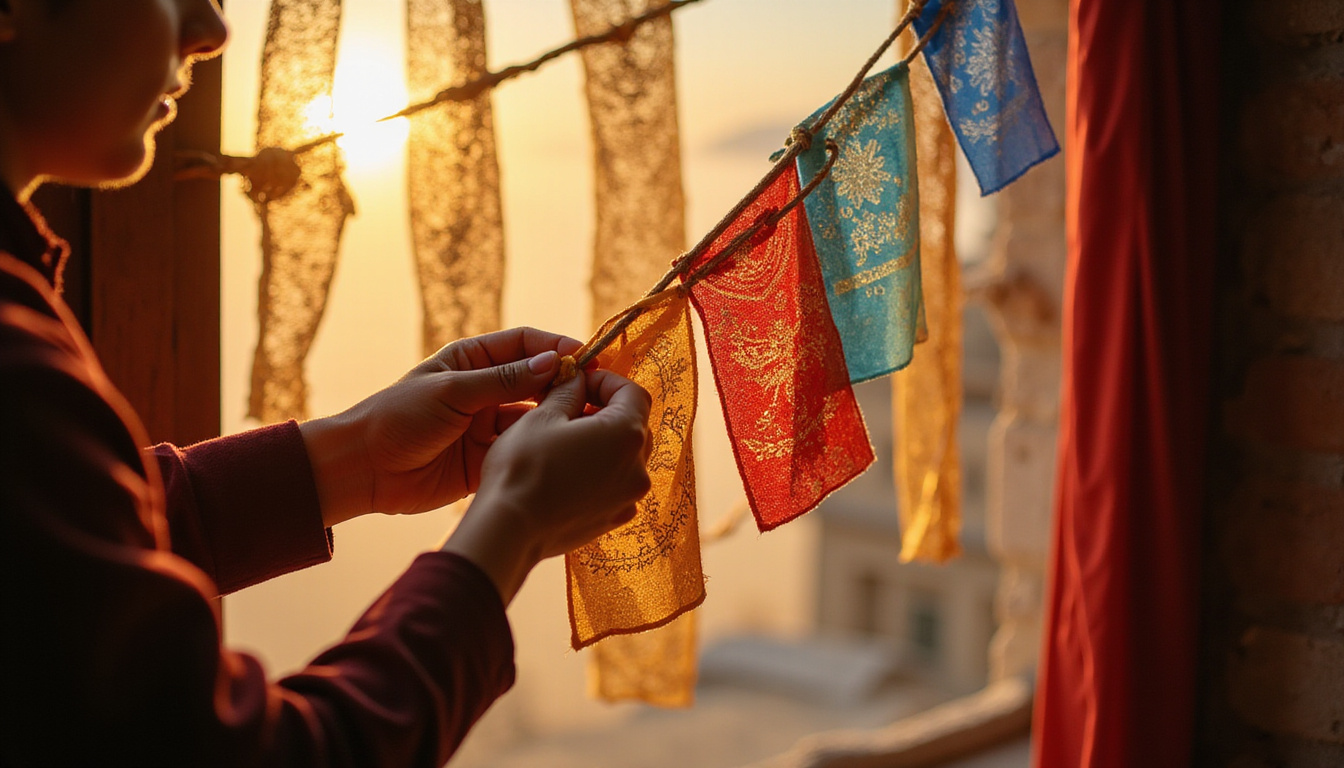
Simple Practice While Hanging Prayer Flags
Many people like to:
- Recite a mantra (e.g., Om Mani Padme Hum) a few times
- Visualize the wind as carrying light and blessings across the landscape
- Think of specific people, communities, or places in need of support
This transforms the act of hanging prayer flags from decoration into practice.
Caring for Old or Weathered Prayer Flags
One powerful aspect of prayer flags is their impermanence. They are meant to fade and disintegrate over time, symbolizing:
- The transient nature of life
- The continuous movement of blessings into the world
What to Do When They Fade
As prayer flags age:
- Let them naturally fade and fray—this is considered auspicious, not unlucky.
- When they are extremely worn or falling apart, consider replacing them with new ones, continuing the cycle of renewal.
Proper Disposal
Because they carry sacred images and text, they shouldn’t be thrown into the trash casually. The traditional method:
- Burn them respectfully, ideally with a simple prayer or intention.
- Ensure the ashes are returned to nature, scattered in a clean place like a garden, riverbank, or forest floor.
If burning isn’t possible, at least:
- Cut them into smaller, unrecognizable pieces.
- Bury them in a clean, undisturbed place in the ground.
Cultural Respect and Ethical Considerations
As prayer flags have spread globally, they’re now found in yoga studios, retreat centers, and homes far from Tibet. This can be beautiful, but it also raises questions of cultural appropriation and respect.
To use prayer flags thoughtfully:
- Acknowledge their origins in Tibetan Buddhism and Himalayan culture.
- Avoid commodifying or trivializing them (for example, using them as a purely trendy décor item with no understanding).
- Prefer ethically sourced flags:
- Support Tibetan refugee communities or Buddhist monasteries when possible.
- Seek fair-trade or charity-based sellers where profits support traditional communities.
You don’t have to be Buddhist, but you can:
- Treat prayer flags as spiritual tools, not props.
- Learn at least the basic meaning of the symbols and mantras.
- Use them to cultivate genuine compassion, mindfulness, and connection.
Practical Ideas for Using Prayer Flags in Your Space
Here are a few ways you might integrate prayer flags into your daily life:
- Garden or backyard: String a line of prayer flags between two trees as a constant reminder of your broader intention for peace and harmony.
- Balcony or rooftop: Hang them high where they can catch the wind, dedicating the blessings to your building, neighborhood, or city.
- Meditation space: Place a shorter string near a window or above a small altar to reinforce your spiritual practice.
- Marking transitions: Raise new prayer flags to honor a birth, a new home, a major healing journey, or a loved one’s passing.
In all cases, let them be more than decoration—let them be a visual reminder to come back to your heart and extend kindness beyond yourself.
FAQ About Prayer Flags
1. What do Tibetan prayer flags symbolize?
Tibetan prayer flags symbolize the interconnection of all life and the aspiration to benefit all beings. The five colors represent the elements and directions, while the mantras and images carry prayers for peace, health, protection, and spiritual awakening. When the wind touches the flags, it is believed to spread these blessings throughout the environment.
2. Is it okay to use Buddhist prayer flags if I’m not Buddhist?
Yes, you can respectfully use Buddhist prayer flags even if you’re not a Buddhist, as long as you:
- Understand their purpose is to benefit all beings, not just yourself.
- Avoid disrespectful use (e.g., placing them on the floor or as fashion accessories).
- Approach them with sincerity, gratitude, and good intention.
Many non-Buddhists find that prayer flags help them cultivate compassion, mindfulness, and a sense of global connection.
3. Where is the best place to hang Himalayan prayer flags?
The best place to hang Himalayan prayer flags is somewhere high, open, and clean:
- Outdoors on rooftops, balconies, trees, or garden poles where they can move freely in the wind.
- Indoors near a window, meditation area, or doorway, making sure they’re treated respectfully and not in bathrooms or directly on the floor.
Aim for a spot where they can inspire you regularly and spread their symbolic blessings to the widest area.
Bring Prayer Flags Into Your Life With Intention
Prayer flags are far more than colorful cloths; they’re a living expression of compassion, interdependence, and the wish for collective well-being. When you understand their meaning, choose a thoughtful placement, and hang them with clear intention, you participate in an ancient tradition of sending blessings into the world.
If you feel called to deepen your practice or refresh your space, consider finding a set of ethically made prayer flags, setting a heartfelt intention, and giving them a place of honor in your home or garden. Let them remind you—each time you see them flutter—that your thoughts, words, and actions are carried outward, touching more lives than you can see.
Begin with one simple act: choose a place, choose an intention, and raise your prayer flags as a quiet offering of peace to the world around you.
Explore the Science Behind Spirituality
This guide explored the meaning and history of good luck symbols. To discover the psychology, consciousness, and scientific perspectives behind spiritual beliefs, visit SpiritualMindScience.com.