Swallow safety matters at every age. Whether you’re caring for a child, an older adult, or managing your own health, understanding how we swallow and what can go wrong is essential to preventing choking and injury. With a few practical strategies and some basic know‑how, you can dramatically reduce the risk of swallowing accidents at home, work, or in care settings.
Why Swallow Safety Deserves Your Attention
Most of us swallow hundreds of times a day without thinking: during meals, sipping drinks, or just clearing saliva. Yet swallowing is a complex process involving the mouth, throat, and esophagus, coordinated by muscles and nerves in fractions of a second. When something disrupts this process, food or liquid can “go down the wrong pipe,” leading to coughing, choking, or—in severe cases—life‑threatening obstruction.
Choking is a leading cause of unintentional injury and death, especially in young children and older adults (source: CDC). Many of these incidents are preventable with awareness and simple changes to how we prepare food, eat, and supervise at‑risk individuals.
How the Body Swallows: A Quick Overview
Understanding what happens during a normal swallow helps you spot when something is wrong.
Swallowing has three main phases:
-
Oral phase (mouth)
- Food is chewed and mixed with saliva.
- The tongue moves the “bolus” (chewed food) to the back of the mouth.
-
Pharyngeal phase (throat)
- The soft palate rises to block the nasal passage.
- The voice box (larynx) lifts and the epiglottis folds down to cover the airway.
- The bolus passes through the throat into the esophagus.
-
Esophageal phase
- Rhythmic muscle contractions (peristalsis) move food down into the stomach.
If any part of this swallow sequence is weak, uncoordinated, or delayed, food or liquid can enter the airway instead of the esophagus. This is called aspiration, and it can cause coughing, choking, or even pneumonia if it happens silently and repeatedly.
Who Is at Higher Risk for Swallowing Problems?
Anyone can choke, but some groups need special attention to swallow safety:
- Infants and toddlers – small airways, immature chewing skills, tendency to explore by mouth.
- Older adults – age‑related muscle weakness, slower reflexes, and common medical conditions.
- People with neurological conditions – stroke, Parkinson’s disease, dementia, ALS, cerebral palsy, traumatic brain injury.
- People with head and neck cancers or surgeries – structural changes can disrupt the swallow.
- Individuals taking certain medications – sedatives, muscle relaxants, and some psychiatric medications can reduce alertness and muscle coordination.
If you or someone you care for falls into one of these groups, proactive swallow safety practices are especially important.
Warning Signs of Swallowing Difficulties (Dysphagia)
Persistent problems with swallow safety are called dysphagia. Recognizing early signs lets you seek help before a serious incident occurs.
Watch for:
- Coughing or choking while eating or drinking
- Wet or gurgly voice during or after meals
- Frequent throat clearing
- Pain or discomfort when swallowing
- The feeling that food is stuck in the throat or chest
- Drooling or difficulty managing saliva
- Long meal times or avoidance of certain foods
- Recurrent chest infections or pneumonia without a clear cause
- Unexplained weight loss or dehydration
Any ongoing difficulty to swallow—especially if new or worsening—should be evaluated by a healthcare professional, often with referral to a speech‑language pathologist who specializes in swallowing.
Everyday Swallow Safety: Practical Eating and Drinking Habits
Developing safer habits during meals dramatically reduces choking risk. These strategies are useful for everyone, but especially for children, older adults, and people with known swallowing concerns.
1. Sit Upright and Stay Alert
Body position can make or break a safe swallow.
- Sit fully upright (about 90 degrees), with feet supported.
- Avoid lying down or slouching while eating or drinking.
- Remain upright for at least 30 minutes after meals to reduce reflux and aspiration risk.
- Never feed someone who is excessively sleepy, sedated, or confused.
2. Slow Down and Take Small Bites
Rushing overwhelms your ability to swallow safely.
- Take small bites and small sips.
- Swallow fully before taking the next mouthful.
- Avoid talking with food in your mouth.
- Allow plenty of time for meals, especially for anyone with reduced swallow efficiency.
3. Chew Thoroughly and Mind the Texture
Food texture is a major factor in swallow safety.
- Chew completely until food is a soft, uniform consistency.
- Avoid mixing solids and thin liquids in the same bite (e.g., cereal with milk) if you’ve been told you have dysphagia; this can be harder to manage in the mouth.
- If teeth are missing or dentures are poor‑fitting, arrange dental review and adjust food textures as needed (softer, moister foods are usually easier to swallow).
High-Risk Foods: What to Avoid or Modify
Certain foods are well‑known choking hazards for people of all ages, but especially children and older adults. They’re often:
- Hard
- Round
- Slippery
- Stringy
- Tough or dry
- Small and compressible (they can mold to the airway)
Common examples include:
- Whole grapes and cherry tomatoes
- Hot dogs and sausages (especially in coin‑shaped slices)
- Nuts, seeds, and popcorn
- Hard candies and chewing gum
- Raw carrots and crunchy vegetables
- Tough meats or large chunks of meat
- Marshmallows
- Peanut butter (particularly by the spoonful)
Safer Food Preparation Strategies
To improve swallow safety:
- Cut round foods (grapes, cherry tomatoes, hot dogs) lengthwise and then into small pieces.
- Cook vegetables until soft; serve finely chopped or mashed if needed.
- Moisten dry foods with sauces, gravies, or broths.
- Shred or mince meats instead of serving large chunks.
- Avoid sticky spoonfuls of peanut butter; spread thinly on bread or crackers and pair with sips of liquid.
For infants and toddlers, always follow age‑appropriate food guidelines and never leave a small child unattended with food.
Supporting Safe Swallow for Children
Children are naturally at risk because they’re still mastering chewing and bite size, and they’re often distracted during meals.
Key tips:
- Have children sit at the table to eat; no running, playing, or lying down with food.
- Offer developmentally appropriate foods—soft, small pieces that can be easily mashed.
- Avoid high‑risk items such as whole nuts, popcorn, hard candy, or raw carrot coins until they’re older and have proven chewing maturity.
- Model safe behaviors: small bites, chewing thoroughly, and swallowing before talking.
- Teach them to spit out food if it feels “wrong” or hard to swallow.
Swallow Safety in Older Adults and People With Dysphagia
Age‑related changes and medical conditions can significantly affect the swallow. For older adults and people diagnosed with dysphagia, tailored strategies are crucial.
Work With Professionals
- Speech‑language pathologist (SLP) – assesses swallowing and recommends exercises, maneuvers, and diet modifications.
- Dietitian – ensures nutritional and hydration needs are met with any modified textures.
- Physician – assesses underlying causes (stroke, reflux, medication side effects) and coordinates care.
They may recommend:
- Specific swallowing postures (e.g., chin‑tuck) or techniques (e.g., double swallow).
- Texture‑modified diets (pureed, minced, or soft & bite‑sized foods).
- Thickened liquids to slow flow and allow more control during the swallow.
Never change food or fluid consistencies long‑term without professional guidance; both over‑restricting and under‑restricting carry risks.
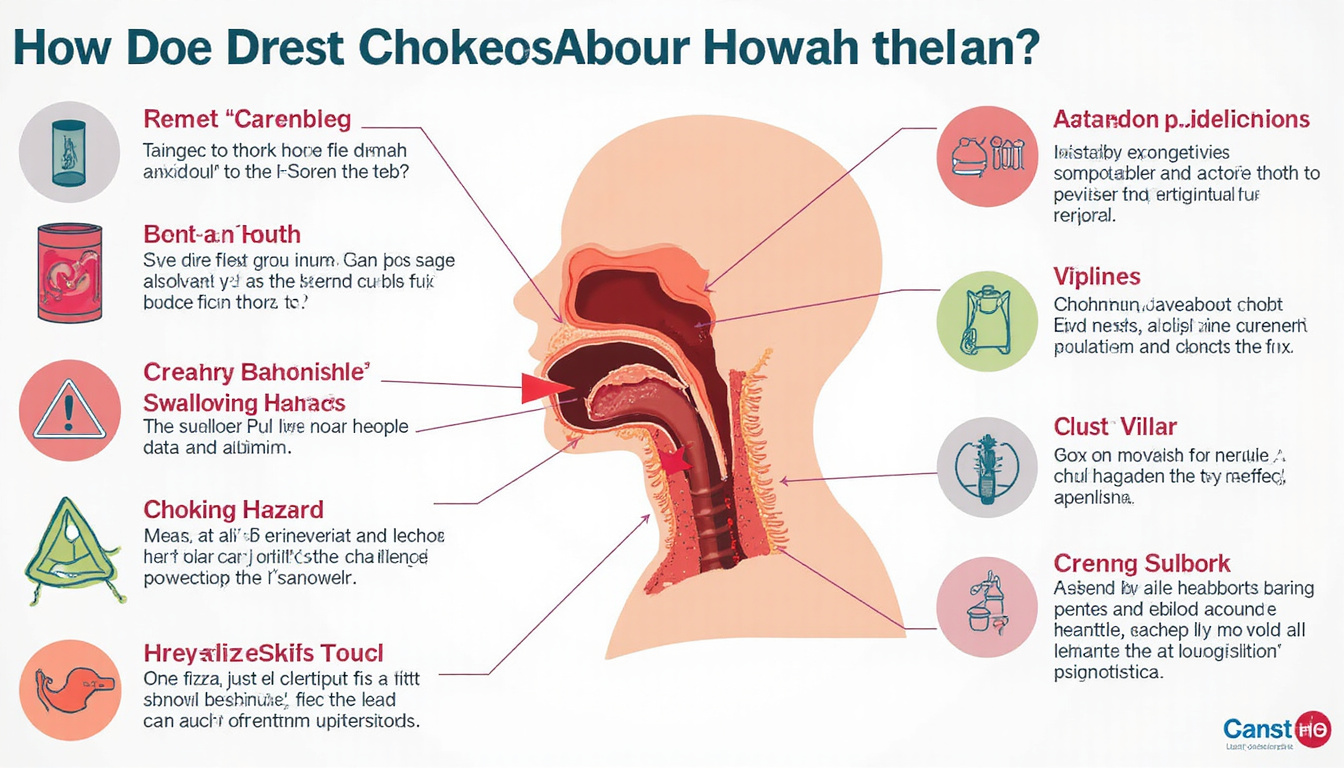
Mealtime Environment Matters
A calm, focused atmosphere improves swallow safety:
- Reduce distractions (TV off, minimal conversation during actual swallowing).
- Serve smaller portions at a time to prevent fatigue.
- Provide prompt but patient assistance—no rushing, no pressure to “just finish.”
- Ensure dentures and glasses are on; good vision and chewing are part of a safe swallow.
How to Respond to Choking: Essential First Aid Basics
Even with the best precautions, choking can still occur. Knowing how to act quickly can save a life. These are general guidelines; always seek certified first‑aid training.
Recognizing Choking
- Mild choking: Person can cough, speak, and breathe, but something is partially blocking the airway.
- Severe choking: Little or no breathing, weak or silent cough, inability to speak, possible high‑pitched noises, hands clutching the throat.
What to Do
-
Encourage coughing
- If the person can cough forcefully, keep encouraging them to cough to try to clear the object on their own.
-
If severe choking in a conscious adult or child (over 1 year)
- Stand behind them, wrap your arms around their waist.
- Make a fist just above the navel and deliver quick, upward thrusts (abdominal thrusts).
- Alternate with firm back blows between the shoulder blades if trained.
-
If the person becomes unresponsive
- Call emergency services immediately.
- Begin CPR as trained and follow dispatch instructions.
For infants under 1 year, techniques differ (back blows and chest thrusts—no abdominal thrusts). Learn age‑specific procedures from an accredited first‑aid course.
Never perform blind finger sweeps in the mouth; you may push the object deeper.
Simple Checklist for Safer Swallow at Home
Use this quick list to support safer swallowing every day:
- Sit fully upright for all meals and snacks.
- Stay focused on eating—no multitasking, running, or lying down with food.
- Serve age‑ and ability‑appropriate textures; modify high‑risk foods.
- Take small bites and sips; chew thoroughly.
- Keep mealtimes calm and unhurried.
- Supervise children and at‑risk adults whenever they eat.
- Seek medical advice for any ongoing swallowing problems.
- Learn basic choking first aid for different age groups.
FAQ: Common Questions About Swallowing Safety
1. What are signs that my swallow isn’t working properly?
Red flags include coughing or choking when you swallow, a wet or gurgly voice after drinking, the sensation of food sticking in your throat or chest, and frequent chest infections. If you regularly feel that you can’t swallow safely—especially with thin liquids—consult your doctor or a speech‑language pathologist.
2. How can I improve my swallow without special equipment?
Basic steps include sitting upright, slowing down your eating, taking smaller bites, chewing thoroughly, and avoiding talking while you swallow food. For some people, taking small sips of fluid between bites and pausing during the meal to rest the swallow muscles can also help. However, if you have ongoing difficulty to swallow, you need individualized assessment and possible exercises prescribed by a professional.
3. When should I worry about a child’s swallow and choking risk?
Be concerned if your child frequently coughs or chokes while eating, takes unusually long to finish meals, avoids certain textures, or seems to have pain or fear when they swallow. Any episode of severe choking where breathing was obstructed should be followed up with a healthcare provider, and you should review their diet, supervision, and eating habits to optimize swallow safety.
Take the Next Step Toward Safer Swallowing
Swallow safety isn’t just a medical issue—it’s central to comfort, nutrition, and quality of life. By understanding how we swallow, recognizing risk factors, and adopting a few proven safety habits, you can significantly lower the risk of choking and injury for yourself and the people you care about.
If you’ve noticed any ongoing swallowing problems, don’t ignore them or simply “work around” them by avoiding foods. Reach out to your healthcare provider and ask for a referral to a speech‑language pathologist for a comprehensive swallow assessment. Investing a little time now to address swallow safety can prevent emergencies later and help you or your loved one enjoy eating and drinking with greater confidence and peace of mind.
Explore the Science Behind Spirituality
This guide explored the meaning and history of good luck symbols. To discover the psychology, consciousness, and scientific perspectives behind spiritual beliefs, visit SpiritualMindScience.com.