Apotropaic Architecture: Secrets of Buildings That Repel Bad Luck
Walk through any old city and you’ll see faces peering from cornices, iron spikes on roofs, strange symbols above doors and even windows that make no practical sense. To a modern eye they’re just “decoration,” but many of these details are part of a long tradition known as apotropaic architecture—design elements intended to ward off evil, misfortune, and bad luck.
This hidden language of protection runs from ancient temples to contemporary skyscrapers, quietly shaping how buildings look and feel. Understanding it adds a new layer of meaning to places you pass every day.
What Is Apotropaic Architecture?
The word “apotropaic” comes from the Greek apotrópaios, meaning “averting evil.” Apotropaic architecture refers to built features—structural or decorative—designed specifically to repel bad luck, evil spirits, curses, the “evil eye,” or any harmful forces thought to threaten a building and its occupants.
Key ideas behind apotropaic design across cultures include:
- Thresholds are vulnerable. Entrances, windows, chimneys, and crossroads are seen as risky points where good and bad forces can cross.
- Like repels like. Fearsome or grotesque images scare away malicious spirits.
- Symbols have power. Religious signs, numbers, and patterns are thought to act as spiritual shields.
- Material matters. Iron, silver, salt, and certain stones often carry protective meaning.
Architects and builders embed these beliefs into plans, facades, and details, often blending them so seamlessly with style and structure that their original purpose becomes invisible to most viewers.
Ancient Roots: Protection Built in Stone
Long before modern engineering codes, ancient builders used symbolic defenses to keep structures—and societies—safe. Many of the earliest known examples of apotropaic architecture come from temples, city gates, and tombs.
Mesopotamia and the Ancient Near East
In Mesopotamia, powerful images guarded doorways and walls:
- Lamassu statues – Winged human-headed bulls or lions stood at gateways in Assyria, watching over palaces with a combination of physical and supernatural prowess.
- Foundation deposits – Ritual objects (figurines, tablets, animal bones) were buried beneath walls to form a permanent spiritual shield.
These were not mere ornaments; they were understood as active protectors, as real a part of a structure’s defense as its walls.
Ancient Egypt
Egyptian temples and tombs were packed with apotropaic features:
- Solar eyes and uraei – The cobra (uraeus) on temple facades or crowns evoked divine power to strike enemies.
- Protective deities at thresholds – Carvings of Bes, Taweret, and other household gods often appeared around entrances to guard against malevolent forces.
- Symbolic architecture – False doors in tombs allowed the dead to pass while creating a controlled interface between worlds.
Hieroglyphic spells carved in stone weren’t simply text; they were functional magic integrated into the architecture (source: The Metropolitan Museum of Art).
Greece and Rome
Classical antiquity provides some of the clearest examples of early apotropaic design:
- Gorgoneia – The head of Medusa, carved on door lintels, shields, or pediments, was used to “petrify” evil.
- Phallic symbols – Carved phalloi on houses, streets, and fountains in places like Pompeii were widely believed to guard against envy and the evil eye.
- Eye motifs on ships and buildings – Painted or carved eyes watched for danger, both literal and supernatural.
Many of these elements transitioned into later European traditions, morphing in meaning but retaining their protective roles.
Medieval and Early Modern Europe: From Gargoyles to Witches’ Marks
If you picture apotropaic architecture, the medieval cathedral is probably the first image that comes to mind. But churches are only part of the story.
Gargoyles and Grotesques
High on the walls of Gothic churches, grotesque faces and monsters appear:
- Gargoyles – Functional waterspouts shaped like beasts, channeling rainwater away from walls while also “spitting” on evil.
- Grotesque corbels and bosses – Non-functional carved heads and creatures, often tucked under eaves or in vaulting.
While interpretations vary, many historians argue that these creatures had an apotropaic role: frightening away demons and reminding passersby of the dangers lurking beyond sacred space.
Witches’ Marks and Protective Symbols
Ordinary homes and barns across Britain and parts of Europe often hid more subtle forms of apotropaic architecture:
- Daisy wheels / hexafoils – Circular geometric carvings near doors, windows, and fireplaces, believed to trap or confuse evil spirits.
- Burn marks and ritual protection marks – Deliberate scorch or carved symbols near hearths or in attics to keep witches and fire at bay.
- Apotropaic shoe or object concealment – Old shoes, mummified cats, and written charms concealed in walls, chimneys, or thresholds to protect the household.
Many of these features have only come to light during recent restorations and archaeological surveys, revealing a hidden layer of magical thinking inside otherwise ordinary buildings.
Around the World: Global Traditions of Protective Design
Apotropaic architecture is not a uniquely European phenomenon. Across cultures, builders developed their own ways to deflect misfortune.
The Middle East and Mediterranean
The fear of the “evil eye” shaped built environments across this region:
- Hamsa and eye symbols – Embedded in door knockers, tiles, and ironwork, believed to reflect envy and harm.
- Blue-painted doors and frames – Common in North Africa and parts of the Mediterranean, with blue seen as a color that confuses or repels evil forces.
- Threshold amulets – Scriptural verses or protective phrases carved over doorways or set in tiles.
These elements often blend faith, folk belief, and regional aesthetics into a single architectural language.
East Asia: Dragons, Lions, and Lucky Layouts
In China, Japan, and neighboring cultures, apotropaic architecture is closely linked to cosmology:
- Feng shui–informed design – Building orientation, placement of openings, and spatial hierarchy are arranged to invite beneficial “qi” and deflect harmful energy.
- Guardian lions (shishi / foo dogs) – Flanking gates and doors, one often male and one female, paired protectors against physical and spiritual threats.
- Roof ornaments – Dragons, phoenixes, and ridge beasts perched along rooflines to guard against fire, storms, and evil spirits.
Many contemporary buildings in East Asia still incorporate these concepts, even in sleek glass-and-steel towers.
South Asia and Beyond
Protective architecture appears across South Asia and the wider world:
- Threshold designs – Temporary or permanent motifs (like kolam in South India) drawn at entrances to welcome prosperity and block negativity.
- Liminal guardians – Carved guardians at temple gates (e.g., dvarapalas) standing between sacred and profane space.
- Color and image taboos – Placement of certain masks, demon faces, or even “ugly” dolls on facades to absorb or deflect misfortune.
Each tradition expresses similar fears—envy, curses, mischance—through very different visual languages.
Modern Echoes: Apotropaic Ideas in Contemporary Design
At first glance, today’s architecture looks rational, governed by building codes and climate simulations rather than superstition. Yet many modern designs quietly echo apotropaic thinking.
The Skyscraper as a Protective Symbol
Corporate and residential towers often wield symbolism intentionally:
- Iconic crowns and spires – Distinctive tops can act as “brands,” but also as power statements meant to project stability and ward off economic “bad luck.”
- Lucky numbers and proportions – Avoiding floors numbered 13, 4, or other culturally loaded numbers; favoring “lucky” floor counts and modular grids.
- Guardian motifs reimagined – Abstracted “eyes,” zigzag lightning patterns, and aggressive silhouettes that suggest strength and invulnerability.
Even if framed in the language of branding and psychology, much of this operates similarly to older apotropaic symbols.
Security, Psychology, and “Invisible” Apotropaic Design
In a secular society, apotropaic architecture often disguises itself as safety or wellness design:
- Defensive landscaping and façades – Bollards, planters, and angled walls that physically protect while creating a subconscious sense of refuge.
- Biophilic elements – Plants, natural light, and organic forms used to reduce stress, potentially “warding off” psychological harms more than supernatural ones.
- Wayfinding and boundaries – Clear thresholds, controlled entries, and layered access echo older concerns about what passes through liminal spaces.
The language changes—from spirits and curses to stressors and threats—but the intention of protection remains.
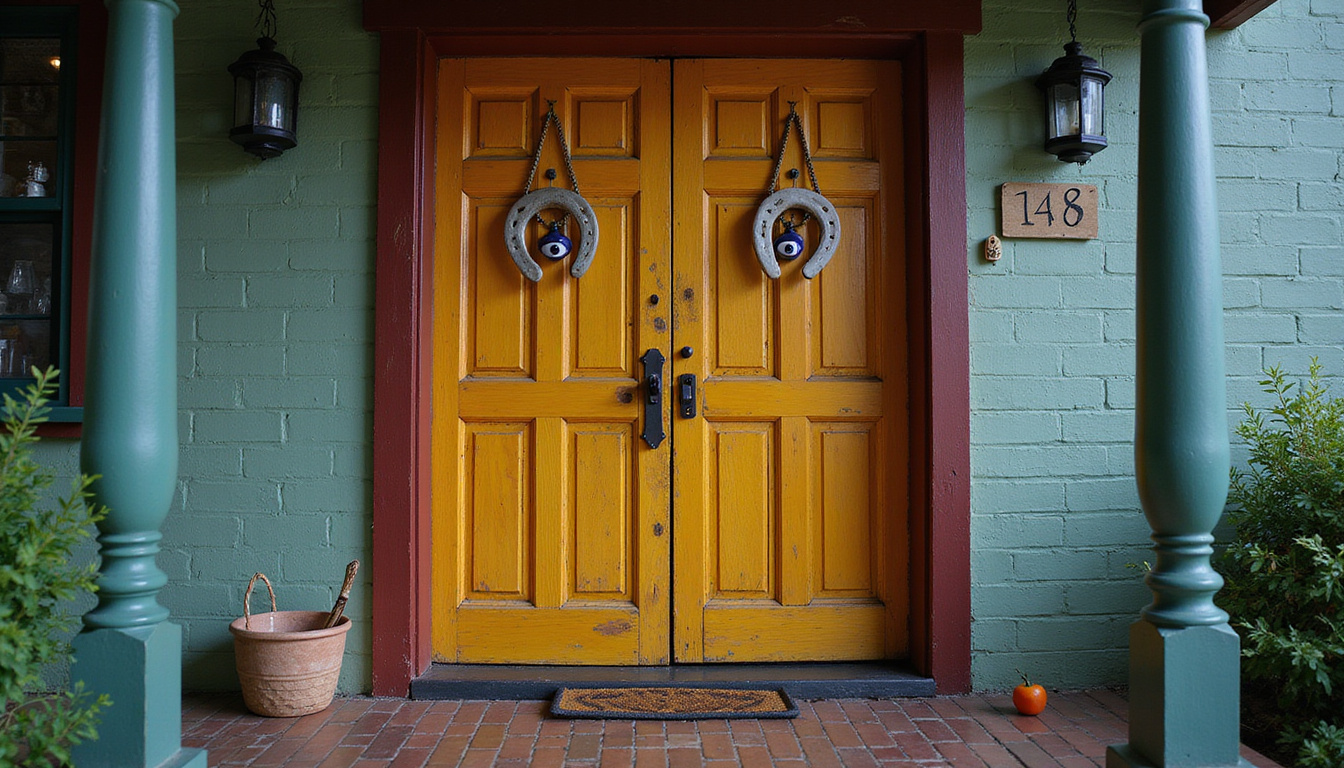
How to Spot Apotropaic Architecture in Everyday Life
Once you know what to look for, apotropaic elements are everywhere. On your next walk, pay attention to:
-
Doorways and windows
- Unusual carvings, numbers, or patterns above or around openings
- Blue trims, eye motifs, hand shapes, or stylized animals
-
Rooflines and corners
- Small statues or ornaments perched on edges
- Dragons, lions, or grotesque heads at high points
-
Ironwork and hardware
- Intricate patterns in gates, grilles, and railings with recurring symbols
- Distinctive door knockers shaped like hands, animals, or mythic creatures
-
Floor plans and numbers
- Missing floor numbers (no 13th floor, skipped 4th in East Asia)
- Symmetrical or axial layouts centered on symbolic objects
-
Hidden spaces (if you have safe, legal access during restorations or tours)
- Odd voids in walls or under staircases that may contain concealed charms
- Burn or scratch marks near chimneys and hearths
These clues often reveal the quiet, apotropaic “second life” of a building beneath its visible function.
Why Apotropaic Architecture Still Matters
Studying and recognizing apotropaic architecture matters for several reasons:
- Cultural understanding – It exposes how different societies understand danger, luck, and the unseen world.
- Historic preservation – Recognizing that a “random” carving may be a protective symbol helps avoid destroying meaningful heritage features.
- Design insight – Modern architects can learn how symbolism affects how people feel in and about spaces—safe, welcome, intimidated, or protected.
- Human continuity – Whether through gargoyles or CCTV cameras, people continue to design buildings to protect against perceived threats, seen or unseen.
Even if you don’t share the beliefs behind these features, you can appreciate the creativity and care that went into trying to safeguard homes, temples, and cities.
FAQ About Apotropaic Architecture and Protective Buildings
Q1: What are some common apotropaic architectural elements in houses?
In many houses you’ll find subtle apotropaic building features: protective symbols carved near doors, religious icons placed above entrances, iron grilles with eye or star patterns, blue-painted window frames, or even deliberately placed mirrors facing outward to reflect negative influences.
Q2: How does apotropaic design differ from regular decorative architecture?
While they often look similar, apotropaic design in architecture is created with an explicit protective intention. A decorative lion may simply be ornamental; a pair of lion guardians flanking a gate, aligned at a threshold, are usually meant to stand between danger and the occupants.
Q3: Is apotropaic architecture still used in new construction today?
Yes. Many new buildings incorporate modern apotropaic architectural elements: skipping unlucky floor numbers, aligning entrances according to geomantic principles like feng shui, using symbolic motifs in facades, or placing protective inscriptions and art in lobbies and at gateways.
Apotropaic architecture turns cities into living talismans—streets and skylines woven with hidden spells for safety and good fortune. Next time you pass a grotesque gargoyle, a watchful lion, or a strangely placed symbol over a doorway, don’t dismiss it as random. It may be part of a centuries-old attempt to push misfortune away from the place you’re standing.
If you’re planning a restoration, designing a new building, or simply curious about the secret life of structures, take the next step: start documenting the apotropaic features around you and consider how protective symbolism—old or new—could shape your own spaces. By consciously engaging with these traditions, you can create environments that feel not only beautiful and functional, but deeply, intuitively safe.
Cultural superstitions have shaped traditions and beliefs for generations. Explore the psychology, cultural history, and science behind these fascinating practices at SpiritualMindScience.com.